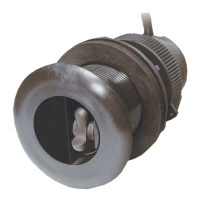
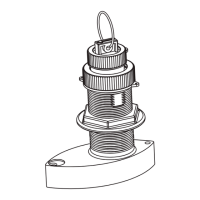
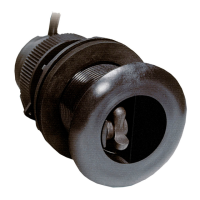
Installation
Hole Drilling
Cored fiberglass hull—Follow separate instructions on page 4.
1. Drill a 3mm or 1/8" pilot hole from inside the hull. If there is a rib,
strut or other hull irregularity near the selected mounting
location, drill from the outside.
2. Using the appropriate size hole saw, cut a hole perpendicular to
the hull from outside the hull.
3. Sand and clean the area around the hole, inside and outside, to
ensure that the sealant will adhere properly to the hull. If there is
any petroleum residue inside the hull, remove it with either mild
household detergent or a weak solvent (alcohol) before sanding.
Metal hull—Remove all burrs with a file and sandpaper.
Bedding
CAUTION: Be sure the surfaces to be bedded are clean and dry.
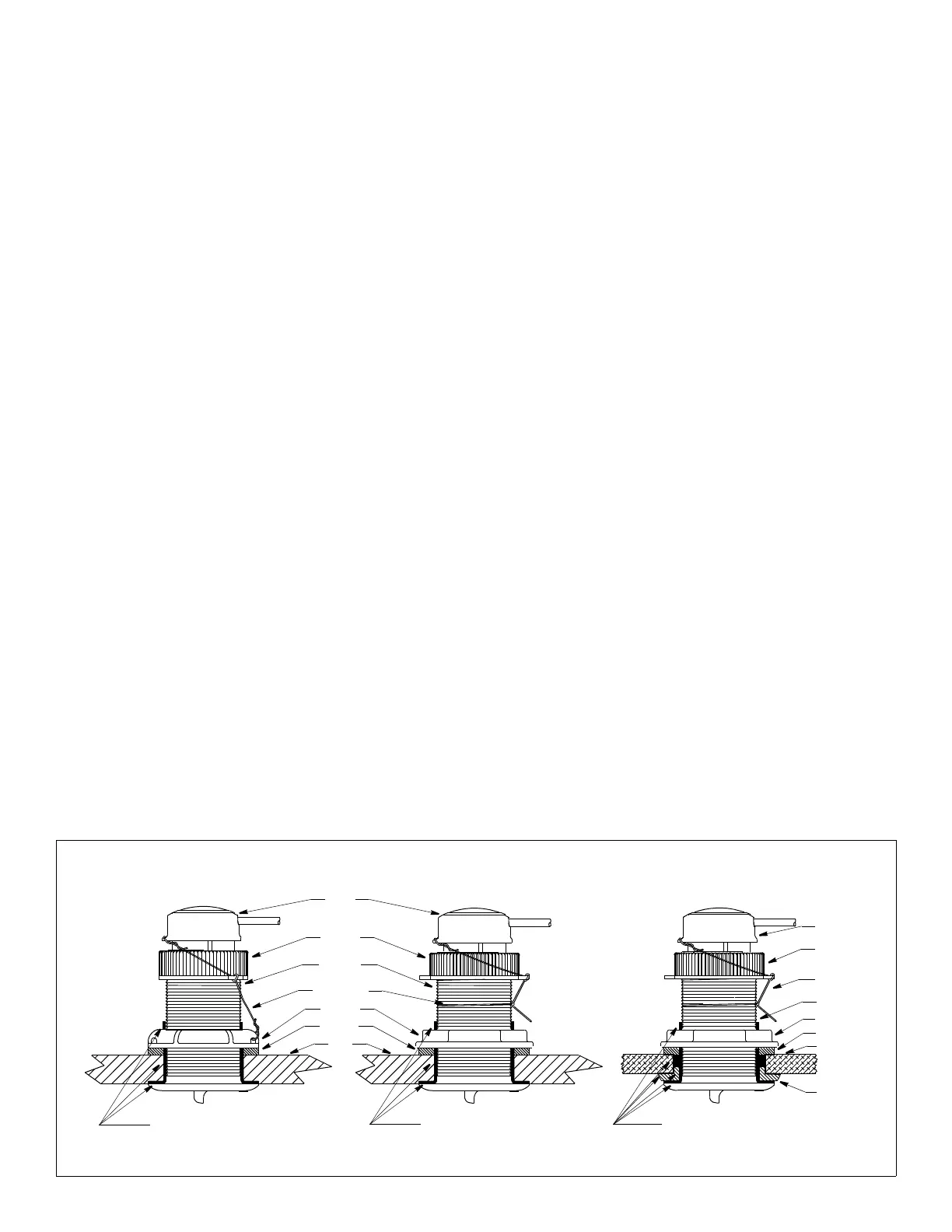
Apply a 2mm (1/16") thick layer of marine sealant around the
flange of the housing that contacts the hull and up the sidewall of
the housing (Figure 3). The sealant must extend 6mm (1/4")
higher than the combined thickness of the hull, the washer, and
the hull nut. This will ensure there is sealant in the threads to seal
the hull and to hold the hull nut securely in place.
Stainless steel housing in a metal hull—A stainless steel
housing must be isolated from a metal hull to prevent electrolytic
corrosion. Slide the isolation bushing onto the housing. Apply
additional sealant to the surfaces of the isolation bushing that will
contact the hull, filling any cavities in and around the bushing.
Installing
NOTE: Disregard any arrow on the housing; it is not used.
1. From outside the hull, push the housing into the mounting hole
using a twisting motion to squeeze out excess sealant (Figure 3).
2. From inside the hull, slide the washer onto the housing.
Stainless steel housing in a metal hull—Be sure the washer
contacts the hull. Do not tighten the hull nut with the washer
against the isolation bushing, as the housing will not be firmly
installed. If necessary, sand the isolation bushing until the
washer rests against the hull.
3. Screw the hull nut in place.
Plastic housing—Do not clamp tightly possibly causing the
housing to fracture.
Plastic hull nut—Hand tighten only. Do not over tighten.
Metal hull nut—Tighten with slip-joint pliers.
Cored fiberglass hull—Do not over tighten, crushing the hull.
Wood hull—Allow wood to swell before tightening the hull nut.
4. Remove any excess marine sealant on the outside of the hull to
ensure smooth water flow under the sensor.
5. O-rings must be intact and well lubricated to make a watertight
seal. After the marine sealant cures, inspect the O-rings on the
insert (replace if necessary) and lubricate them with the silicone
lubricant supplied (Figure 5). Be sure the YELLOW O-ring is in
place near the top. Also lubricate the bore of the housing above
the valve.
6. The insert must be fully inserted into the housing and the cap
nut screwed on completely to make a watertight seal (Figure 3).
Slide the insert into the housing with the arrow on the top
pointing forward toward the bow.
7. Screw the cap nut several turns until the threads are engaged.
Being sure the arrow on the top of the insert and the cable exit
are pointing forward toward the bow, continue to tighten the cap
nut completely. Be careful not to rotate the housing and disturb
the sealant. Hand tighten only. Do not over tighten.
8. Always attach the safety wire to prevent the insert from backing
out in the unlikely event that the cap nut fails or is screwed on
incorrectly.
Plastic housing—Attach the safety wire to one eye in the hull
nut. Keeping the wire taut throughout, lead the wire in a
counterclockwise direction and thread it through one eye in the
cap nut. Thread the wire through the eye a second time. Then
lead the wire through the eye in the insert. Twist the wire
securely to itself.
Metal housing—Wrap one end of the safety wire tightly around
the housing and twist it together with the long end. Keeping the
wire taut throughout, lead the wire straight up and through one
eye in the cap nut. Thread the wire through the eye a second
time. Then lead the wire counterclockwise and through the eye
in the insert. Twist the wire securely to itself.
Installing in Housing WITHOUT Valve
To create a watertight seal in a housing that does NOT have a
valve, the insert must have a BLACK O-ring near the top. Use
Replacement O-ring Kit 20-519-01 and follow the instructions
supplied.
3
marine sealant on flange
Figure 3. Bedding and installing
cap nut
washer
hull
safety wire
housing
hull nut
insert
marine sealant on flange
isolation
bushing
washer
and sidewall of housing
(plastic)
marine sealant on flange
cap nut
hull
safety wire
housing
insert
(plastic)
hull nut
Copyright © 2005 - 2020 Airmar Technology Corp
and sidewall of housing
and sidewall of housing
and isolation bushing where it contacts hull
BOW ►
plastic housing
stainless steel housingmetal housing
non-metal hull metal hull
P617V
B617V SS617V
solid fiberglass or metal hull


 To Next Page
 Loading...