This document is an instruction manual for the AKAI AK-FF45L 45 L Portable Fridge/Freezer.
Function Description:
The AKAI AK-FF45L is a portable fridge/freezer designed for storing chilled and frozen foods, making it ideal for camping, road trips, and use in cars, vans, or camper vans. It can keep items like fruit, meat, seafood, drinks, and ice cream fresh and cold while on the go. The unit can also be used at home with the included AC adaptor and a household wall socket. It is recommended to pre-chill the unit at home using a household socket for faster cooling when used in a car. The fridge/freezer is intended for temporary storage of cold or frozen food for outdoor camping or car rides, not for long-term freezing of food.
Important Technical Specifications:
- Model Number: AK-FF45L
- Capacity: 45 L
- Voltage: 12/24 V (DC) or 14.5 V (DC)
- Current: 6 A Max.
- Climate Class: T (Tropical climates, suitable for ambient temperatures of 16 °C to 43 °C)
- Electrical Protection Class: III
- Refrigerant: R134a (38 g)
- Insulation Blowing Agent: Cyclopentane
- Dimensions (approx.): 612 (L) x 430 (W) x 397 (H) mm
- Net Weight (approx.): 17.2 kg
- AC Adaptor Model Number: GM95-145600-D
- AC Adaptor Specifications (input): 100-240 V~, 50/60 Hz, 2.5 A
- AC Adaptor Specifications (output): 14.5 V, 6 A
- DC Charging Cable Specifications: 12/24 V
Usage Features:
- Power Connection: The unit can be connected to a 100-240 V~, 50/60 Hz household power outlet (using the AC adaptor) or a 12/24 V car cigarette lighter plug (using the DC power cord). It is crucial to ensure the outlet voltage and circuit frequency match the appliance rating label. Extension cords should not be used.
- First Use: Before first use, the unit should stand upright for at least 12 hours to allow refrigerant gases to settle. It should also be cleaned as per the instructions. For optimal cooling, it is recommended to plug the unit into a household socket and chill it for 2-3 hours before use in a car. When first starting up or after a period of disuse, allow the unit to cool down on the maximum setting (-18°C) for at least 2 hours before placing food inside.
- Control Panel: Features a POWER button, SET button, TEMPERATURE UP/DOWN buttons, POWER INDICATOR, ERROR INDICATOR, and a digital DISPLAY.
- Switching On/Off: Press and hold the POWER button to turn the unit on or switch it to standby mode. The POWER INDICATOR light will illuminate.
- Temperature Setting: To set the temperature, press the "Set" button, then use the [ + ] or [ - ] buttons. The temperature on the display will flash and then confirm after 5-6 seconds of no adjustments. The ambient temperature will be shown on the display. The temperature can be adjusted from -18°C to 10°C, with a default setting of -18°C.
- Celsius/Fahrenheit Adjustment: Press the "Set" button twice to enter Celsius/Fahrenheit setting mode, then use the [ + ] or [ - ] buttons to switch between °C and °F. The selected unit will flash and then confirm after 5-6 seconds.
- Battery Protection Settings (ABS): The refrigerator automatically turns off to protect the battery from over-discharge when the voltage drops to a set value. It restarts when the battery charge reaches the restart voltage. The ABS voltage setting can be adjusted to "Hi" (high), "ned" (medium), or "Lo" (low) by pressing the "Set" button a third time and using the [ + ] or [ - ] buttons.
- Memory Function: The fridge will restart using the last mode and temperature settings if power is turned off and then restored.
- Error Indication: If an error occurs, a buzzer will sound, and the ERROR INDICATOR light will illuminate. Specific error codes (e.g., EER1, EER2) and flashing patterns indicate different issues (e.g., battery voltage protection, fan overcurrent, compressor failure, controller overheat, NTC open/short circuit).
- Efficiency: For efficient operation, ensure the unit is in a well-ventilated area, away from heat or direct sunlight. Do not open the door unnecessarily or for prolonged periods. Ensure hot items have cooled sufficiently before being added. Recommended storage temperatures for various foods are provided (e.g., water 5°C, cooked food 4°C, red wine 10°C, quick-frozen food -10°C, meat and seafood -18°C).
Maintenance Features:
- Cleaning: Always switch off and unplug the appliance before cleaning. The interior surfaces and accessories should be washed with a damp, warm cloth moistened in a water and baking soda solution (2 tablespoons of baking soda to 1 litre of water). Wring out excess water before cleaning around electrical parts. The outside of the unit should be cleaned with a damp, well-wrung cloth. The door gasket (seal) should be kept clean. After cleaning, dry thoroughly before placing the appliance back into service.
- Cleaning Restrictions: Do not use abrasive, acid, oil, or solvent-based cleaning agents, abrasive pads, scourers, flammable fluids, or sprays. Steam cleaners should not be used due to the risk of electric shock and damage to plastic parts. Ethereal oils and organic solvents (e.g., lemon juice, orange peel juice, butyric acid, acetic acid) can attack plastic parts and should not come into contact with appliance parts.
- Defrosting: Defrost the appliance when a thick coating (more than 5 mm) of frost appears. To defrost, switch off and unplug the unit, let it sit for about two hours until the ice melts, then pour/wipe away the accumulated water. Do not use sharp or hard tools to remove ice or frost. Ensure the fridge/freezer is completely dry before reattaching to the power supply.
- Storage: Before storage, switch off and unplug the unit, defrost and dry it. Store the unit in its original packaging or wrapped in a plastic bag/material in a dry, cool place, out of children's reach. Leaving the door slightly ajar during storage can help prevent dampness and mold.
- Service and Repair: Do not attempt to alter, modify, or repair any part of the appliance unless specifically recommended in the manual. All other servicing should be referred to a qualified technician. Only genuine spare parts should be used.

 Need help?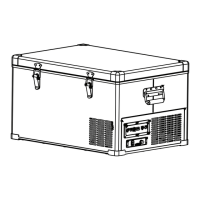

 To Next Page
 General