EasyManua.ls Logo

Akai AK-T25R32 - User Manual

Akai AK-T25R32
28 pages
Print Icon
To Next Page IconTo Next Page
Loading...
PROTECT YOUR WARRANTY
This unit must be installed by a registered,
licensed installer as required by
Government regulations.
INSTALLATION MANUAL
Model Number AK-T25R32
2.5kW Reverse Cycle Inverter
Split System Air Conditioner
Question and Answer IconNeed help?

Do you have a question about the Akai AK-T25R32 and is the answer not in the manual?

Summary

Installation Safety Instructions

Installer Safety Precautions

Safety precautions for installers, including reading the guide and following regulations.

Refrigerant R32 Safety

Safety measures for R32 refrigerant, highlighting combustibility and safe handling.

Refrigerant Charge and Room Area

Guidelines for calculating maximum refrigerant charge and minimum room area based on LFL.

Site and Operation Safety

Safety guidelines for installation site and operation, including flame, ventilation, and static electricity.

Site Accessibility for Installation

Requirements for site accessibility for installation and maintenance, avoiding obstacles.

Refrigerant Leak Procedures

Procedures to follow in case of a refrigerant leak during installation or maintenance.

Required Tools for Installation

List of specialized tools required for installation with their specific requirements.

Product Overview

Indoor Unit Components

Description of the indoor unit and its components, including scope of delivery.

Outdoor Unit Components

Description of the outdoor unit and its components, including rating label and valves.

Installation Hardware Details

Details of installation hardware included with the unit for mounting and connection.

Other Included Items

List of other items included with the product that are not shown in the illustration.

Selecting the Installation Place

Indoor Unit Placement

Guidelines for selecting the installation location for the indoor unit, considering room size and clearances.

Outdoor Unit Placement

Guidelines for selecting the installation location for the outdoor unit, considering environmental factors and clearances.

Installation Procedures

Indoor Unit Installation

Steps for installing the indoor unit, including positioning and avoiding communal areas.

Mounting Plate Installation

Detailed steps for installing the mounting plate, including drilling and fixing.

Wall Piping Hole Drilling

Instructions for drilling a wall hole for piping, ensuring proper slope for drainage.

Indoor Unit Electrical Connections

Guide for making electrical connections to the indoor unit, including wiring and earth connection.

Refrigerant Piping Connection

Instructions for connecting the refrigerant piping, including direction and binding.

Connecting the Refrigerant Pipes

Procedures for connecting pipes, including handling bends and tightening connections.

Indoor Unit Pipe Connections

Steps for connecting pipes to the indoor unit, including flange creation and tightening.

Indoor Unit Water Drainage

Guidelines for the indoor unit's water drainage system, ensuring proper slant and avoiding siphons.

Outdoor Unit Installation

Guidelines for securely installing the outdoor unit on a wall or ground, considering maintenance space.

Outdoor Unit Water Drainage

Instructions for connecting the drain port for the outdoor unit's water drainage.

Outdoor Unit Electrical Connections

Steps for making electrical connections to the outdoor unit's terminal board.

Outdoor Unit Pipe Connections

Procedures for connecting pipes to the outdoor unit, emphasizing leak prevention and tightening torque.

Refrigerant Circuit Bleeding

Procedure for bleeding air and humidity from the refrigerant circuit using a vacuum pump.

Refrigerant Pressure Inspection

How to inspect refrigerant pressure and check for leaks using a vacuum pump and valves.

Final Installation Steps

Final steps for installation, including insulating pipes, sealing holes, and securing cables.

Indoor Unit Functional Test

Checks to perform after indoor unit installation to ensure proper function.

Outdoor Unit Operational Test

Checks to perform after outdoor unit installation, focusing on noise, vibration, and leaks.

Information for the Installer

Indoor Wiring Diagram

Electrical wiring diagrams for the indoor unit, showing connections and components.

Outdoor Wiring Diagram

Electrical wiring diagram for the outdoor unit, illustrating connections to the power supply and components.

Cable Wire Specifications

Specifications for power supply and connection cable wire sizes and types.

Refrigerant Pipe Details

Details about the refrigerant pipes, including diameter, length, and type.

Tightening Torque Specifications

Table detailing correct tightening torque values for pipe connections and caps.

Technical Specifications

Key technical specifications of the air conditioner, including capacity, current, and dimensions.

Other Useful Information

Product Compliance

Information on product compliance with relevant Australian/New Zealand standards and RCM mark.

Responsible Disposal Guidelines

Guidelines for responsible disposal of packaging and the air conditioner unit.

Licensed Installer Details

Section for recording licensed installer details for warranty purposes.

Summary

Installation Safety Instructions

Installer Safety Precautions

Safety precautions for installers, including reading the guide and following regulations.

Refrigerant R32 Safety

Safety measures for R32 refrigerant, highlighting combustibility and safe handling.

Refrigerant Charge and Room Area

Guidelines for calculating maximum refrigerant charge and minimum room area based on LFL.

Site and Operation Safety

Safety guidelines for installation site and operation, including flame, ventilation, and static electricity.

Site Accessibility for Installation

Requirements for site accessibility for installation and maintenance, avoiding obstacles.

Refrigerant Leak Procedures

Procedures to follow in case of a refrigerant leak during installation or maintenance.

Required Tools for Installation

List of specialized tools required for installation with their specific requirements.

Product Overview

Indoor Unit Components

Description of the indoor unit and its components, including scope of delivery.

Outdoor Unit Components

Description of the outdoor unit and its components, including rating label and valves.

Installation Hardware Details

Details of installation hardware included with the unit for mounting and connection.

Other Included Items

List of other items included with the product that are not shown in the illustration.

Selecting the Installation Place

Indoor Unit Placement

Guidelines for selecting the installation location for the indoor unit, considering room size and clearances.

Outdoor Unit Placement

Guidelines for selecting the installation location for the outdoor unit, considering environmental factors and clearances.

Installation Procedures

Indoor Unit Installation

Steps for installing the indoor unit, including positioning and avoiding communal areas.

Mounting Plate Installation

Detailed steps for installing the mounting plate, including drilling and fixing.

Wall Piping Hole Drilling

Instructions for drilling a wall hole for piping, ensuring proper slope for drainage.

Indoor Unit Electrical Connections

Guide for making electrical connections to the indoor unit, including wiring and earth connection.

Refrigerant Piping Connection

Instructions for connecting the refrigerant piping, including direction and binding.

Connecting the Refrigerant Pipes

Procedures for connecting pipes, including handling bends and tightening connections.

Indoor Unit Pipe Connections

Steps for connecting pipes to the indoor unit, including flange creation and tightening.

Indoor Unit Water Drainage

Guidelines for the indoor unit's water drainage system, ensuring proper slant and avoiding siphons.

Outdoor Unit Installation

Guidelines for securely installing the outdoor unit on a wall or ground, considering maintenance space.

Outdoor Unit Water Drainage

Instructions for connecting the drain port for the outdoor unit's water drainage.

Outdoor Unit Electrical Connections

Steps for making electrical connections to the outdoor unit's terminal board.

Outdoor Unit Pipe Connections

Procedures for connecting pipes to the outdoor unit, emphasizing leak prevention and tightening torque.

Refrigerant Circuit Bleeding

Procedure for bleeding air and humidity from the refrigerant circuit using a vacuum pump.

Refrigerant Pressure Inspection

How to inspect refrigerant pressure and check for leaks using a vacuum pump and valves.

Final Installation Steps

Final steps for installation, including insulating pipes, sealing holes, and securing cables.

Indoor Unit Functional Test

Checks to perform after indoor unit installation to ensure proper function.

Outdoor Unit Operational Test

Checks to perform after outdoor unit installation, focusing on noise, vibration, and leaks.

Information for the Installer

Indoor Wiring Diagram

Electrical wiring diagrams for the indoor unit, showing connections and components.

Outdoor Wiring Diagram

Electrical wiring diagram for the outdoor unit, illustrating connections to the power supply and components.

Cable Wire Specifications

Specifications for power supply and connection cable wire sizes and types.

Refrigerant Pipe Details

Details about the refrigerant pipes, including diameter, length, and type.

Tightening Torque Specifications

Table detailing correct tightening torque values for pipe connections and caps.

Technical Specifications

Key technical specifications of the air conditioner, including capacity, current, and dimensions.

Other Useful Information

Product Compliance

Information on product compliance with relevant Australian/New Zealand standards and RCM mark.

Responsible Disposal Guidelines

Guidelines for responsible disposal of packaging and the air conditioner unit.

Licensed Installer Details

Section for recording licensed installer details for warranty purposes.

Overview

This document is the installation manual for an AKAI 2.5kW Reverse Cycle Inverter Split System Air Conditioner, model number AK-T25R32.

Function Description:

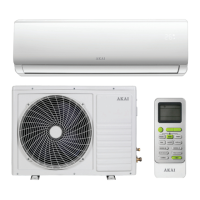
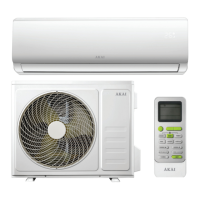
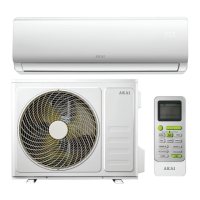
The AKAI 2.5kW Reverse Cycle Inverter Split System Air Conditioner is designed for cooling and heating rooms. It operates as a reverse cycle inverter split system, meaning it can both cool and heat, and its inverter technology allows for variable compressor speed, leading to more efficient operation compared to traditional on/off systems. The "split system" designation indicates that it consists of two main units: an indoor unit and an outdoor unit, connected by refrigerant pipes and electrical cables. The system uses R32 refrigerant, which is an odourless hydrocarbon gas with a high level of environmental compatibility, significantly lower global warming potential (GWP), and zero ozone depleting potential (ODP).

Important Technical Specifications:

  • Model Number: AK-T25R32
  • Capacity:
    • Cooling: 2500W
    • Heating: 2600W
  • Current:
    • Cooling: 3.1A
    • Heating: 3.2A
  • Rated Current (AS/NZS 60335):
    • Cooling: 5.0A
    • Heating: 7.0A
  • Power Input:
    • Cooling: 500W
    • Heating: 510W
  • Rated Power Input (AS/NZS 60335):
    • Cooling: 1100W
    • Heating: 1300W
  • Room Size Suitability: 10–15m²
  • Rated Voltage and Frequency: 220–240V~, 50Hz
  • Ingress Protection (Outdoor Unit): IPX4
  • Max. Pressure:
    • Discharge: 3.7MPa
    • Suction: 1.2MPa
  • Noise (SPL):
    • Indoor Unit: 45dB(A)
    • Outdoor Unit: 54dB(A)
  • Refrigerant Type: R32
  • Refrigerant Quantity: 800g
  • Indoor Airflow Volume:
    • Cooling: 550m³/h
    • Heating: 550m³/h
  • Net Weight:
    • Indoor Unit: 9kg
    • Outdoor Unit: 27kg
  • Dimensions (mm):
    • Indoor Unit: 910 x 294 x 206
    • Outdoor Unit: 831 x 300 x 553
  • Liquid Pipe Diameter: 6mm (1/4")
  • Gas Pipe Diameter: 9.52mm (3/8")
  • Length of Pipe with Standard Charge: 5m
  • Max. Distance Between Indoor and Outdoor Unit: 15m
  • Additional Gas Charge: 15g/m
  • Max. Difference Between Level: 5m
  • Cable Wire Specifications (min.):
    • Power Supply Cable (N, L, E): 1.5mm² AWG16
    • Connection Supply Cable (N, L, 1, 2, E): 1.5mm² AWG16
  • Fuse Rating (Built-in Control Unit): T 5A / 250V

Usage Features:

The indoor unit features a front panel, LED display, deflectors for airflow direction, and a remote control for operation. The remote control allows users to select various modes (MODE), eco-friendly operation (ECO), set timers (TIMER), adjust fan speed (FAN), activate sleep mode (SLEEP), control display settings (DISPLAY), manage swing functions (SWING), mute the unit (MUTE), activate health functions (HEALTH), use "I FEEL-CLEAN" (likely a self-cleaning or comfort feature), and set turbo mode (TURBO) or other settings (I SET).

Maintenance Features:

The manual emphasizes that installation and maintenance must be performed by appropriately qualified and licensed installers due to the flammable R32 refrigerant and government regulations.

  • Refrigerant Handling: The appliance is factory-charged with R32 refrigerant. Any recharge must be done by a professional installer. Maintenance technicians must perform a safety inspection before any work and strictly comply with all instructions and gas-related laws.
  • Leak Detection: Special tools like a leak detector are required for maintenance, with specific error margins (not more than 5% for fixed-type, 10% for portable). Concentration detectors must be calibrated regularly.
  • Vacuum Pump: An explosion-proof mini vacuum pump (vacuum degree lower than 10Pa) is required for bleeding air and humidity from the refrigerant circuit.
  • Filling Device: A special explosion-proof filling device with a precision deviation of less than 5g is needed for refrigerant filling.
  • Pressure Gauge: Pressure gauges used for R410A can be used for R32 and should be calibrated regularly.
  • Fire Extinguishers: Dry powder, carbon dioxide, and foam fire extinguishers must be available at the maintenance site, placed in stipulated, eye-catching, and handy positions.
  • Post-Installation Checks: After installation, the service technician must:
    • Check that air cannot enter the refrigerant system.
    • Check for refrigerant leaks when moving the air conditioner.
    • Carry out a test cycle under controlled conditions and record operating data.
  • Filter Accessibility: The indoor unit should be installed where the filter is easily accessible for cleaning or replacement.
  • Drainage: The condensed water drain pipe must slant downwards to aid drainage and should not be bent, protrude, twist, or have its end in water.
  • Disposal: Packaging materials are recyclable. The air conditioner contains flammable refrigerant and must be removed by municipal authorities or recycling facilities. Electrical and electronic components should not be disposed of with household rubbish due to their potential environmental and health impact.

Safety Precautions (for installers):

  • Do not install the unit in environments with gas, oil, sulphur, near heat sources, or within 50cm of flammable substances.
  • Ensure proper ventilation in the installation area to prevent refrigerant gas accumulation.
  • The outdoor unit base must be firmly fixed.
  • Disconnect all power circuits before accessing terminals.
  • Verify mains voltage matches the rating plate.
  • Ensure the socket is suitable for the plug.
  • The appliance requires a means for disconnection from the supply mains with contact separation in all poles for full disconnection under overvoltage category III conditions, incorporated into fixed wiring.
  • Do not expose the appliance to high heat, sparks, or open flames. Do not pierce or burn the appliance.
  • Store the appliance in a room without continuously operating ignition sources.
  • Only professional installers should recharge refrigerant.
  • Maintenance must be carried out under controlled procedures to minimize risks from combustible gas/vapour.
  • The room for installation must be larger than 4m² (suitable for 10-15m²).
  • Avoid open fires, welding, smoking, drying ovens, or heat sources above 548°C during installation/maintenance.
  • Mind static electricity; wear protective clothing and anti-static gloves.
  • Do not use a mobile phone during installation.
  • Choose a site convenient for installation and maintenance, ensuring air inlets/outlets are unobstructed and away from heat/combustible environments.
  • Ensure indoor unit inlet/outlets are even.
  • Avoid installing directly under electrical products, switches, sockets, kitchen cabinets, beds, sofas, or valuable items.
  • If an indoor unit refrigerant leak occurs during installation, immediately turn off the outdoor unit valve and ensure personnel leave the room for at least 15 minutes after the leak is fixed.
  • If the product is damaged, it must be returned to a maintenance station; do not attempt to weld refrigerant pipes on site.

Akai AK-T25R32 Specifications

General IconGeneral
BrandAkai
ModelAK-T25R32
CategoryAir Conditioner
LanguageEnglish

Related product manuals