Need help?
Do you have a question about the AL-KO ESC and is the answer not in the manual?
Explains the AL-KO ESC as a sway and swerve stability control system for caravans with AL-KO electric brakes.
Details how AL-KO ESC detects lateral movement and applies caravan brakes to maintain stability.
Covers connecting the ESC, its self-test procedure, and interpreting LED status light indicators.
Guidance for off-road use and essential maintenance for connectors and electric brakes.
Provides answers to common user queries regarding ESC activation and its effect on vehicle braking.
Details red and flashing red status lights, indicating minor or serious system malfunctions.
Covers issues with loose contacts, dirty connectors, and damaged power cables affecting ESC operation.
Guidance on checking electric brake connectivity, tow vehicle voltage, and connector integrity.
Explains that a constant flashing red light signifies a serious problem requiring ESC module repair.
Troubleshooting 'no power to ESC' and flashing green light states indicating incomplete system checks.
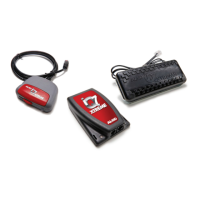
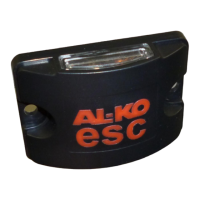
Visual guide identifying the location of the LED Status Light and ESC Module on the caravan.
Details two options for powering the ESC: via a 12-pin or a 2-pin connector.
Specifies tow vehicle battery wiring, fuse protection, and recommended electric brake controllers.
Defines the pin assignments and cable colors for the 12-pin connector used for ESC power and ground.
Outlines the product warranty period, coverage details, and conditions for repair or replacement.
Details the procedure for submitting a warranty claim, including required documentation and customer responsibilities.
Lists circumstances that void the warranty and specifies the extent of AL-KO's liability.
The AL-KO ESC (Electronic Stability Control) is a sophisticated sway and swerve stability control system designed specifically for caravans equipped with AL-KO electric brakes. Its primary function is to enhance safety during towing by continuously monitoring the caravan's lateral movement and intervening when critical sway or an emergency swerve is detected. This system provides drivers with increased confidence, even in challenging driving scenarios such as maneuvering past heavy goods vehicles, coping with strong side winds, or reacting to road hazards. The ESC ensures that potentially dangerous conditions are smoothly and effectively controlled, helping the driver maintain control of the vehicle combination. It is important to note that the AL-KO ESC is exclusively approved for use on trailers and caravans that are fitted with AL-KO electric brakes, axles, and suspensions.
The AL-KO ESC operates on principles similar to the ESC systems found in some cars, but it is specifically adapted for caravan dynamics. The core of its functionality lies in its ability to constantly sense the lateral (side-to-side) movement of the caravan while it is being towed. When the system identifies a critical sway or an emergency swerve, it initiates a partial application of the caravan's electric brakes. This braking action is precisely calibrated to pull the caravan back into alignment behind the tow vehicle, effectively preventing further swaying. The intervention is designed to be smooth, allowing the driver to remain in control without abrupt or unsettling movements. Once the sway is stopped and the caravan is back in line, the brakes are released, and the system returns to its monitoring state.
For the ESC to function, it must be connected to the power supply of the tow vehicle. This connection is typically made via a 12-pin trailer connector or a separate 2-pin connector. Upon receiving power, the ESC performs an automatic self-test to verify that all components are working correctly and are properly connected. During this self-test, an LED status light, usually located at the front of the caravan, will display red. Once the test is successfully completed, the LED status light turns green, indicating that the ESC is operational and ready for use.
In some instances, the LED may flash green after the initial self-test, requiring some movement to complete the sensor calibration. If this occurs, the vehicle should be driven a short distance, and the LED status light should then be rechecked for a solid green, confirming correct system operation.
The ESC also provides diagnostic feedback through its LED status light. If the LED turns red at any point during a trip, it signifies a minor problem. While it is generally safe to continue driving, the ESC will not activate during a critical sway or swerve until the issue is resolved and the green light is restored. For such cases, the user is directed to a troubleshooting section for corrective steps. If the LED flashes red continuously at 1-second intervals, it indicates a serious problem, and the ESC will cease to operate. In this scenario, the ESC should be disconnected before driving further, and the troubleshooting guide should be consulted immediately.
For off-road use, it is recommended to disconnect the ESC. This is because severe tilting of the trailer and the bumps encountered during off-road driving can inadvertently trigger the ESC to activate the brakes, which could be undesirable in such conditions. For vehicles frequently used off-road, it is suggested to connect the ESC to the tow vehicle using a separate 2-pin connector, rather than the standard 12-pin, to facilitate easy disconnection during off-road periods. The ESC should be reconnected as soon as the vehicle returns to less severe road conditions.
The AL-KO ESC is designed for ease of use, with its primary function being automatic and requiring minimal driver intervention once properly installed and connected. The system's operational status is clearly communicated through the LED status light, allowing drivers to quickly ascertain if the system is active and functioning correctly.
When the ESC activates during a sway or swerve event, the driver will typically notice a soft braking sensation from the caravan. This subtle feedback confirms that the system is working to correct the caravan's alignment. It is important to note that when the ESC activates, the caravan's brake lights do not illuminate. This is because the ESC applies the brakes to correct alignment, not to bring the combination to a stop, similar to how a tow vehicle's ESC operates without illuminating brake lights during its own stability corrections.
The system's power supply is crucial for its operation. It must be wired directly to the tow vehicle's battery and protected by a 30A fuse or circuit breaker. The connection to the tow vehicle can be made using a standard 12-pin plug or a 2-pin connector. The wiring configuration for a 12-pin plug can vary between manufacturers, so users are advised to confirm their caravan's specific wiring with the manufacturer. For off-road applications, a 2-pin, 50AMP connector or a switch and relay setup is recommended to allow for easy disconnection of the ESC.
The tow vehicle must also be equipped with an approved electric brake controller. AL-KO provides a list of compatible controllers, including Tekonsha Prodigy P2, Tekonsha P3, Tekonsha Primus IQ, Hayes Energiser III, and Hayman Reese Guardian IQ. This ensures compatibility and optimal performance of the integrated braking system.
The AL-KO ESC system itself is largely maintenance-free and requires no adjustment once installed. However, certain aspects of the overall braking and connection system require regular attention to ensure the ESC functions correctly and reliably.
One key maintenance point is the electrical connector between the caravan and the tow vehicle. This connector should be regularly lubricated with a water dispersant spray to prevent corrosion. It is also essential to inspect the connector periodically for any signs of corrosion. If corrosion is evident, the connector should be replaced to maintain a reliable electrical connection.
Beyond the connector, the electric brakes of the caravan are critical to the effective operation of the ESC. It is imperative that the electric brakes are correctly adjusted and in good working order. Regular maintenance of the electric brakes should be carried out as described in the electric brake service manual provided by the manufacturer. This ensures that when the ESC commands a braking action, the brakes respond efficiently and effectively.
Troubleshooting guidance is provided within the manual to address issues indicated by the LED status light. For a red status light, the initial step is to disconnect and reconnect the ESC for 10 seconds. If the light remains red, a series of checks are recommended, including:
For a flashing red status light (constant, every second), the ESC should be disconnected before driving, and the module should be returned to AL-KO for repair or replacement. If the status light is off, troubleshooting focuses on ensuring power supply to the ESC, checking the 12-pin connector, ESC connector, fuses, and cables for damage or voltage. If the LED status light itself is faulty, checking the voltage supplied to it (should be two volts) and replacing the light if necessary are recommended.
A flashing green light indicates that the start-up test is complete but the ESC hasn't detected movement to confirm sensor operation. Driving a short distance should resolve this, turning the light solid green. If it continues to flash green, AL-KO should be contacted.
By following these maintenance and troubleshooting guidelines, users can ensure the continued optimal performance and safety benefits provided by the AL-KO ESC system.
 General
| Type | Electronic Stability Control |
|---|---|
| Power Supply | 12V DC |
| Manufacturer | AL-KO |
| Application | Caravan/Trailer |
| Function | Stabilizes the trailer during critical driving situations |

 To Next Page