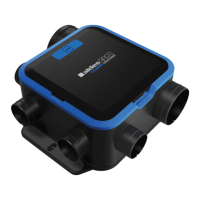
Residential HRV/ERV
7
Fully Ducted System – Best Conguration
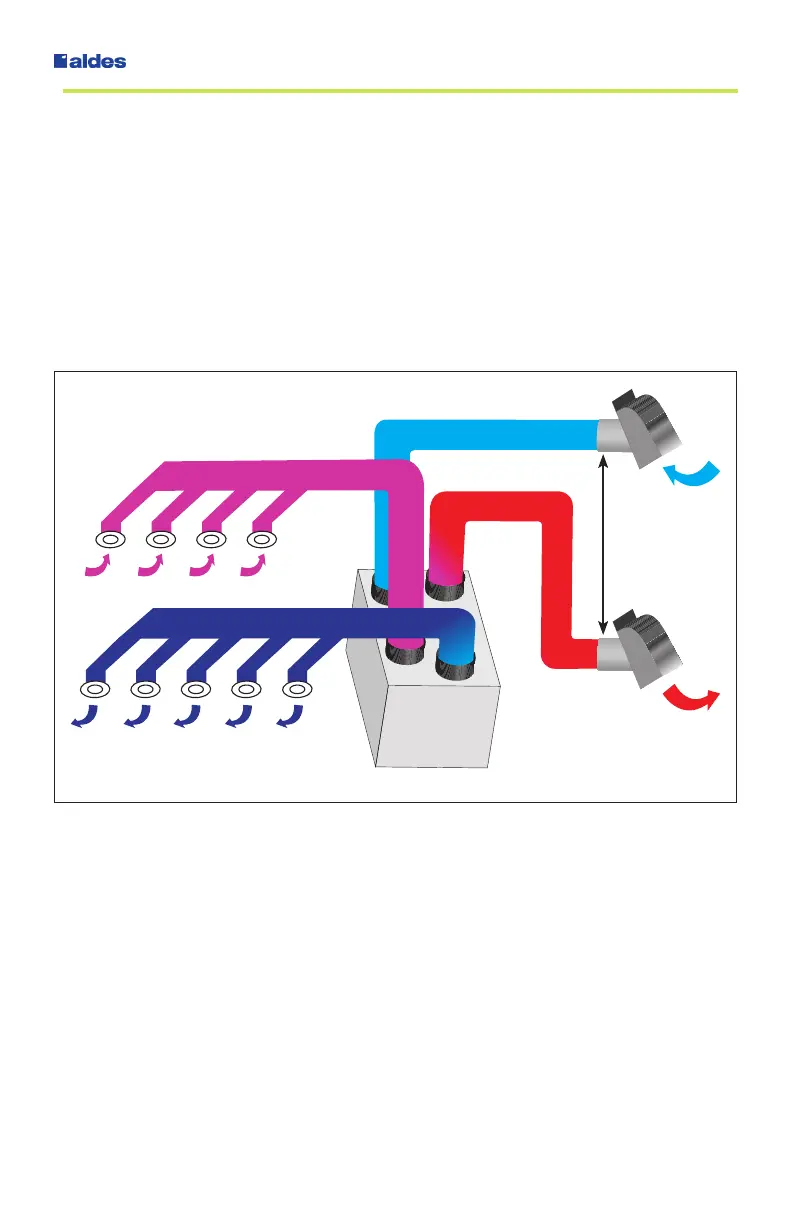
Fully Ducted System
The fully ducted system has the highest ventilation eectiveness. It is especially suited for
homes without forced-air systems used for both heating and cooling. Dedicated exhaust
grilles draw stale air from service rooms. Dedicated supply registers provide fresh air to main
living areas and bedrooms. Grilles should be located high on a wall or in the ceiling. Grilles
that diuse the air are recommended. Special care should be taken in locating grilles in the
oor. Areas under baseboard heaters will help temper the air. See “Locating the Exhaust Air
Grilles or Registers” page 13 and “Locating the Air Grilles of Diusers” page 14 . Also refer to the
installation instructions included with these products (sold separately).
This system is not connected to an Air-Handling Unit (AHU) or furnace. This system is
normally balanced on high speed. If Aldes patented* Zone Register Terminals (ZRT®) are used
for exhaust or supply registers, balancing must be done at normal operating speed.
INDOOR AIR
SUPPLY AIR
OUTDOOR AIR
EXHAUST AIR
*Note: Port congurations
are generic and do not
represent specic models
6 ft min
*U.S. Pat. No. 7,766,734 Canada Pat. No. 2,570,948
Note (continued): The way your heat/energy-recovery ventilator is installed can make a
signicant dierence to the electrical energy you use. To minimize the electricity use of the
heat/energy-recovery ventilator, a stand-alone fully ducted installation is recommended.
If you choose a simplied installation that operates your furnace air handler for room-to-
room ventilation, an electrically ecient furnace that has an electronically commutated
(EC) variable speed blower motor will minimize your electrical energy consumption and
operating cost.”



 To Next Page