38934 9
Selections . . .
Water Temperatures
HOT Wash
Hot water will give the best results of cleaning and
sanitizing, but it is not suitable for all items. It is best for
sturdy whites and colorfast items, heavily soiled items
and diapers.
WARM Wash
By using warm water, there is less chance of color loss in
items. Warm water also reduces wrinkling in permanent
press items. Use with light and moderate soils, non-
colorfast or dark colors, permanent press, silks, woolens,
nylons, and acrylic.
COLD Wash
Cold water is less effective in cleaning than hot or warm
water, but it does minimize wrinkling and color fading.
Use it for washing extra-sensitive clothes
Rinse Temperature
Your washer provides a cold rinse. You’ll save money and
energy with the cold rinse. Cold rinses also help reduce
wrinkling in permanent press and other synthetics.
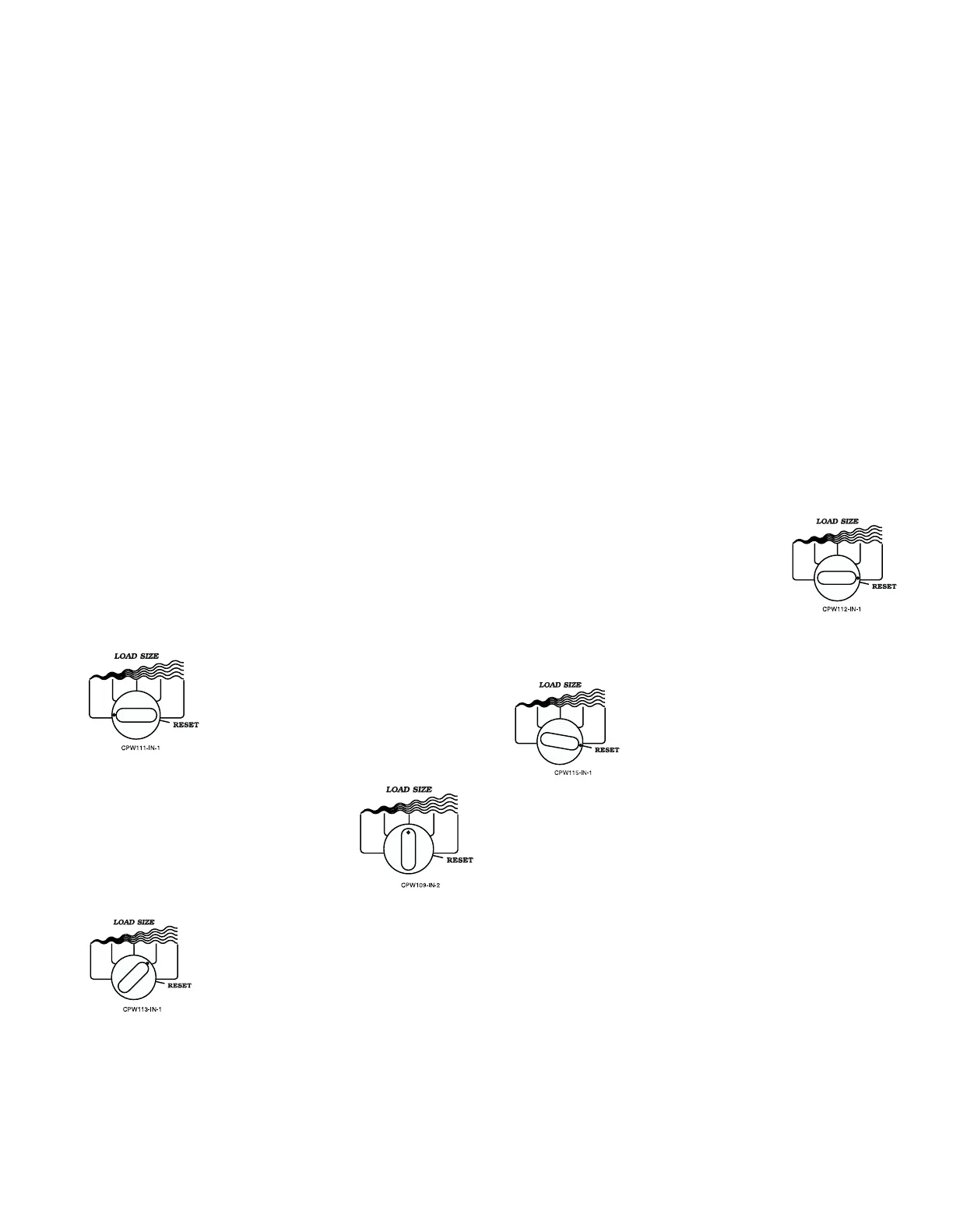
Load Sizes . . .
Load sizes are determined by the bulk of the clothes, not
the weight. When sorting items into separate loads
remember, clothes must be able to circulate freely to get
clean. Do not overload the washtub. Overloading can
produce unsatisfactory results. The sample loads shown
in the chart are guides. Your load sizes may vary.
Small (Sample Loads)
3-4 perm. press dress shirts
OR
1 twin sheet, 1 pillow case
OR
1-2 lightweight dresses
Medium (Sample Loads)
6-7 perm. press dress shirts
OR
2 twin sheets, 2 pillow cases
OR
8 standard bath towels, 6 bath cloths
Large (Sample Loads)
10-11 perm. press dress shirts
OR
2 full size sheets, 2 pillow cases
2 pair men’s pajamas
OR
12 standard bath towels, 4 hand towels,
4 wash cloths
Ex. Large (Sample Loads)
8-9 shirts and 5 pr. polyester pants
OR
2 queen size sheets, 4 pillow cases
2 night gowns, 1 pair men’s pajamas
OR
1 queen size bedspread
Reset
Use the RESET if agitation has started
and more water is needed for the load.


 To Next Page