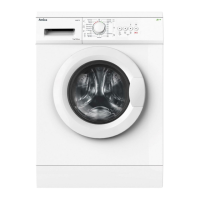
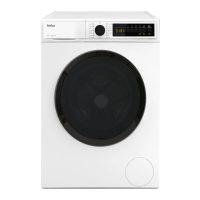
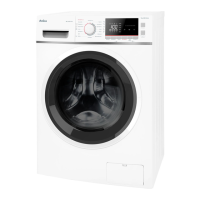
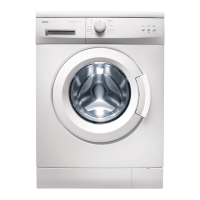
This document provides comprehensive operating instructions for the Amica WME610 washing machine, covering its functions, usage, and maintenance.
Function Description
The Amica WME610 is a domestic washing machine designed to wash textiles and clothes that are suitable for machine washing in a detergent bath. It features a programme selector dial to choose from various wash programmes based on the degree of soil, type, and amount of laundry. The machine offers several functions to customize the wash cycle, including:
- Prewash button: This function provides an extra wash before the main wash, ideal for clothes with surface dust. Detergent for prewash should be placed in Case (I) of the dispenser.
- Extra rinse button: Selecting this option adds an additional rinse cycle to the laundry.
- Skip spin button: This function allows the user to bypass the spin cycle.
- Start/Pause button: Used to initiate or temporarily halt a programme. The START/PAUSE indicator light illuminates when the machine is operating and turns off when paused. The pause mode can also be used to soak laundry; after about 10 minutes from the programme start, pressing START/PAUSE will pause the cycle, and pressing it again will resume.
- Acoustic Signal On/Off: The buzzer can be muted or activated by pressing the Prewash button for 3 seconds. This setting persists until the next reset.
- Child Lock: This feature locks the function buttons to prevent accidental changes or interruptions by children. It is activated by pressing and holding the Extra Rinse and Skip Spin buttons for 3 seconds during a wash cycle. The display shows a lock symbol when activated. To deactivate, hold the same buttons for approximately 3 seconds. The Child Lock remains active even if the machine is turned off, unplugged, or the cycle ends.
The appliance incorporates a load distribution control system that checks the distribution of clothes inside the drum before spinning. If an imbalance is detected, the system attempts to rearrange the load. If unsuccessful, it may reduce the spin speed or cancel the spinning to prevent damage.
Usage Features
Before using the appliance, it is crucial to remove all packaging and transport bolts, and ensure the machine is level. The transit bolts should be kept for future use, such as moving the appliance. The washing machine must be connected to a cold water supply (or hot and cold if it has double inlet valves) using only the new hoses provided, ensuring they are not twisted and are sealed tightly. The drain hose should be fixed securely to prevent movement during operation.
Preparation for washing:
- Empty all pockets and remove any metal items (coins, paper clips, needles, screws, stones, etc.) to prevent damage to the laundry and the machine.
- Delicate items like bras or stockings should be placed in a protective mesh laundry bag.
- Close all zippers and fasten buttons.
- For the first wash, run a high-temperature cycle without any load, adding a suitable detergent.
Detergent and Laundry Additives:
- Use general-purpose laundry detergent powder or liquid suitable for the chosen temperature range, following the manufacturer's instructions.
- Detergent for the main wash goes into the compartment marked
II.
- Pre-wash detergent goes into the compartment marked
I.
- For liquid detergents, install the provided tab in compartment
II.
- Fabric softener should be poured into the compartment marked with a flower symbol, ensuring not to exceed the maximum level.
- For white laundry, washing powder is recommended as liquid detergents typically do not contain bleach, which can cause yellowing.
Soil Levels:
- Stubborn stains: Apply an additional stain remover before washing.
- Heavy soil: Wash less laundry per cycle and add more detergent for better results. After washing heavily soiled garments or items that shed fibers, run a wash cycle at 60°C (e.g., Cotton or Synthetics programme) without any load to rinse the machine.
- Light soil: Refer to conservation tips for appropriate settings.
Conservation:
- To reduce energy and water consumption, wash lightly soiled garments on the Rapid Wash setting.
- For most programmes, the machine detects the load. For partial loads, especially with the Ultra short programme, the appliance automatically reduces water and energy consumption and shortens the cycle.
Water Hardness:
- Hard water can cause scale buildup. It is recommended to use a water softener for each wash, and information on water hardness can be obtained from the local water works.
Power Outage:
- The machine has a programme memory; a power outage or unplugging will not cancel the set programme. It will resume once power is restored. Do not open the door during a power outage.
Loading:
- Maximum drum capacity is 6 kg.
- Load cotton, denim, and children's clothes to a full drum, but do not force clothes in, as this reduces wash quality.
- For synthetics, load up to ½ of the drum.
- For delicate fabrics, load up to ⅓ of the drum.
- Avoid overloading, as this can damage clothes. If overloaded, the display will show "OVL"; remove excess laundry and restart.
Door Lock:
- The machine is equipped with a door lock that prevents opening during a wash cycle. It automatically releases after the cycle. To open during a programme, press PAUSE and wait for the door to unlock.
- If the drum temperature is high (above 60°C), the door may remain locked until the water cools down.
- Always check for water inside the drum before opening the door.
Maintenance Features
Regular maintenance is essential for extending the working life of the washing machine.
Cleaning the Cabinet:
- Clean the cabinet surface with diluted non-abrasive neutral detergents.
- Wipe off any water overflow immediately with a wet cloth.
- Avoid using sharp items, formic acid, diluted solvents, alcohol, or other chemical products.
Cleaning the Drum:
- Remove any rust left by metal articles immediately using chlorine-free detergents.
- Never use steel wool.
- Do not put laundry in the machine during drum cleaning.
Cleaning the Door Seal and Glass:
- Wipe the glass and seal after each wash to remove lint and stains, which can cause leaks if accumulated.
- Remove any coins, buttons, or other objects from the seal after each wash.
Cleaning the Drain Pump Filter:
- Clean the pump filter approximately every 20 washes. Neglecting this can lead to draining problems.
- To clean: open the service filter, turn the filter counter-clockwise to open, remove and clean it, then close the lower cover cap.
Cleaning the Water Supply Valve:
- Unscrew the water supply hose.
- Use forceps to grasp the filter mesh pin.
- Remove and clean the filter, preferably with a brush.
- Replace the filter by reversing the procedure.
Cleaning the Detergent Drawer:
- Clean the detergent drawer at least once a month.
- To clean: pull out the drawer, press down the tab to completely remove it.
- Rinse under running water, cleaning with a brush or a piece of fabric.
- Clean the recess inside the machine with an old toothbrush.
- Replace the drawer.
The manual also includes troubleshooting steps for common issues like the machine not starting, door not opening, water leakage, detergent residues, display not lighting, and abnormal noise. If problems persist, users are advised to contact the service line.


 To Next Page
 General
 Weight and Dimensions