Need help?
Do you have a question about the Apollo ORBIS ORB-OH-13003-APO and is the answer not in the manual?
Provides contact details for technical queries, sales, and general inquiries.
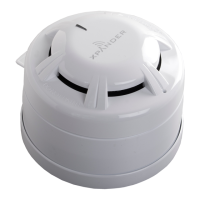
Details the types of detectors and bases available in the Orbis range.
Lists technological advantages and functionalities of Orbis detectors like TimeSaver Base and FasTest.
Compares optical and multisensor detectors for different fire scenarios and sensitivities.
Explains when to use heat detectors and their EN54 classification.
Advises on suitable environments for optical detectors, highlighting performance.
Details the light scatter technology and algorithms used in the optical detector.
Explains the photo-electric detection method and microprocessor algorithms.
Lists electrical parameters: supply voltage, current, alarm load, etc.
Covers material, dimensions, weight, operating temperature, and humidity.
Guides on multisensor use, especially for fast-burning fires and combined heat/smoke risks.
Confirms environmental performance is consistent with the Orbis optical smoke detector.
Explains dual sensing (smoke/heat) and their combined detection logic.
Lists electrical parameters specific to the multisensor detector.
Covers material, dimensions, weight, operating temperature, and humidity.
Advises on using heat detectors when smoke detectors are unsuitable due to environmental factors.
Provides a flowchart for choosing heat detector classes based on site conditions.
Presents EN54 classifications and temperature response data for heat detectors.
Explains thermistor-based temperature sensing and rate-of-rise detection algorithms.
Notes performance is similar to optical detectors but optimized for ambient temperatures.
Details the quick installation procedure for the TimeSaver base and its terminals.
Describes the process of attaching detector heads after base installation and wiring.
Lists various Orbis base types, their markings, and associated product descriptions.
Explains red and yellow LED behavior during detector startup, testing, and normal use.
Details yellow LED for DirtAlert and error state indications for SensAlert.
Describes the features and applications of these specialized Orbis mounting bases.
Explains the Heater Base for cold environments and the Adaptor for Series 60/65 compatibility.
Illustrates wiring connections for TimeSaver relay and Sav-Wire bases.
Details StartUp and FasTest features for efficient detector setup and testing.
Covers recommended checks, cleaning, and interpreting DirtAlert warnings.
Lists certifications, standards compliance, and regulatory information for Orbis detectors.
 General
| Brand | Apollo |
|---|---|
| Model | ORBIS ORB-OH-13003-APO |
| Category | Security Sensors |
| Language | English |

 To Next Page