34 | 35
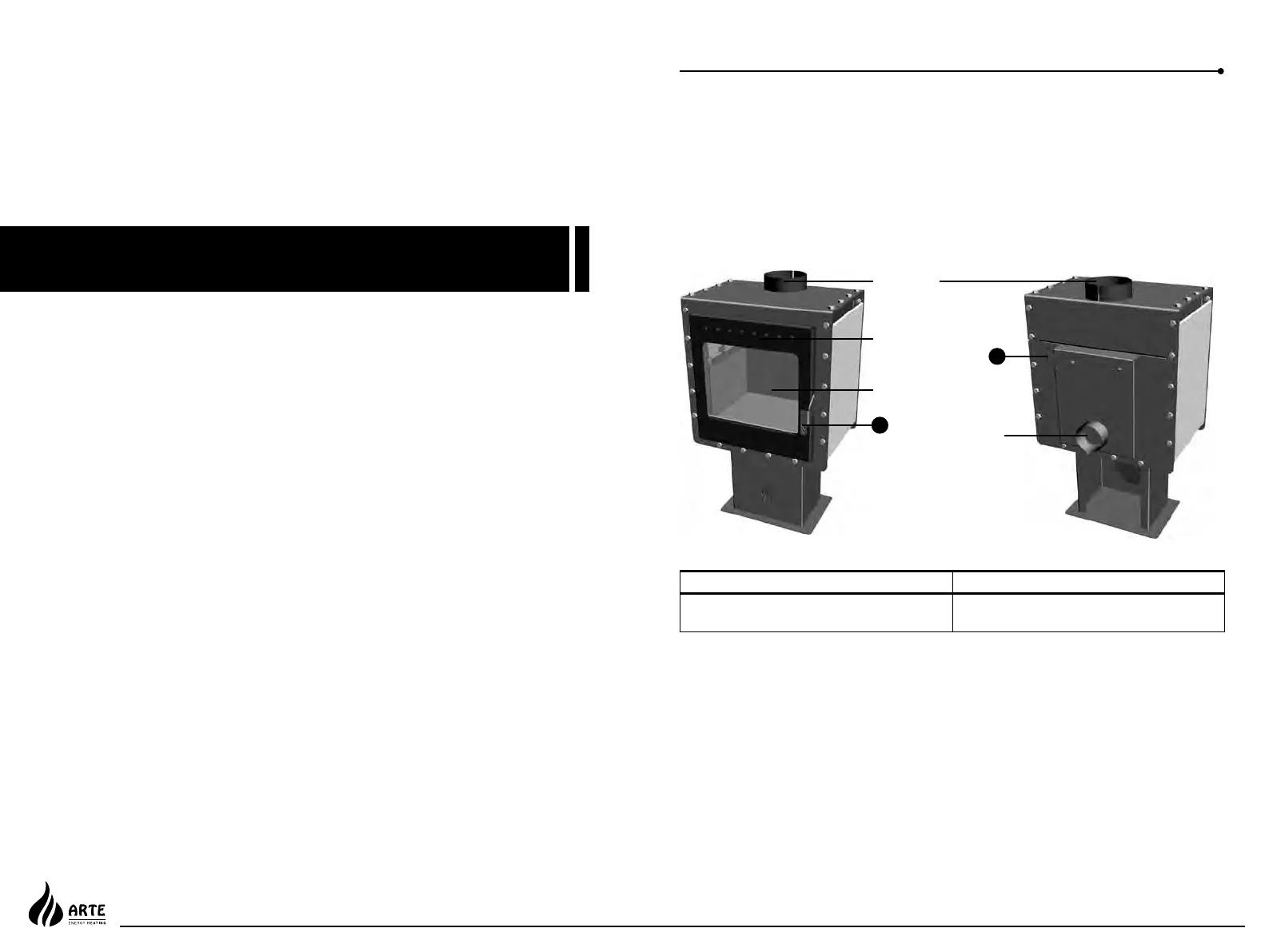
Stovepipe
Εξωτερικός
αέρας
Σύστηµα
καθαρισµού
τζαµιού
Combustion Chamber
> Avoid touching the outside surfaces when the stove is operating. Every stove gets hot when fired: risk of
burning!
> It is prohibited to use the stove as a waste incinerator
> Do not burn, refused or painted wood
> Dispose of the ashes only after they have cooled completely
> Ash should be placed outdoors or be emptied in a place where it will not present a potential of hazard
> Inform your specialized dealer without delay of defect gaskets
> Do not use chemicals or fluids to start the fire
5.3 Chimney safety instructions
The condition and functionality of your chimneys must be inspected by a chimney sweep or specialist before
the ARTE
®
wood stove is installed. (EN 13384-1 & EN 13384-2)
This will provide the optimal conditions for trouble-free heating.
5.3.1 Common chimney problems
> Retrofitting an old chimney: Frequently, old chimneys are too big for today’s wood stoves. That means
the amount of air they draw is not proportional to the amount of heat the stove produces. A too-big chim-
ney means you’ll burn more wood than you need, and likely spend more time than necessary on fire
maintenance. You’ll need to install a “liner” stovepipe within the chimney. It should run the entire length
of the chimney, and nowhere along its length should it be any bigger than the stove’s exhaust opening.
But -- before you go jamming pipe up the chimney -- you should know how the chimney was built, and
what sort of insulation it contains. The heat produced by a wood-burning stove is different from the heat
produced by an open fireplace, and your chimney may not be up to the task without some work.
> Setting the stovepipe to minimum height requirements: A short chimney may look nicer (though that’s a
matter of opinion), but it may not supply an optimal draft to the stove. Work with a professional to figure
out the right stovepipe height for your stove.
> Running too much horizontal stovepipe: A venting system works best when it’s vertical. Some hom-
eowners, rather than create chimney holes in the roof, run stovepipe out windows or through walls. But
this is a very bad idea.
> Running the stovepipe along an exterior wall: This isn’t a safety issue so much as an efficiency issue. The
stove will heat more of the house if the pipe travels up along an interior wall, so all the heat from the pipe
stays in the house.
> Creating too many twists and turns: Venting systems should be direct and straight. Twists and turns in a
stovepipe invite the buildup of creosote, and that raises the risk of fire.
5.4 Conduct during malfunctions - SHUTTING DOWN safely
In rare cases, also a pilot fire can fail to generate a draught in the flue.
You must then ask your chimney sweep for advice. On no account must you attempt to light a larger fire.
When smoke escapes from your stove, air the room immediately and contact your chimney sweep. You
should then refrain from firing your stove.
Observe the information in our operating instructions and make
a proactive contribution to fire prevention and the protection of
our environment.
6. OPERATING INSTRUCTIONS
6.1 Before firing the stove for the first time
You have now been instructed by one of our specialized dealers on how to fire your ARTE
®
wood stove.
In these operating instructions we wish to set down each step that you must take if you are to encounter no
problems when operating your ARTE
®
wood stove.
Your specialized dealer will be pleased to assist you with any questions you may have.
ARTE
®
wood stove is equipped with the following controls:
6.2 About the stove
6.3 General information
6.3.1 When the stove paint dries
When the stove is fired for the first few times the paint on the stove emits an odour when it dries.
Let the fire burn with a high draught until all traces of the gas have disappeared and no smoke or odour
can be detected.
The gas is not toxic but the room should be thoroughly ventilated.
Postcombustion Control, Fig. 4A Handle for door, Fig. 4Β
Pushed in: Closed
Pulled out: Open
Door is opened by pulling handle out.
Fig. 3 Fig. 4
BOX WOOD STOVE
Α
B


 To Next Page