38 | 39
6. When you can see that the chimney is hot enough to draw (after 5 - 10 minutes), close the door (Fig. 3B).
7. Reduce the amount of combustion air to the desired position, and the optimal combustion will continue.
Make sure that there is always enough air (oxygen) to maintain clear, lasting flames when, and after,
reducing the amount of combustion air. (Fig. 4A).
8. Once the fire has been reduced to a thick layer of embers, a new portion of wood can be added. Stoke the
stove frequently but only add small amounts of fuel max 3,4kg at a time. If the stove is filled too full, the
heat created may cause extreme stress in the chimney. Add fuel to the fire in moderation.
The maximum height of the pile of the wood should be just below the
combustion air holes.
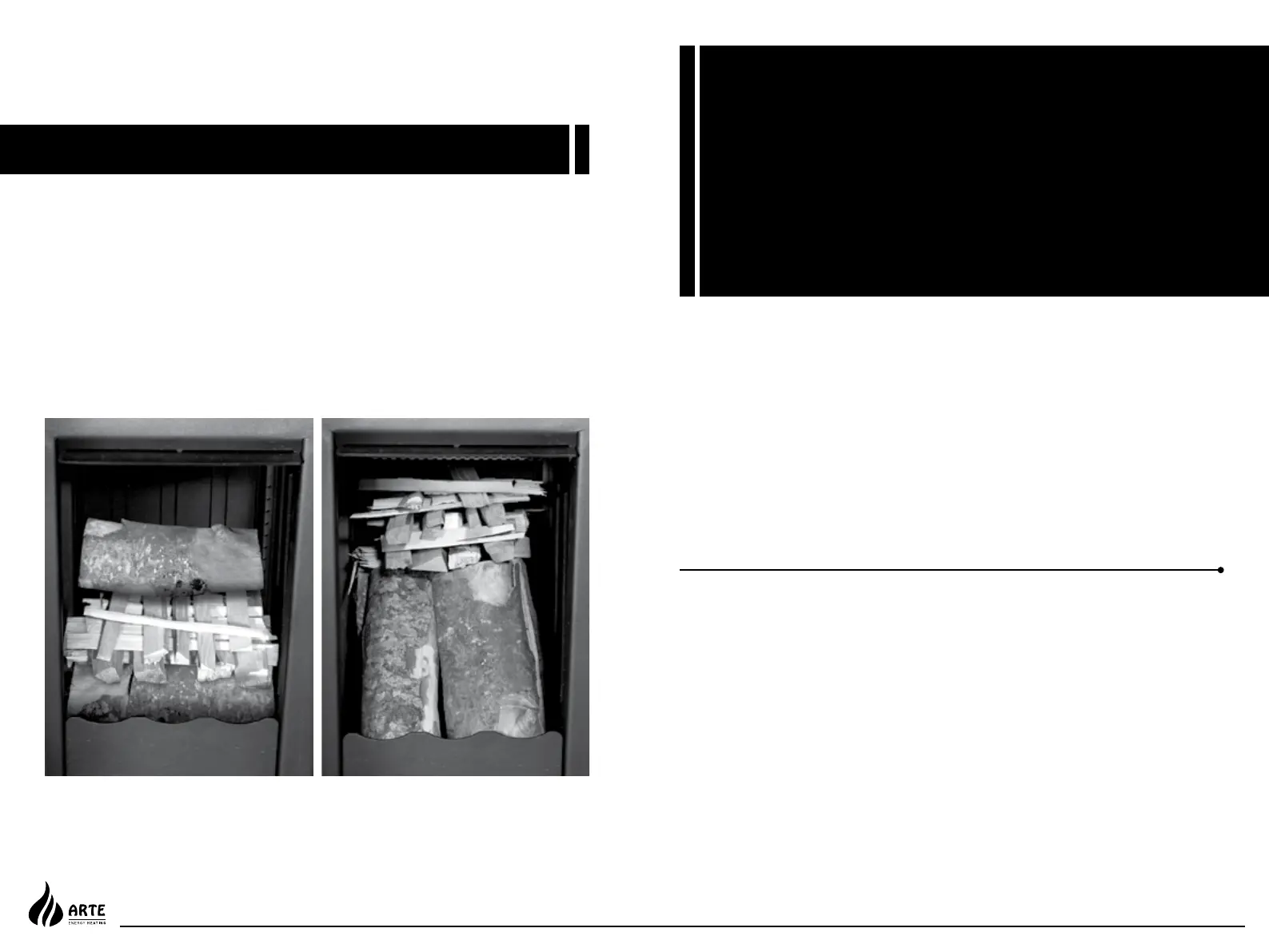
3. Put 2 - 3 fuel tablets or 5 - 8 rolled up sheets of newspaper between these woods
4. Add some kindling wood (1 - 2 kg) in a criss-cross pattern on top (Fig. 5 A&B)
5. Finally, place a medium-sized log on the top of the pile and light the tablets/newspaper
BOX WOOD STOVE
Fig. 5A (Horizontal) Fig. 5B (Vertical)
The fire is best when it is burning well and the smoke from
the chimney is almost invisible.
Avoid smouldering fires as this produces the most pollution.
WARNING: Wood stoves must never be left unattended with
the door open.
If the door is left partly open, gas and flame may be drawn
out of the fireplace stove opening, creating risks from both
fire and smoke. We recommend that you fit a smoke detec-
tor in the room where the stove is installed.
DO NOT OVERFIRE THIS HEATER. Over firing may cause a
house fire, or can result in permanent damage to the stove.
If any part of the stove glows, you are over firing.
The maximum recommended weight of wood fuel per load is 3,4kg/h (approx 3 split logs).
Rules of wood burning
If you want less heat, put fewer logs on the stove and reduce the amount of air. It is still important to main-
tain a good layer of embers.
Less heat - less wood - less air
Greater heat - more wood - more air
Soot deposits will settle on the glass if the stove is run too slowly or if your wood is not well seasoned.
We would strongly recommend that you do not leave your stove alit at night. It harms the environment, and
constitutes very poor use of the wood, as the gases in the wood do not ignite at the low temperature, but
settle as soot (unburned gases) in the chimney and stove instead.
8. SECONDARY COMBUSTION
One of our objectives is to develop wood burners that burn cleaner and more economically than any other
product in relation to the environment.
In traditional heating appliances, wood combustion is never complete. This has as results:
> low efficiency (Partial use of the calorific value of wood resulting in significant wastage)
> pollution (formation of carbon monoxide: CO)
C + O
2
= CO
2
+ CO + heat
Thanks to the Double combustion technology applied to our fireplaces and wood stoves, the following
reaction take place inside the burner:
Primary combustion:
C + O
2
= CO
2
+ CO + heat
Double combustion:
CO + O
2
= CO
2
+ heat


 To Next Page