the intermediate intended use, (5) cover a fairl y wide range of intended use, and within this ran ge are models that are more or
less heavy duty. Talk to your retailer about your needs and these models.
NOT INTENDED For use in extreme forms of jumping/riding such as hardcore mountain, Freeriding, Downhill, North Shore,
Dirt Jumping, Huckin g etc. No large dro p of fs, jump s or l aunches ( wooden structures, dirt embankments) requ iring lo ng
suspension travel or heavy duty components; and no spending time in the air landing hard and hammering through obstacles.
TRADE OFF All-Mountain bikes are more rugged than cross country bikes, for riding more difficult terrain. All-Mountain bikes
are heavier and harder to ride uphill than cross country bikes. All-Mountain bikes are lighter, more nimble and easier to ride uphill
than Freeride bikes. All-Mountain bikes are not as r ugged as Freeride bikes and must not be used for more extreme riding and
terrain.
MAXIMUM WEIGHT LIMIT
RIDER LUGGAGE* TOTAL
lbs / kg lbs / kg lbs / kg
300 / 136 5 / 2.3 305 / 138
* Seat Bag Only
Gravity, Freeride, and Downhill
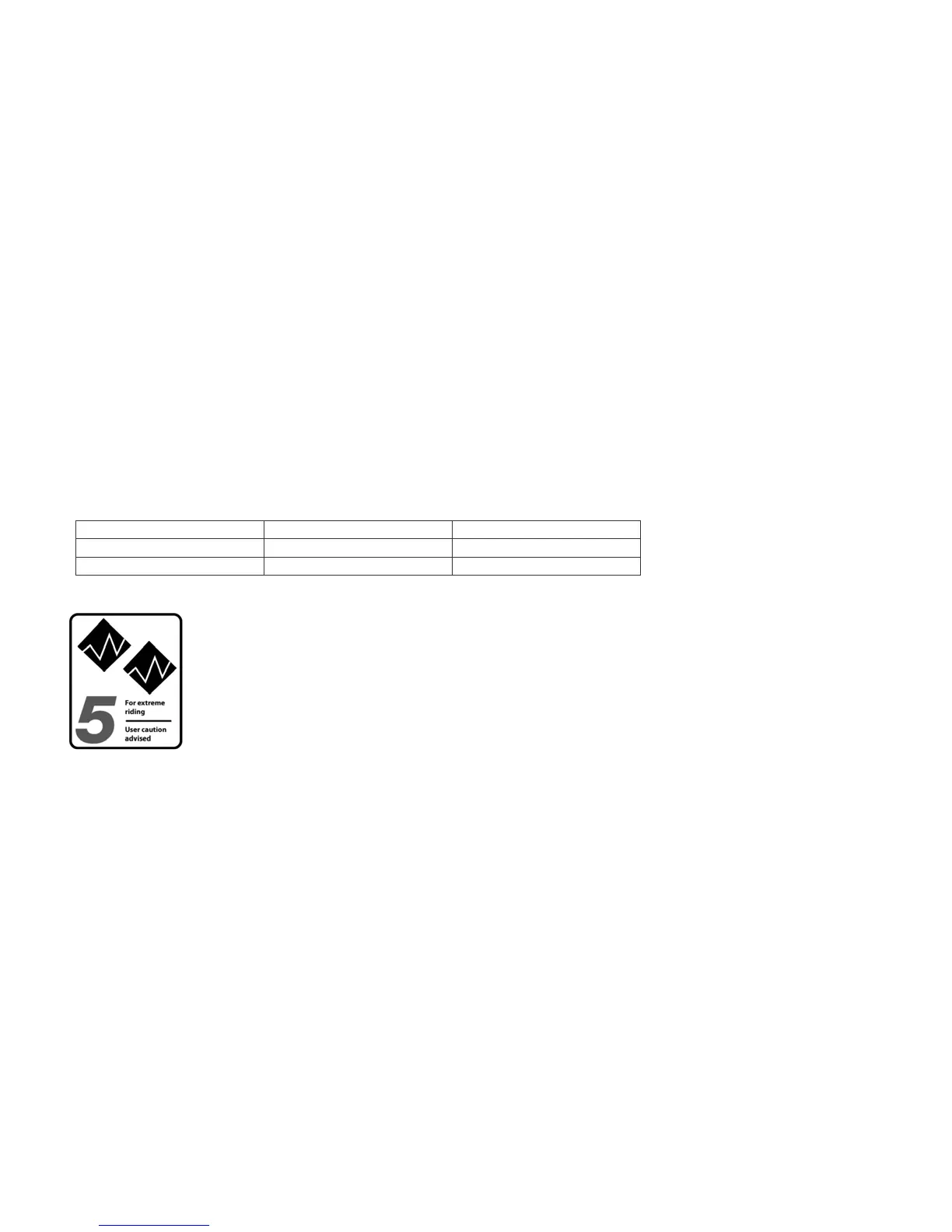
CONDITION 5
Bikes designed for jumpi ng, hucking, high speeds, or ag gressive ri
ding
on rougher surfaces, or la nding on
flat surfaces. However, this type of riding is extremely hazardous and puts unpredictable forces on a bicycle
which may overload the fram e, fork, or p arts. If y ou choose to ride i n Condition 5 terr ain, you should take
appropriate safety precautions such as more frequent bike inspections and replacement of equipment.
You should also wear comprehensive safety equipment such as a full-face helmet, pads, and body armor.
INTENDED For riding that includes the most
difficult terrain that only very skilled riders should attempt.
Gravity, Freeride, and Downhill are terms which describe hardcore moun
tain, north shore, slopestyle. This is
“extreme” riding and the terms describing it are constantly evolving.
Gravity, Freeri de, and Downhill bikes are: ( 1) heavier and have m ore s uspension tr avel than All-Mountain bikes, al lowing
them to be rid den in more dif ficult terrain, o ver larger o bstacles and larger jumps, (2) the lo ngest in s uspension travel an d use
components that fit heav y duty inte nded us e. While al l that is tr ue, there is no gu arantee that extre me riding will not break a
Freeride bike.
The terrain and type of riding that Freeride bikes are designed for is inheren
tly dangerous. Appropriate equipment, such as a
Freeride bike, does n ot change this real ity. In this kind of riding, bad judgment, bad luck , or riding be yond your capabilities can
39



 To Next Page