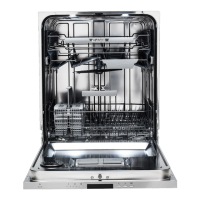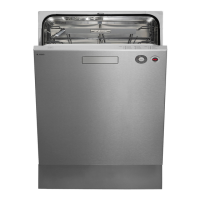
EasyManua.ls Logo

Asko DWCBI231 W/1 Series - User Manual

Asko DWCBI231 W/1 Series
44 pages
Print Icon
To Next Page IconTo Next Page
Loading...
OPERATING INSTRUCTIONS
Dishwasher
EN
DWCBI231.W/1
DWCB1231.S/1

Table of Contents

Questions and Answers

  • A
    Alicia RobertsonAug 18, 2025
    Why my Asko DWCBI231 W/1 Dishwasher does not start?
    • K
      Kenneth ColonAug 18, 2025
      If your Asko dishwasher isn't starting, there are several things you can check: * Ensure you press and hold the Start/Stop button until the display indicates the program has started and prompts you to close the door. * Verify that the door is completely closed. * If you opened the dishwasher mid-cycle to add dishes, close the door and allow the dishwasher to resume the program. * Check your fuse/circuit breaker, the wall socket connection, and the water tap to ensure they are all functioning correctly. * Look for any signs of overflow or leaks. * If you hear a continuous whirring sound from the drainage pump that doesn't stop even when the power is off, turn off the water tap, unplug the dishwasher, and contact customer service.
  • W
    Wendy EnglishAug 20, 2025
    How to improve drying in Asko DWCBI231 W/1?
    • R
      Russell GarciaAug 20, 2025
      If your Asko dishwasher isn't drying dishes adequately, consider the following: * Make sure the dishwasher is fully loaded. * Check and replenish the rinse aid, or increase the dosage if it's set too low. You can find instructions in the Settings chapter. * If using all-in-one detergents with the TAB setting activated, try switching to separate detergents, or deactivate the TAB setting and add salt and rinse aid separately. * After the program finishes, slightly open the door to help with drying.
  • B
    Benjamin StephensonAug 26, 2025
    What to do if water remains in my Asko Dishwasher after cycle?
    • V
      vclayAug 26, 2025
      If your Asko dishwasher has water remaining after a cycle, try these steps: * Clean the coarse and fine filters to remove any blockages. * Ensure the filters are correctly fitted and locked in the stop position. * Check for debris in the drainage pump and clean it if necessary. Refer to the Care and cleaning chapter for instructions. * Verify that the coloured stop on the right in the bottom drain is in place. See the chapter Care and cleaning. * Inspect the drainage hose for kinks or sharp bends. * Disconnect the drainage hose from the sink unit's water trap and check for blockages, ensuring the connection has an inner diameter of at least 14 mm.
  • K
    Kayla WarrenAug 28, 2025
    How to remove grease deposits in Asko Dishwasher?
    • D
      daveryAug 28, 2025
      Grease deposits in your Asko dishwasher often result from prolonged use of low-temperature programs. To resolve this: * Run a self-cleaning program once or twice a month. See Self-cleaning in the chapter Using the dishwasher. * Alternatively, select a high-temperature program like Intensive to dissolve grease on heavily soiled dishes.
  • A
    Anthony HamptonAug 30, 2025
    Why Asko Dishwasher buttons do not react?
    • M
      meyerdanielAug 30, 2025
      If your Asko dishwasher buttons aren't responding, here's what you can do: * Wait a moment and try pressing the buttons again. Sometimes, pressing them too soon after opening the door can cause a delay. * Check if the child lock (button lock) is activated. Refer to the Settings chapter for instructions on deactivating it. * Make sure the door is open, as the buttons only work when the door is open. * Clean the buttons with a dry or slightly damp cloth to remove any dirt.
  • K
    kimberlyherreraSep 2, 2025
    How to get rid of bad odour in Asko Dishwasher?
    • N
      Nathan HughesSep 2, 2025
      A bad odor in your Asko dishwasher can be caused by: * Dirt accumulation around the seals and in corners. Clean these areas with a washing-up brush and a low-foaming cleaner. * Prolonged use of low-temperature programs. Run a high-temperature program or a self-cleaning program once or twice a month. See Self-cleaning in the chapter Using the dishwasher.
  • R
    Robert DavidsonSep 4, 2025
    Why is there detergent residue in my Asko Dishwasher detergent compartment?
    • E
      Elizabeth CarneySep 4, 2025
      If you find detergent residue in the detergent compartment of your Asko dishwasher after washing, it could be due to: * A damp detergent compartment when adding detergent. Ensure the compartment is dry before adding detergent. * The detergent compartment being blocked. Check that dishes aren't preventing the detergent compartment from opening.
  • J
    jessica56Sep 7, 2025
    Why do the dishes have a sticky white/blue film after using my Asko Dishwasher?
    • R
      Robert WebbSep 7, 2025
      If you notice a sticky white or blue film on your dishes after washing in your Asko dishwasher, it's likely due to a rinse aid dosage setting that is too high. Reduce the dosage. See the chapter Settings. If you have very soft water, you may want to dilute the rinse aid 50:50 with water.
  • K
    Katherine ThompsonSep 10, 2025
    What to do if I cannot close the door of my Asko DWCBI231 W/1 Dishwasher?
    • J
      Jack ReevesSep 10, 2025
      If you're experiencing difficulty closing the door of your Asko dishwasher, consider the following: * Ensure that the baskets are correctly positioned horizontally. * Check that the dishes are not blocking the baskets from sliding properly into place.
  • G
    Geoffrey WallaceSep 12, 2025
    Why is my Asko Dishwasher making a rattling sound?
    • J
      Jamie AlexanderSep 12, 2025
      If your Asko dishwasher is making a rattling sound during operation, it's likely that the dishes are not correctly placed or the spray arms are not rotating. Check that the dishes are placed securely and manually spin the spray arms to ensure they can rotate freely.

Summary

Safety instructions

General safety precautions

Key safety precautions for operating and using the dishwasher.

Before washing for the first time

Water hardness and softener settings

How to check water hardness and adjust the softener for optimal results.

Adjusting water hardness and topping up salt

Fine-tuning the water softener setting and filling the salt compartment.

Loading the dishwasher

Using the dishwasher

Adding detergent and program selection

How to add detergent and choose the correct wash program.

Settings

Water hardness and interior light settings

Adjusting water softener and controlling the interior light.

Care and cleaning

Cleaning filters and spray arms

Instructions for cleaning the coarse/fine filters and the spray arms.

Troubleshooting

Display error codes and actions

Explains error codes (F10-F56) and corresponding corrective actions.

Dishwasher not starting or poor cleaning

Troubleshooting steps for a dishwasher that won't start or doesn't clean effectively.

Water retention and drying problems

How to resolve issues with water remaining, grease, or insufficient drying.

Installation

Installation safety and transport protection

Critical safety guidelines and removing transport protection before installation.

Water and electrical connections

Connecting water supply and electrical power according to regulations.

Asko DWCBI231 W/1 Series Specifications

General IconGeneral
Appliance placementBuilt-in
Built-in displayYes
Drying systemCondensation drying
Delayed start timerYes
Delayed start (max)24 h
AquaStop functionYes
Adjustable basket placementYes
Salt indicatorYes
Rinse aid indicatorYes
Power consumption (off)0.5 W
AC input voltage220 - 240 V
Weight45 kg
TypeBuilt-in
Number of place settings13
Washing programsAuto, Eco, Intensive, Quick, Glass
AC input frequency50 Hz
Width596 mm
Depth55 cm
Place settings13
ProgramsAuto, Eco, Intensive, Quick, Glass
Height819 mm
Dimensions (HxWxD)82 x 60 x 55 cm

Related product manuals