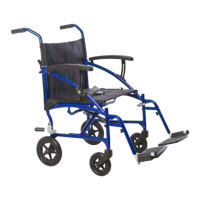
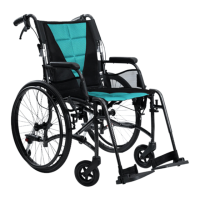
The Aspire Metro Wheelchair is a mobility aid designed for individuals with limited mobility or those unable to walk, suitable for both indoor and outdoor use on dry, hard, and level terrain. It comes in three models: Metro - Attendant Propelled, Metro - Self Propelled, and MetroX - Self Propelled.
Function Description
The wheelchair is primarily intended to bear the weight of an occupant during propulsion and when stationary. It is not designed to be carried with an occupant in the seat.
- Metro - Attendant Propelled: This model is a four-wheeled wheelchair with a cross-folding aluminum frame, making it lightweight and easy to store or transport. It offers great maneuverability and stability. The legrests are height-adjustable for a customized fit. It features a padded mesh seat and backrest, push handles, maneuverable 14-inch rear wheels, and flip-up legrests and armrests. It is propelled by an attendant using the push handles.
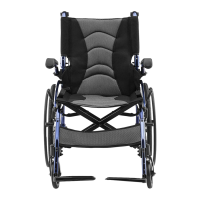
- Metro and MetroX - Self Propelled: These models are also four-wheeled wheelchairs with a cross-folding aluminum frame, designed for easy storage and transport. They provide excellent maneuverability and stability, with height-adjustable legrests for a customized fit. They are equipped with a padded mesh seat and backrest, push handles, maneuverable 20-inch rear wheels, flip-up legrests and armrests. Users can propel these models themselves using the self-propelling wheels, or an attendant can assist using the push handles.
Important Technical Specifications
All Aspire Metro models have a maximum weight capacity of 100 kg, which includes any accessories, shopping, or other personal items carried on the chair.
Aspire Metro Wheelchair Models:
| Model |
Overall Length (mm) |
Overall Width (mm) |
Overall Height (mm) |
Seat Depth (mm) |
Seat Width (mm) |
Seat Height (mm) |
Backrest Height (mm) |
Armrest Height (mm) |
Safe Working Load (SWL) (kg) |
Rear Wheel (inch) |
Folded Dimensions D x W x H (mm) |
| Metro Attendant Propelled |
930 |
600 |
910 |
400 |
450 |
450 |
470 |
220 |
100 |
14" |
680 x 220 x 670 |
| Metro Self Propelled |
930 |
650 |
910 |
400 |
450 |
450 |
470 |
220 |
100 |
20" |
750 x 310 x 670 |
| MetroX Self Propelled |
930 |
650 |
910 |
400 |
450 |
450 |
470 |
220 |
100 |
20" |
750 x 310 x 670 |
Chair Weights:
- Metro Attendant Propelled Models: 12 kg
- Metro Self Propelled Models: 13 kg
Product Finishes:
| Model |
Frame Colour |
Upholstery Colour |
| Metro Attendant Propelled |
Midnight Blue |
Grey/Black |
| Metro Self Propelled |
Midnight Blue |
Grey/Black |
| MetroX Self Propelled |
Metallic Orange |
Grey/Black |
Usage Features
Assembly:
The wheelchair frame comes fitted with rear wheels (14-inch for Attendant Propelled, 20-inch for Self Propelled models). To assemble:
- Place the wheelchair on level ground, push both legrests down until the locking bracket hugs the aluminum tubing and clicks into place.
- Push down on the side rails of the seat until flat.
- Flip up the backrest until it clicks into place. Ensure fingers are clear of the pivoting mechanism.
Preliminary Checks (before initial use):
- Verify the seating surface is locked and flat.
- Check that rear wheels are locked.
- Confirm rear brakes engage and disengage correctly.
General Operation:
- Avoid quick direction changes.
- Use on appropriate surfaces.
- Self-propelled models: Control speed using hand rims on rear wheels.
- Attendant-propelled models: An attendant must assist at all times.
- Self-propelled models: An attendant should assist where necessary.
Lifting the Wheelchair:
To fold, reverse the assembly steps. Use the carry handle on the seating surface to lift the wheelchair safely. Do not lift the wheelchair with an occupant in the seat. Do not lift by legrests or armrests; fold legrests prior to lifting.
Transporting the Wheelchair:
For transport in a motor vehicle, fold the backrest, seat, and legrests to reduce overall size. Aspire Metro Wheelchairs are not crash-tested and should not be used to transport a user in a motor vehicle.
Moving Wheelchair Up a Kerb (with attendant):
- Push the wheelchair up to the kerb feet first.
- The attendant pushes down on the rear foot peg to slightly incline the chair (do not tilt back with push handles).
- Once front wheels are on the ground above the kerb, push rear wheels against the kerb to propel the entire chair over. This must only be done with an attendant.
Moving Wheelchair Down a Kerb (with attendant):
- Reverse the wheelchair up to the kerb feet last.
- Attendant checks for obstructions.
- Attendant slowly lowers rear wheels to the road surface, ensuring not to tip the chair.
- Once rear wheels are on the road, slowly lower front wheels to the road surface. This must only be done with an attendant.
Adjusting Legrest Height:
Use a 5mm Allen key to loosen the bolt and remove the center pin. Adjust the footplate to the preferred height, then align the center pin with the chosen hole and tighten to secure.
Using the Wheelchair Brakes:
Brakes should always be locked when leaving a user unattended.
- Handbrakes (Self-Propelled models):
- Lock: Push the brake lever forward until firmly locked.
- Unlock: Pull the brake lever back until unlocked.
- Do not use handbrakes to stop a moving wheelchair; use push rims.
- Attendant Handbrakes (Attendant-Propelled models):
- Brake: Squeeze the handbrake in an upwards direction.
- Release Brake: Release the handbrake.
- Lock: Squeeze the handbrake upwards, then press down on the switch until it clicks.
- Unlock: Flip the switch upwards.
Maintenance Features
Maintenance Schedule:
- Weekly: Check brakes are functioning properly.
- Periodically: Check for signs of wear on front castors and rear tyres.
- Yearly: Service to be completed by an authorized Aspire service agent.
- Serviceable Components: Wheels & Tyres, Forks, Axles, Armrest receivers, Seat sling, Footrest mounts, Footplates, Armrest Pads.
Care for Your Chair:
- The seat and backrest upholstery can be removed by loosening screws and wiped with a wet sponge and mild detergent. Other components can be cleaned with a damp cloth.
- Check tyre condition at least twice per month.
- Check that rear wheel spokes are not loose. Loose spokes should be adjusted by a qualified technician.
- Keep rear wheel axles clean and free from dirt and hair.
- If push rims become scratched, de-burr or replace them to avoid skin damage (not applicable for Attendant Propelled models).
- Brakes should be checked regularly.
For doubts about functioning or components, contact AIDACARE on 1300 133 120 or your local Aspire distributor. A provided tool kit allows basic adjustments; for repairs and service, contact AIDACARE.
Troubleshooting:
- Steering/Pulling to one side: Check rear wheel axle pins, user weight distribution, and push rim tightness.
- Moving slowly: Ensure rear wheel axle pins are inserted correctly, remove hair/dirt from castors/axles, adjust center of gravity if too much weight on castors, ensure user clothing isn't interfering, and ensure both brakes are disengaged.
- Does not turn smoothly: Ensure front fork bolts are not overtightened, remove hair/dirt from castor axles, and ensure both brakes are disengaged.
- Brakes not working properly: Check distance between tyres and brake foot to ensure sufficient force can be applied.
- Cannot be opened or folded easily: Clean and grease the crossbar under the seat, check for lodged items under the seat or in the crossbar mechanism, and ensure foot plates are folded up.
For assistance with correct adjustment, contact Aidacare Service Department on 1300 133 120.
Warranty:
Aspire Metro Wheelchairs come with a 1-year warranty. Keep the purchase invoice as proof of warranty commencement. Aidacare's 'Warranty against Defects' statement is available on their website. The warranty does not cover excessive/incorrect use, modification, or fair wear and tear. Tyres, tubes, and castor wheels are considered consumable items and carry a 12-month warranty against manufacturer defects only, not wear and tear from reasonable use. The warranty is back-to-base and does not cover freight costs. Aidacare does not guarantee safety or correct functioning if original components are changed or replaced with non-original Aidacare-approved parts.
Compliance:
The wheelchair range is manufactured in ISO-compliant facilities in P.R. China. It complies with Australian Standard AS/NZS 3695.1:2011. Safety stickers are located on the frame. Testing was certified by Novitatech Children's Services in South Australia, an independent NATA accredited laboratory.
Service Maintenance & Customisation:
For warranty, service, or repair work, include all components (leg rests, armrests, seat cushion) and clearly mark the wheelchair with the owner's name and contact details. To organize pickup by Aidacare, call 1300 133 120 (standard pickup and delivery charges apply). Aidacare stocks replacement parts; all replacements should be completed by Aidacare or an authorized service technician. Customization, modifications, or alterations may cause the product to no longer satisfy Australian Standards. For such work, contact AIDACARE on 1300 133 120 to consult with qualified Rehab Engineers.


 To Next Page
 General