782 Electric Latch
Retraction Controller
Installation Instructions
6
80-9477-0782-001 01/24
1-855-557-5078 • www.assaabloy.com
Copyright © 2014, 2023, 2024, ASSA ABLOY Access and Egress Hardware Group, Inc. All rights reserved. Reproduction in whole
or in part without the express written permission of ASSA ABLOY Access and Egress Hardware Group, Inc. is prohibited.
TROUBLESHOOTING
Before proceeding through the troubleshooting section, ensure that all device latches are not binding against their corresponding
strikes. A bound latch can cause sluggish electric retraction or prevent retraction entirely.
Symptom: Neither DEVICE ONE or DEVICE TWO pulls back after the control switch is activated.
Possible Causes:
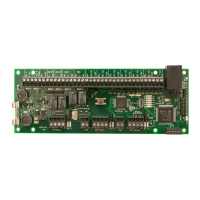
1. A short circuit in the output circuits. If either device output is shorted, an electronic circuit breaker will trip and be indicated by
a red LED indicator labeled “Fault” on the circuit board. Locating and removing the short and recycling the input should clear the
fault. The most likely cause will be a short circuit in the solenoid wiring or a defective solenoid assembly.
2. An open connection in the eld wiring between the power supply and control switch used for activating latch retraction.
3. A defective control switch.
4. An open connection in the eld wiring between the power supply and exit device.
5. There may be no pulse. To check for pulses, prop the door open and connect a voltmeter across the red and black leads coming
from the exit device (red lead is positive). Next, connect a jumper wire across terminals 16 and 15 of TB3 to keep DEVICE ONE in
a continuous pulled back state. If the voltmeter measures approximately 24VDC at the moment the jumper wire was installed,
but the latch did not budge, then no initial pulse was generated. Check for a series of timed pulses that will occur approximately
every six seconds. (Make sure the control rod is not positioned over the reective sensor on the pulse module when making
the next check.) Wait for about 20 seconds to see if the latch pulls back. If it still does not respond, then it indicates the pulse
module is inoperative and the entire solenoid/module assembly must be replaced.
Symptom: When 120 volts is applied to TB1, the exit devices immediately pull back, even though the control switch had not been
activated.
Possible Causes:
1. Field wiring between the power supply and control switch are shorted together against the conduit or switch mounting box.
2. A maintain switch is being used and is in the closed position.
3. A defective control switch.
Symptom: A noticeable buzzing sound at equal intervals is coming from inside the exit Device while in pulled back state.
Possible Causes:
1. The latch is binding against its corresponding strike and preventing it from pulling back fully, due to misalignment between the
latch and strike opening.
2. A defective pulse module.


 To Previous Page
 Loading...