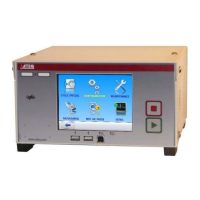
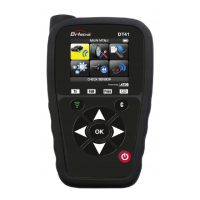
The ATEQ ADSE 550 is a robust, portable pressure generator/controller designed for testing altimeters, airspeeds, variometers, engine pressure rating indicators, manifold pressure indicators, and other vacuum or low-pressure equipment. It is housed in a very robust case, making it suitable for use directly on the aircraft, on the tarmac, or in the hangar for "in situ" testing of mounted equipment.
Function Description
The ADSE 550 is a pitot-static system test bench that simulates pressure and vacuum conditions to verify the accuracy and functionality of an aircraft's air data instruments. It provides both total pressure (Pt) and static pressure (Ps) outputs, allowing for comprehensive testing of various flight instruments.
Key functions include:
- Anemometer/Airspeed Indicator Testing: Displays airspeed in knots or mph by measuring the differential pressure between Pt and Ps.
- Altimeter/Variometer Testing: Displays digital altitude in feet and climb rate in ft/min by measuring the vacuum of the static side.
- Pressure Control: Allows for precise control of pressure and vacuum levels.
- Balance Control: Used to control the pressure balance between the pitot and static systems.
- Vent Function: Releases pressure towards the atmosphere.
The device features two digital measurement instruments: an Anemometer (ASI-3 Airspeed Indicator) and an Altimeter/Variometer (ALT-3 Precision Aviation Altimeter and Vertical Speed Indicator). These instruments provide real-time readings during testing.
Important Technical Specifications
- Power Supply: 4 batteries / Accumulators LR6 (AA).
- Battery Indicator:
- Red: batteries under 20% of charge capacity.
- Orange: batteries between 20% and 80% of charge capacity.
- Green: batteries over 80% of charge capacity.
- Estimated Usage Time with Charged Battery: 6 hours.
- Weight: Approximately 12 kg.
- Dimensions (L/H/P): 520 mm / 220 mm / 440 mm.
- Display: 2 LCD graphic displays, 12864 (ALT-3) and 11464 (ASI-3), with backlight (Green/Yellow) and adjustable contrast.
- Pressure Range: Pressure source manometer (PRESSURE TANK #11) capable of producing a pressure of 100 kPa.
- Vacuum Range: Vacuum source manometer (VACUUM TANK #12) capable of producing a vacuum of -60 kPa.
- Pneumatic Connectors: Quick coupling pneumatic connectors (self-sealing and keyed) for both Pt (blue) and Ps (red) connections.
- Pt (Blue): Connects to the Pitot system of the aircraft or other low-pressure applications.
- Ps (Red): Connects to the Static system of the aircraft or other vacuum applications.
Usage Features
The ADSE 550 is designed for ease of use with clearly labeled controls and digital displays.
User Interface Components:
- Anemometer: Digital Speed Indicator.
- Altimeter/Variometer: Digital altitude and climb rate indicator.
- Pt: Quick coupling connector (Staubli) for Pitot system.
- Ps: Quick coupling connector (Staubli) for Static system.
- Battery Drawer: Houses 4xLR6 (AA) batteries.
- ON/OFF: Push button to turn on or off the power for the digital indicators.
- Charge State LED: Indicates battery charge status (Red/Orange/Green).
- Micrometric Control Taps:
- a. Vent: Releases pressure towards the atmosphere.
- b. Pressure Control: Controls the source of pressure.
- c. Balance Control: Used to control the pressure balance between the pitot and the static.
- d. Vacuum Control: Controls the vacuum source.
- ON/OFF Vacuum: To fill/empty the vacuum tank.
- ON/OFF Pressure: To fill/empty the pressure tank.
- Pressure Tank: Pressure gauge (0 to 100 kPa) indicating pressure in the tank.
- Vacuum Tank: Vacuum gauge (-100 to 0 kPa) indicating vacuum in the tank.
- Pressure/Vacuum Pump: Hand pump to be operated to fill tanks when they are ON (Pressure and/or Vacuum).
Operation Overview:
The instrument is connected to two tanks (#11 and #12) which supply the equipment with pressure and vacuum. The hand pump (#13) is used to fill these tanks. Valves (#8a, #8b, #8c, #8d) are provided for control of pneumatic functions and connections.
Preliminary Tests:
Before performing tests, users must familiarize themselves with the ADSE 550. The bench is fully tested before shipment, but users should perform preliminary tests to ensure the integrity of sensitive tests.
- Internal Pump Test: Fill the pressure/vacuum tanks by switching ON the respective switches (#10 and #9) and operating the hand pump (#13).
- Pitot Preliminary Test: Switch on the bench (#6), close all valves (#8a, #8b, #8c, #8d), fill the pressure and vacuum tank. Open the PRESSURE CONTROL valve (#8b) until the airspeed on the airspeed meter (#1) reaches 75% of the full scale (e.g., 160 Kts / 185 mph). Close the PRESSURE CONTROL valve and monitor the airspeed for one minute. The airspeed should not decrease more than 3 Kts. Record the value of the lost speed (leak). Open the VENT valve (#8a) to bring back the airspeed to the ambient pressure. Close the VENT valve (#8a).
- Static Preliminary Test: Open the BALANCE CONTROL valve (#8c) completely. Open the VACUUM CONTROL valve (#8d) to reach 20,000 ft with the altimeter (#2). Close the VACUUM CONTROL valve (#8d). Monitor the altitude for one minute. The altitude should not decrease more than 100 ft. Record the value of the lost altitude (leak). Open the VENT valve (#8a) to bring back the altitude to the atmospheric pressure. Close the valve.
Pitot System Test (1.4):
- Connection to the Pitot system: Connect the Pt port of the test bench (#3) to the Pitot system of the aircraft.
- Pitot Leak Test: Involves switching on the bench, opening the VENT valve, closing the PRESSURE CONTROL, BALANCE CONTROL, and VACUUM CONTROL valves, using the hand pump to fill the pressure tank, and then closing the VENT valve. The airspeed indicator (#1) is checked for stability.
Static System Test (1.5):
- Connection to the Static system: Connect the Ps port of the test bench (#4) to the Static system of the aircraft.
- Static Leak Test: Similar to the Pitot leak test, but focuses on the altimeter (#2) and vacuum control. The altimeter is set to 1,000ft, and the vacuum is monitored for stability.
- Negative Altitude Test: Involves setting the altimeter to a negative altitude (e.g., -1,000 ft) and checking for stability.
Combined Pitot (Speed) / Static (Altitude) Test (1.6):
This test involves performing the tests referenced in sections 1.3 Preliminary tests, 1.4 Pitot System Test, 1.5 Static System Test, and 1.5.2 Static Leak Test, correcting the leaks found before proceeding.
- Test above the local elevation: Involves adjusting valves and monitoring desired instrument readings.
- Test below the local elevation: Similar to the above, but for lower altitude conditions.
- Returning the Pitot / Static Test Set to Ambient: Gently opening the BALANCE CONTROL valve (#8c) until the airspeed (#1) returns to its rest state (Zero), and then opening the valve completely.
Maintenance Features
ATEQ emphasizes the importance of regular maintenance and offers comprehensive after-sales service.
Maintenance Plan (2. SERVICE PLAN):
The manual includes a detailed service plan table outlining various checks and their recommended frequencies (e.g., every year, every two years, every four years). These include:
- Calibration
- Ventilation filter changes
- Internal filter changes
- Power supply verification
- Voltage check
- Internal pneumatic check
- Rubber part exchange
- Electronic part exchange
- Electrovalves test
- Electronic board test
- Pneumatic test
- Pneumatic plug test
- Test of electronic connectors
- Electronic check
- Modulating valve adjustment
- Tactile screen replacement
- Electronic screen renovation
- Pneumatic connector replacement
- Pneumatic part exchange
- Test of pump
- Pump group test
- Test of fans/ventilators
- Fan exchange
- Test of batteries
- Battery test
- Replacement of batteries
- Battery pack exchange
- Renovation of electrovalves 3Ps 3Pt
- Electrovalves renovation 3Ps 3Pt
Valves Leak Test (1.1):
- Pressure Control Valve Test: Close all valves except the VENT valve (#8a), pressurize the pressure and vacuum tanks, monitor the anemometer (#1) for one minute, and check for airspeed increase. If the airspeed increases more than 5 knots, a leak exists in the PRESSURE CONTROL valve (#8b). Correct the leak before continuing.
- Vent and Balance Control Valve Test: Close all valves, pressurize tanks, apply enough pressure to achieve maximum full scale airspeed on the anemometer (#1) by gently opening the PRESSURE CONTROL valve (#8b). Close the valve. Monitor the airspeed for one minute. If there is an airspeed decrease more than 2Kts (knots), a leak exists either in the VENT valve (#8a) or in the BALANCE CONTROL valve (#8c). Correct the leak before continuing.
- Vacuum Control Valve Test: Close all valves except the BALANCE CONTROL valve (#8c), pressurize tanks, open the VACUUM CONTROL valve (#8d) to increase the altitude to 20,000 ft. Close the VACUUM CONTROL valve (#8d). Monitor altitude for one minute. If the altitude increases more than 100ft, a leak exists in the VACUUM CONTROL valve (#8d). Correct the leak before continuing.
Storage (3. STORAGE):
For good storage of the ADSE 550, follow these instructions:
- Remove the batteries from the battery drawer and the unit when storing the bench.
- Close and lock the top of the suitcase.
- Store in a cool, dry place.
- If the bench is exposed to moisture or high humidity environment, dry as soon as possible and store temporarily in a dehumidified area.
- To avoid damage to instruments by extreme atmospheric changes, it is recommended that the VENT (#8a) and BALANCE CONTROL (#8c) valves be opened. The PRESSURE CONTROL (#8b) and VACUUM CONTROL (#8d) valves must be closed.
After Sales Service:
ATEQ provides comprehensive after-sales service, including:
- A team of qualified technicians.
- Permanent telephone assistance.
- Agencies close to you for faster reaction.
- A stock of spare parts available immediately.
- A car fleet for rapid intervention.
- A commitment to quality.
Overhaul:
ATEQ carries out the overhaul of instruments at interesting prices, checking, cleaning, replacing used parts, and performing preventive maintenance.
Maintenance Kits:
ATEQ offers two kits for preventive maintenance of pneumatic circuits.
Calibration:
Calibration can be carried out on-site or in ATEQ offices, with a certificate following a calibration.
Training Courses:
ATEQ offers two types of training in order to optimize the usage and knowledge of instruments: method/control training and maintenance/upkeep training.
Targeted Technical Documentation:
A number of technical documents are available, including problem sheets, descriptions and offerings of solutions, general maintenance manuals.
Quality Guarantee:
Instruments are guaranteed for parts and labor in ATEQ offices: 2 years for leak detection equipment, 1 year for electrical tests to norms instruments, 1 year for the accessories.
ATEQ strongly recommends sending the instrument back to ATEQ once a year for re-calibration.

 Need help?
 General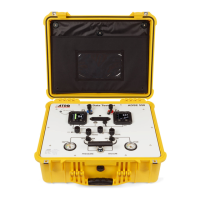

 To Next Page