EasyManua.ls Logo

Atlas Copco PICO 14 - User Manual

Atlas Copco PICO 14
28 pages
Print Icon
To Next Page IconTo Next Page
Loading...
Motor Drills
and Breakers
Question and Answer IconNeed help?

Do you have a question about the Atlas Copco PICO 14 and is the answer not in the manual?

Summary

Machine Types

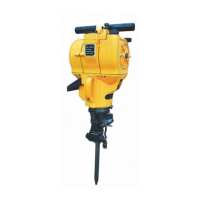
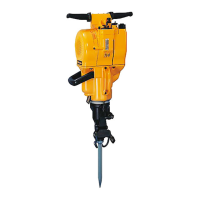
Combined Drill;Breaker (Pionjär & PICO 14)

Describes combined drill/breaker models, powered by two-stroke engine with integrated impact mechanism.

Heavy Duty Breaker (Cobra mk1)

Details the Cobra mk1 heavy-duty breaker, powered by a two-stroke engine with separate impact mechanism.

Correct Fuel Mixture

Fuel Mixture Ratios

Specifies fuel/oil ratios for different machine models, e.g., Pionjär, PICO, Cobra.

Consequences of Incorrect Mixture

Explains issues like insufficient lubrication or clogged ports from wrong fuel mixtures.

Daily Checks and Maintenance

Spark Plug Checks

Instructions for regularly checking the spark plug condition and electrode gap.

Air Filter Cleaning

Daily cleaning of the air filter and housing to prevent engine wear and carbonization.

Impact Mechanism Oil Level

Daily checks and topping up of the impact mechanism oil level on the Cobra mk1.

Safety First

Personal Protective Equipment (PPE)

Essential protective clothing including glasses, gloves, steel-toed shoes, ear protectors, and hard hat.

Operational Body Support

Using thigh as support for ease of operation and control when running the machine.

Vibration Reduction Systems

Features like shock-absorbent bushings and H.A.P.S. to reduce harmful vibrations.

General Safety Precautions

Avoiding flammable materials, poor ventilation, and ensuring fuel is empty for storage.

Tools for Applications

Breaking and Cutting Tools

Moilpoint, chisels, wedges, asphalt cutters, digging blades, and spades for various tasks.

Drilling and Driving Tools

Drill steels, driver rods, tampers, tie-tampers, and drivers for specific applications.

Cutting and Compacting Asphalt

Asphalt Scoring and Breaking

Process of scoring asphalt with an angle and breaking it with a straight, inward edge.

Asphalt Compaction Technique

Methods for compacting the base and new asphalt, starting from the edges for a lasting seal.

Concrete Breaking

Breaking Concrete Structures

Tips for breaking concrete, starting from edges and using appropriate tools for speed.

Creating Openings in Walls

Method for creating wall openings by drilling holes and breaking out material.

Tie Tamping

Ballast Compaction

Ensures perfect compaction of bearing ballast using the percussive effect without pulverization.

Tamping Operation

Guidance on starting upright and working under the tie for effective tamping.

Drilling Operations

Drill Steel Selection

Guidance on choosing integral drill steels, pilot drills, and button bits for different materials.

Drilling Techniques

Procedures for collaring holes, managing engine speed, feed pressure, and centering the drill.

Drilling Troubleshooting

Solutions for sluggish rotation, stuck tools, and using water for flushing.

Drill Bit Maintenance

Keeping tools sharp, checking shanks, flushing channels, and adjusting cutting edge angles.

Rock Splitting

Rock Splitting Procedure

Process of drilling holes and using feathers/wedges to split large rocks safely and accurately.

Anchoring Systems

Soil Anchoring

Using special earth anchors driven with rods for soil loads.

Hard Material Anchoring

Utilizing expander bolts for anchoring in rock or concrete, and for lifting.

Post Driving

Signpost Installation

Driving a pipe and placing the sign within it for secure erection.

Fencing

Fence Post Installation

Using a post hole tool and driver pad to install fence posts into the ground.

Digging Applications

Digging in Difficult Conditions

Utilizing breakers for digging in extreme conditions and round spades for hard/frozen ground.

Machine Accessories

Fuel Storage and Transport

Practical 5-liter fuel can for transport case storage.

Pionjär Operational Accessories

Starter cord guides for protection and a back-pack for carrying the machine and tools.

Ground Investigation Equipment

Special equipment sets designed for surveying and soil sampling.

Pionjär Handling Accessories

Extra lower handle for improved balance and control during operation.

Further Information

Manuals and Resources

References to maintenance, service, and spare parts manuals and the Atlas Copco website.

Overview

The Atlas Copco Motor Drills and Breakers are versatile, motorized tools designed for a wide range of demanding tasks, including splitting rocks, breaking concrete, cutting asphalt, tamping ballast, and digging. The manual covers two primary types of machines: combined drill/breakers and heavy-duty breakers, each with specific features and applications.

Function Description

The Atlas Copco motorized drills and breakers are powered by two-stroke engines.

  • Combined Drill/Breakers (Pionjär and PICO 14): These machines feature an integrated impact mechanism, rotation, and air flushing mechanism, making them suitable for both drilling and breaking/driving applications. A function selector allows the operator to easily switch between these modes, offering flexibility for various jobs.
  • Heavy-Duty Breakers (Cobra mk1): The Cobra mk1 is equipped with a separate impact mechanism that is activated by pressing the machine down. This design allows the engine to run without engaging the impact mechanism, which can be beneficial for certain tasks. It is as powerful as a 27 kg (60 lbs) pneumatic breaker, making it ideal for very demanding breaking and driving jobs.

Important Technical Specifications

While specific power output is not detailed, the manual emphasizes the robust nature of these two-stroke engines and their capability to handle heavy-duty tasks.

  • Fuel Mixture: Correct fuel mixture is crucial for optimal performance and longevity.
    • Pionjär 120/130: 8% oil (1:12 ratio)
    • Pionjär 140/150: 5% oil (1:20 ratio)
    • PICO 14: 4% oil (1:25 ratio)
    • Cobra mk1: 2% oil (1:50 ratio)
    • Cobra 149/248: 5% oil (1:20 ratio) Using too little oil leads to insufficient lubrication and increased wear, while too much oil can clog exhaust ports and channels. Fresh fuel and oil are recommended.
  • Electrode Gaps: Proper spark plug electrode gaps are essential for performance.
    • Pionjär: 1.5/0.060"
    • PICO 14: 0.5/0.020"
    • Cobra mk1: 0.5/0.020"
    • Cobra 149/248: 1.5/0.060"
  • Tool Compatibility: The machines are compatible with a wide array of specialized tools, including moilpoints, concrete chisels, wide chisels, wedges, digging blades, asphalt cutters (standard and reinforced), spades, drill steels (integral, pilot, button bits), driver rods, wedge hammers, wedge and feathers, spike drivers, tie-tampers, tampers, shafts, sheet pile drivers, pipe drivers, driver pads, and posthole tools.
  • Drill Bit Angles: The standard cutting edge angle for drilling tools is 110°. For loose rock, it can be reground to 130° for better results.

Usage Features

The manual provides practical guidance for various applications:

  • Asphalt Cutting and Compacting:
    • Use an asphalt chisel and tamper.
    • Start by scoring the asphalt at an angle with the breaker at idling speed.
    • Break the asphalt, keeping the edge straight and angled slightly inwards.
    • Compact the base thoroughly with the tamper.
    • When packing new asphalt, start at the edges for a lasting seal, then compact the rest and level off.
  • Concrete Breaking:
    • Always start from the edge if possible.
    • Use the widest tool the material allows for faster work.
    • For openings in concrete walls, drill holes around the outline and additional holes in the middle before breaking out the material.
  • Tie Tamping:
    • The percussive effect ensures perfect compaction of bearing ballast without pulverization.
    • Start upright and work your way under the tie.
  • Drilling:
    • Atlas Copco offers a wide range of drills for different materials. Choosing the correct drill saves time and energy.
    • Integral drill steels are best for hard materials.
    • Pilot drills are useful for accurate starts and drilling large-diameter shallow holes.
    • Button bits are suitable for large holes in concrete or soft rock.
    • When collaring a hole, grip the side handle for better control.
    • Allow the engine to idle and press the machine against the spot. Increase engine speed once the drill bit has collared.
    • Regulate feed pressure and rotation according to the material; never let the drill jump freely.
    • Keep the drill centered for free rotation.
    • If rotation becomes sluggish or the drill sticks, lift the machine a few times to improve flushing.
    • If the tool gets stuck, stop the machine and use a drill wrench or spanner to free it.
    • In damp rock, drill dust can cause sticking; pouring water into the hole dissolves sludge and frees the drill.
    • For deep holes, use integral drill steels in series, starting with a short, wide drill and successively using smaller sizes to avoid jamming and allow easy extraction.
  • Rock Splitting:
    • Drill holes in a straight line across the rock, 30-40 cm (12"-16") apart and at least 40 cm (16”) deep.
    • Insert feathers and wedges along the line. Drive in each wedge a little at a time until the rock splits. Grease on wedges makes the job easier.
  • Anchoring:
    • For soil, special earth anchors are driven down with driving rods.
    • For hard materials (rock/concrete), an expander bolt can be used, also suitable for lifting concrete slabs.
  • Post Driving:
    • Various hammers are available for different profiles and tubes.
    • For signposts, drive a short pipe first, then place and secure the sign inside.
    • For fencing, start the hole with a posthole tool, then use a driver pad to drive the fence post.
  • Digging:
    • Motorized breakers can dig holes in extreme conditions.
    • The round spade is ideal for hard or frozen ground.

Maintenance Features

The manual emphasizes simple daily checks and proper maintenance for trouble-free operation.

  • Daily Checks:
    • Spark Plug: Check regularly for dirt or burnt-out electrodes, which impair performance. Verify the electrode gap.
    • Air Filter: Clean the air filter and housing daily. A clogged filter causes excessive engine wear and carbonization. Never operate without the air filter to prevent dust and stone particles from entering the cylinder.
    • Impact Mechanism Oil Level (Cobra mk1): Check daily. Place the machine upright and top up as necessary.
  • Tool Maintenance: Keep tools sharp for maximum effect. Check shank lengths with a shank template.
  • Drilling Tool Flushing: Blow through the air-flushing channel on drilling tools to ensure it's not blocked.
  • Safety: Always wear protective clothing: glasses, gloves, steel-toecap shoes/boots, ear protectors, and a hard hat. Use your thigh as support for ease of operation.
  • Vibration Reduction:
    • Pionjär: Shock-absorbent rubber bushings reduce vibration levels.
    • Cobra mk1: Incorporates H.A.P.S (Hand and Arm Protection System) with a unique leaf spring construction to virtually eliminate vibrations. Both designs shield the operator from harmful vibrations and shock recoil.
  • Fuel Handling: Avoid running the engine near flammable materials or in poorly ventilated areas. Always empty the fuel tank before transportation and storage.

Accessories

A range of accessories enhances the machine's versatility:

  • Fuel Can: A practical 5-liter fuel can fits neatly in the transport case.
  • Starter Cord Guides (Pionjär): Protect the starter cord and machine casings when starting on driving rods, etc.
  • Back-pack (Pionjär): A practical backpack that carries one machine and two tools.
  • Ground Investigation Sets: Special equipment for surveying and soil sampling.
  • Extra Lower Handle (Pionjär): Provides better balance and control when using the machine on long driving rods, drill steels, stake drivers, etc.

For detailed information on maintenance, servicing, and repair, users are directed to the Instruction Manual, Service Manual, and Spare Parts List, available from Atlas Copco distributors or their website.

Atlas Copco PICO 14 Specifications

General IconGeneral
BrandAtlas Copco
ModelPICO 14
CategoryDrill
LanguageEnglish

Related product manuals