Need help?
Do you have a question about the Audient ASP800 and is the answer not in the manual?
Key safety guidelines for device operation and user protection.
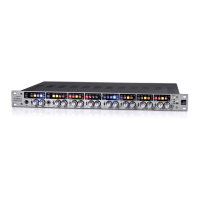
Details on Class-A mic preamps and combi-XLR/TRS line input functionality.
Explanation of the two discrete JFET DI inputs for instruments like guitars.
Covers phantom power, -15dB PAD, and polarity reverse functions for signal control.
Details on the HMX harmonic saturation stage and its tone shaping.
Explains the IRON transformer-based drive and its sonic characteristics.
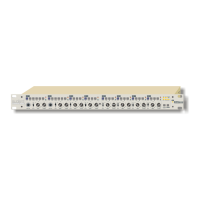
Describes the 8-channel ground-sensing analogue outputs via DB25 connector.
Details the ADAT optical outputs supporting SMUX for higher sample rates.
Configuring the ASP800 to act as the master clock source for digital systems.
Synchronizing the ASP800 to an external master clock source.
Illustrates various clocking setups with external devices like UA Apollo and Antelope Orion.
Addresses common issues like no signal or clocking problems with solutions.
Provides answers to common user queries and support information.
Outlines the procedure for unit repair, including obtaining an RMA number.
Details the manufacturer's warranty terms, coverage, and limitations.
 General
| Microphone Preamps | 8 |
|---|---|
| Sample Rates | 44.1kHz to 96kHz |
| Input Impedance (Mic) | 2.8kΩ |
| Phantom Power | 48V |
| HPF | 100Hz |
| Bit Depth | 24-bit |
| Type | 8-channel microphone preamplifier |
| Instrument Input | 2 x Discrete JFET Instrument Input |
| Word Clock I/O | Yes |
| Channel Inserts | No |
| Gain Range | 60dB |
| EIN | -128dBu |
| THD+N @ 0dBu | < 0.0025% |
| THD+N | 0.0007% |
| Frequency Response | 10Hz - 40kHz (+0.1/-0.5dB) |
| Input Impedance (Line) | 10kΩ |
| Power | External PSU (included) |
| Inputs | 8 x XLR/TRS Combi Inputs |
| Outputs | ADAT Optical (S/MUX) |

 To Next Page