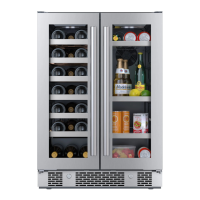
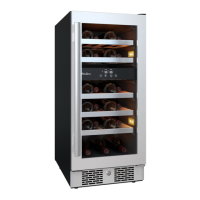
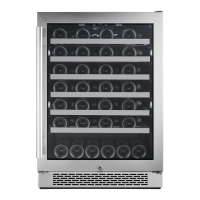
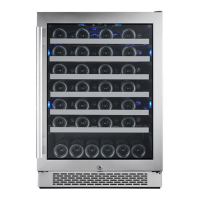
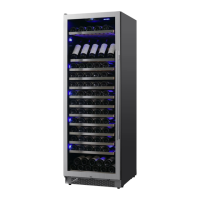
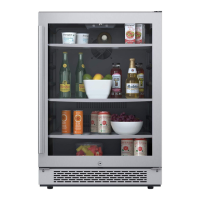
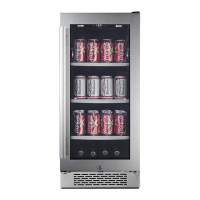
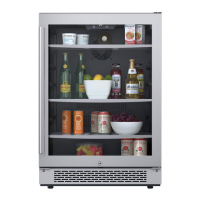
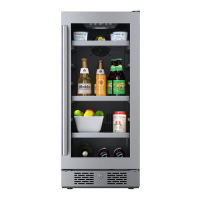
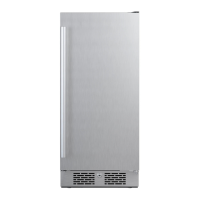
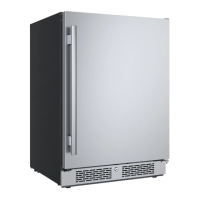
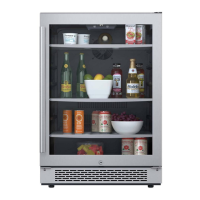
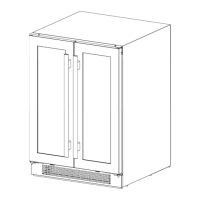
The Avallon Built-In Wine and Beverage Refrigerator (Model AWBC241GGFDBLSS) is a dual-zone appliance designed for the optimal storage of wine and beverages in a domestic indoor setting. It offers both freestanding and built-in installation options, providing flexibility for various kitchen or entertainment area designs. The unit features a seamless stainless steel door, a black cabinet, and a black stainless steel door, contributing to a sleek and modern aesthetic.
Function Description:
This refrigerator is engineered to maintain two independently controlled temperature zones, catering to the specific needs of wine and various beverages. The right zone is dedicated to beverages, offering a temperature range of 34°F to 65°F, while the left zone is for wine, with a temperature range of 40°F to 65°F. This dual-zone capability ensures that both wines and other drinks are stored at their ideal temperatures for enjoyment. The cooling system is air-cooled and equipped with an internal fan to maintain a consistent internal temperature throughout the unit. A high-efficiency compressor contributes to its cooling performance. The appliance utilizes R600a refrigerant.
Usage Features:
The refrigerator is operated via a user-friendly control panel located on each independently controlled temperature zone. Each panel includes a Power Button, Increase Temperature button, Decrease Temperature button, and an Interior Light button.
- Power Control: The unit can be powered on or off by pressing and holding the Power Button for three seconds. A "Run" indicator light illuminates when the unit is active.
- Temperature Adjustment: Temperatures for each zone can be increased or decreased in one-degree increments using the respective buttons. The highest adjustable temperature in both zones is 65°F. The lowest temperature for the right (beverage) zone is 34°F, and for the left (wine) zone, it is 40°F. The temperature display can be switched between Fahrenheit (°F) and Celsius (°C) by simultaneously pressing and holding the increase and decrease temperature buttons.
- Internal Lighting: The refrigerator is equipped with top and side internal lights that can be set to either blue or white. There are four lighting modes: Constant Blue, Constant White, Automatic Blue, and Automatic White. Pressing the Interior Light button cycles through these settings. In "Constant Mode," the lights remain illuminated whether the door is open or closed. In "Automatic Mode," the lights illuminate when the door is opened and fade off when it is closed, triggered by a sensor on the front vent. The lights can also be completely turned off or on by pressing and holding the Interior Light button for three seconds.
- Shelving: The unit includes roll-out shelves for easy access and organization of bottles and cans. The installation and removal of these shelves are straightforward, involving specific steps to ensure proper fit and smooth operation. For the left zone, shelves slide into tracks affixed to the inner cabinet walls. For the right zone, shelves have metal guide posts that rest on shelf tracks, requiring a slight tilt for installation and removal.
- Door Handle: The door handle is installed by inserting Phillips head screws through the door from the gasket side and then aligning and tightening the handle. Care must be taken not to over-tighten the screws to prevent damage.
- Leveling: The refrigerator is equipped with leveling legs that can be adjusted to ensure the unit stands firmly and level on any surface. This is crucial for proper operation and can be achieved by rotating the plastic sheaths around the feet.
- Alarms:
- Temperature Alarm: If the interior temperature exceeds 73°F (23°C), "HI" will be displayed on the control panel, and an alarm will sound continuously after one hour. If the temperature drops below 25°F (-4°C), "LO" will be displayed, and the alarm will sound after fifteen minutes.
- Door Ajar Alarm: A door ajar alarm will sound if either door remains open for more than three minutes. This feature helps prevent poor cooling performance and potential shortening of the refrigerator's lifespan.
- Carbon Filter: A built-in carbon filter acts as a natural barrier against harmful odors, protecting the contents of the refrigerator. This filter should be replaced every 3-6 months, or every three months if the unit is located in a kitchen.
Maintenance Features:
Regular cleaning and maintenance are essential for the refrigerator's efficiency, performance, and longevity.
- Interior Cleaning: To clean the interior, the unit should be disconnected from power, the doors opened, and contents and shelves removed. After defrosting, the interior can be wiped down with a clean cloth. Shelves and contents are then reinserted, and power reconnected.
- Exterior Cleaning: The door and cabinet can be cleaned with a mild detergent and lukewarm water solution using a soft sponge. Abrasive or solvent-based cleaners should be avoided. For stainless steel surfaces, a cloth dampened with a mild detergent and warm water solution is recommended to prevent discoloration from chlorine gas and moisture.
- Defrosting: The refrigerator features an automatic defrost system under most temperature and ambient conditions. However, in colder or more humid environments, frost may build up. If frost prevents the door from closing, the unit may need to be powered off to allow the frost to melt, and then dried with a soft absorbent towel. Sharp objects should never be used to remove frost.
- Storage Preparation: If the refrigerator is to be stored for an extended period or moved, it should be defrosted and the interior dried. This involves disconnecting the power, leaving the door open for air circulation to prevent mold and mildew, and ensuring the interior is clean and dry before storage. If children are present, it is advised to take precautions such as removing the door to prevent entrapment.
- Troubleshooting: The manual provides a comprehensive troubleshooting guide to address common issues such as frequent cycling, failure to turn on, inability to reach desired temperatures, strange noises, electrical issues, frost formation, and improper door closure. This guide helps users diagnose and resolve problems before contacting customer service.


 To Next Page
 General