EasyManua.ls Logo

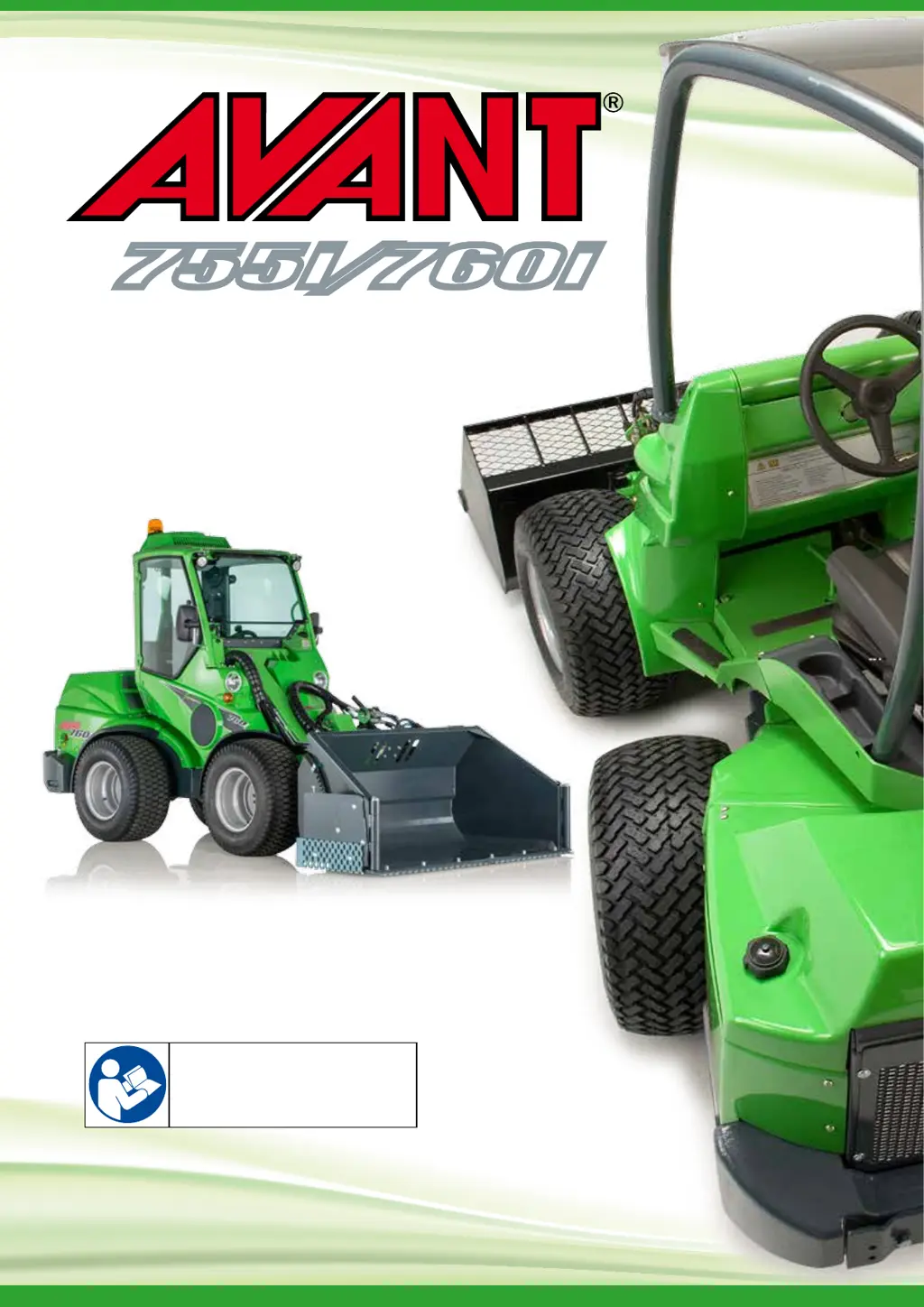
AVANT 755i - User Manual

AVANT 755i
64 pages
Print Icon
To Next Page IconTo Next Page
Loading...
North America
Operator’s Manual
2019-
755i/760i
Read this Operator's Manual, safety decals,
and other safety related instructions before
operating the loader. If you do not obey these
instructions, there is a risk of serious injury.
Keep all manuals for reference.
WARNING
A428533 2019 4 EN_NA 2016-

Table of Contents

Questions and Answers

Summary

Introduction and Safety Symbol Definitions

Safety Alert Symbol Definitions

Definitions of signal words like DANGER, WARNING, CAUTION, NOTICE, SAFETY INSTRUCTIONS.

Safety Instructions and Precautions

Relevant Manuals and Intended Use

Ensuring all manuals are available and understanding the loader's intended purpose for safe operation.

General Safety Precautions

Always follow general safety rules to avoid personal injury during operation.

Handling Heavy Loads and Tipping Risks

Guidance on safely handling heavy loads and understanding tipping risks to prevent accidents.

Load Sensor and Overturning Prevention

Understanding the load sensor system and actions to prevent machine overturning.

Gradient Operation and Ventilation Safety

Safe operation on slopes and ensuring proper ventilation to prevent suffocation hazards.

Personal Protective Equipment and Safety Structures

Importance of PPE, ROPS, and FOPS for operator safety and restrictions on modifications.

Electrical Safety and Fire Prevention

Guidelines for safe handling of the battery and preventing fires during operation and maintenance.

Warranty Information

Avant 755 i;760 i Warranty Terms

Details of the warranty coverage, exclusions, and conditions for the loader.

Description of the Loader

Loader Identification and Engine Details

Identifying the loader model, serial number, and engine specifications.

Main Loader Components Overview

Detailed identification of key loader parts like frames, boom, articulation joint, and coupling plate.

Safety Decals and Warning Labels

Location and importance of safety decals for hazard identification and operator awareness.

Technical Specifications

General Loader Specifications

Key dimensions, weight, transmission, and speed specifications for the loader.

Engine, Fuel, and Tire Details

Details on engine type, oil, fuel requirements, and tire specifications.

Hydraulic System Specifications

Information on auxiliary hydraulics oil flow and pump selection settings.

Tipping Load and Rated Capacity

Understanding Tipping Load and Diagrams

Explaining tipping load factors and how to interpret load diagrams for safe operation.

Rated Operating Capacity and Load Sensor

Determining ROC based on load conditions and understanding the function of the load sensor.

Operating the Loader

Operator Controls and Dashboard

Location and function of steering wheel, pedals, levers, switches, and dashboard indicators.

Loader Boom and Auxiliary Hydraulics Operation

Detailed operation of boom control, telescopic boom, auxiliary hydraulics, and joystick functions.

Seat Adjustments and Cab Features

Proper adjustment of seat, suspension, and understanding cab-specific controls.

Drive System and Parking Brake Operation

Using drive speed selection, drive release valve, and parking brake.

Boom Functions: Floating, Self-Leveling, and Telescopic

Operating boom floating, self-leveling, and telescopic boom options for enhanced functionality.

Starting and Stopping the Engine Safely

Step-by-step guide for safely starting and stopping the loader engine.

Loader Warm-up, Steering, and Drive Control

Proper procedure for warming up the loader, safe steering techniques, and drive control.

Working with Attachments

Attachment Requirements and Manuals

Ensuring attachment compatibility, reading manuals, and safety precautions.

Coupling and Hydraulic Hose Connections

Step-by-step guide for attaching and detaching equipment securely.

Releasing Hydraulic Pressure

Procedures for safely releasing hydraulic pressure before service.

Transporting, Lifting, and Storage

Transporting Instructions and Tie-Down Points

Guidelines for safely transporting the loader using tie-down points.

Safe Lifting and Loader Storage

Safe methods for lifting the loader using ROPS frame or cab lifting points and storage recommendations.

Cab Features and Climate Control

Cab Options and Interior Features

Overview of available cab types (L, LX, DLX) and their features.

Heater and Air Conditioning Operation

Instructions for using the cab heater and air conditioning system.

Maintenance and Service Overview

General Maintenance Safety and Schedule

Safety precautions before performing maintenance and importance of adherence to schedules.

Hydraulic System Maintenance Procedures

Procedures for checking and maintaining hydraulic hoses, components, and systems.

Daily Inspection Points

Key inspection points before and after starting the loader for daily upkeep.

Periodic Service Schedule Details

Detailed schedule of maintenance tasks required at specific intervals.

Detailed Daily Inspections

Refueling and Loader Condition Check

Fueling procedures and checks for damages, rust, and leaks on the loader.

Cleaning and Cooling System Care

Proper methods for cleaning the loader and maintaining cooling systems.

Greasing Pivot Points

Location and procedure for greasing loader pivot points to prevent wear.

Visual Inspections and Bolt Checks

Inspecting boom structures and checking tightness of bolts, nuts, and fittings.

Hydraulic Oil and Attachment Security

Checking hydraulic oil level and ensuring attachments are properly locked.

Engine Oil, Coolant, Fuel, and Air Filter Checks

Routine checks for engine oil, coolant, fuel water separator, and air filter.

Battery, Drive, and Boom Inspections

Inspecting battery, drive control operation, and boom movements.

Load Sensor Calibration

Calibrating the Load Sensor

Steps to calibrate the load sensor after adding or removing counterweights.

Fuses, Jump Starting, and Filters

Fuses and Hydraulic Cooler Fan Fuse

Locating main fuses and checking the hydraulic oil cooler fan fuse.

Jump Starting and Filter Information

Procedure for jump starting the loader and identifying filter part numbers.

Troubleshooting Common Issues

Engine and Hydraulic System Problems

Diagnosing and resolving common issues like engine not starting or overheating.

Service Record and Compliance

Services Made Log

A log for recording periodic service dates, hours, and technician details.

EC Declaration of Conformity

Declaration of conformity to EC Directives regarding machinery, EMC, and noise emissions.

AVANT 755i Specifications

General IconGeneral
Engine Power42 kW (57 hp)
Fuel TypeDiesel
Length3360 mm
Width1490 mm
Height2220 mm
Tipping load1450 kg

Related product manuals