SECTION 1 - INTRODUCTION & SPECIFICATIONS
1.1 - INTRODUCTION
1.1.1 - GENERAL DESCRIPTION
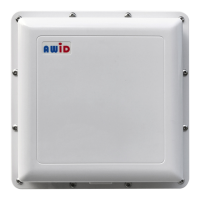
AWID's LR-3000 reader is a rugged, weather resistant, long-range Radio Frequency Identification (RFID) reader that works with a
selection of hands-free and vehicle mounted credentials. This reader comes with a unique combination of long read range, small size,
and low power consumption. With a 12 volt DC supply, its’ current consumption is less than 2.0 amperes, making it suitable for a
large selection of commercial power supplies. The LR-3000 reader has simultaneous Wiegand and RS-232 outputs suitable for all
Access Control Systems that have Wiegand or RS-232 Inputs.
1.1.2 - SPECIAL FEATURES
• IP-65 Rated Enclosure – Suitable for outdoor applications.
• Single small footprint for reader electronics, RF module, and antenna.
• Built-in LED indicator for power and activity.
• Easy to install using AWID’s pan-and-tilt adjustable mounting bracket (LR-MB-0-0).
• Compatible with most commercial access control systems.
• Wide selection of credentials — 11 tags and cards.
• Unlimited credential life — passive; no battery.
• Can be interfaced to a PC or to a special application controller.
• Adjustable Radio Frequency (RF) attenuation* — settable RF field.
• Simultaneous Wiegand and RS-232 output.
• Reads from 26-bit to 50-bit format credentials.
• Built-in arming wire for use with vehicle ground loops.
• Flexible data output — variable read repetition rate.
• Allows mixing RFID products for several applications into an integrated system.
• Operates at low power level.
• Uses frequency-hopping technology in the 902-928 MHz band (UHF).
• Passive tags assure small size, unlimited life, and easy mounting out of the driver's vision.
• Users do not need an FCC license.
1.1.3 - SUGGESTED APPLICATIONS
• Automated Vehicle Identification (AVI) for passenger cars, small trucks, big trucks and trailers, and railcars.
• Operation of vehicle gates and garage doors for authorized vehicles.
• Hands-free operation of doors and elevators for handicapped users (wheelchairs, gurneys) in ADA situations.
• Data collection using encoded cards and tags for input.


 To Next Page