Need help?
Do you have a question about the Axis 01809-031 and is the answer not in the manual?
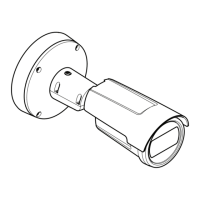
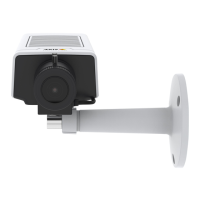
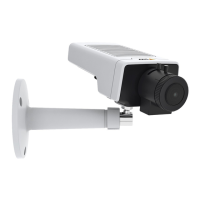
This document serves as a user manual for the Axis P13 Network Camera Series, specifically highlighting the AXIS P1377-LE model, an outdoor network box camera. The manual provides comprehensive guidance on the device's functionality, usage, and maintenance, ensuring users can effectively deploy and manage their surveillance system.
The Axis P13 Network Camera Series is designed for robust surveillance, offering features like HD recording and a 5-megapixel effective camera resolution. The camera is capable of capturing detailed video, making it suitable for various monitoring needs. It supports different video compression formats, including Motion JPEG, H.264 (MPEG-4 Part 10/AVC), and H.265 (MPEG-H Part 2/HEVC), allowing users to balance image quality with bandwidth and storage requirements. The device can be configured to reduce noise in low-light conditions, ensuring clear images even in challenging lighting environments. Users can select various exposure modes, such as automatic exposure, flicker-free, and flicker-reduced, to optimize image quality for specific scenes and artificial lighting conditions. The camera also supports the "corridor format" for monitoring long and narrow areas, maximizing the field of view in spaces like staircases, hallways, and roads.
A key feature is the ability to handle scenes with strong backlight through Wide Dynamic Range (WDR), which makes both dark and bright areas of an image visible. The device can display text overlays in the video stream, useful for providing additional information during recordings or indicating events like "Motion detected." It also supports the AXIS Camera Application Platform (ACAP), an open platform for third-party analytics and applications, expanding the camera's capabilities for various surveillance tasks. The camera includes an I/O connector for integrating external devices like PIR sensors, door/window contacts, and relays, enabling event triggering and alarm notifications. An RS485/RS422 connector is also available for controlling auxiliary equipment such as pan-tilt devices.
The manual guides users through accessing and configuring the device on a network using AXIS IP Utility or AXIS Device Manager. It emphasizes security by detailing how to verify firmware integrity and set secure passwords, recommending strong, frequently changed passwords. Users can replace the lens to adapt the camera to different surveillance scenarios, with instructions provided for disconnecting the old lens, attaching a new one, and adjusting zoom and focus. Privacy masks can be created to hide specific parts of the image, ensuring privacy in sensitive areas.
For optimizing image details, the manual suggests adjusting compression levels, selecting MJPEG streaming, and turning off Zipstream functionality, though it notes that maximizing details might increase bitrate and reduce frame rate. The device offers tools to improve license plate recognition, including a pixel counter to set optimal pixel resolution. Users can define "view areas" to stream and store cropped parts of the full view, which helps minimize bandwidth and storage needs, and allows for pan, tilt, and zoom within the defined area.
Recording and video management are straightforward, with instructions on setting up network storage or using an SD card. Users can add audio to their recordings by editing stream profiles. The device supports rule-based event management, allowing users to create rules that trigger specific actions, such as starting a recording or sending an email, when certain conditions (e.g., motion detection) are met. An example is provided for setting up the camera to record video when motion is detected, including prebuffer and postbuffer times.
The manual provides essential troubleshooting information, starting with how to reset the device to factory default settings, which is crucial for resolving configuration issues or regaining control after a security attack. It details the process of disconnecting power, pressing the control button, and reconnecting power until the status LED indicates a successful reset. The control button also serves to enable the Focus Assistant, aiding in achieving optimal image focus.
Firmware management is covered, with Axis offering both active track and long-term support (LTS) tracks. Users are advised to check the current firmware version as a first step in troubleshooting, with instructions on how to do so via the product's webpage. The manual also addresses common technical issues and provides solutions, such as problems with accessing the device from a browser (e.g., incorrect protocol, forgotten password), changes in IP address due to DHCP, and certificate errors when using IEEE 802.1X.
For streaming problems, the manual suggests checking router settings for multicasting support, verifying network administrator settings for firewalls, and ensuring graphics card drivers are up to date for proper H.264 rendering. It also provides guidance on improving lower frame rates by reducing client computer applications, limiting simultaneous viewers, checking network bandwidth, and lowering image resolution. The status LED indicators are explained, providing visual cues for connection status, startup, firmware upgrades, and network connectivity issues. Additionally, the status LED acts as a focus assistant, indicating when the image is out of focus, close to focus, or in focus, guiding users in fine-tuning the lens. The SD card slot section includes important notices about preventing damage and data loss, advising against using sharp tools and removing the card while the product is running.
 General
| Category | Security Camera |
|---|---|
| Type | Network Camera |
| Model | 01809-031 |
| Frame Rate | 30 fps |
| Lens | Fixed |
| IR Range | 30 m (98 ft) |
| Power Supply | 12 V DC |
| Power over Ethernet | Yes |


 To Next Page