- 3 -
Introduction
The ESP8266 module is a System on a Chip (SoC). It consists of a Tensilica
L106 32-bit microcontroller and a Wi-Fi transceiver. It has 11 General Purpose
Input/Output pins, or for short GPIO pins, and one analog input. This means
that it can be programmed like any other microcontroller. The best thing about
the ESP8266 is that it has Wi-Fi communication, which means that it can be
connected to Wi-Fi, or the Internet, host a web server with real web pages,
connect to a smartphone, etc. It supports network protocols like Wi-Fi, TCP,
UDP, HTTP, DNS, etc.
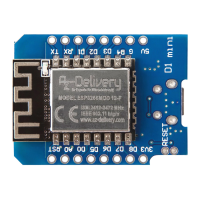
AZ-Delivery D1 Mini module is a development board based on the ESP8266
chip. It has 11 digital input/output pins and one analog input pin. All digital I/O
pins have interrupt, pwm, I2C and 1-wire capabilities, in software. The range of
analog input voltage is between 0V and 3.3V DC. The module uses microUSB
port and the CH340G chip with a programmer circuit for programming the
ESP8266. Also, the microUSB port provides a power supply for the module.
There are different ways to program the D1 Mini module. If you have used
Arduino boards before, then this is really easy for you. Just keep in mind that it
is not limited to this option, there are many other ways to program the D1 Mini
module (official ESP SDK for C programming, Lua interpreter, MicroPython
firmware, are few of many).


 To Next Page