EasyManua.ls Logo

Baileigh TS-1248P - User Manual

Baileigh TS-1248P
104 pages
Print Icon
To Next Page IconTo Next Page
Loading...
OPERATOR’S
MANUAL
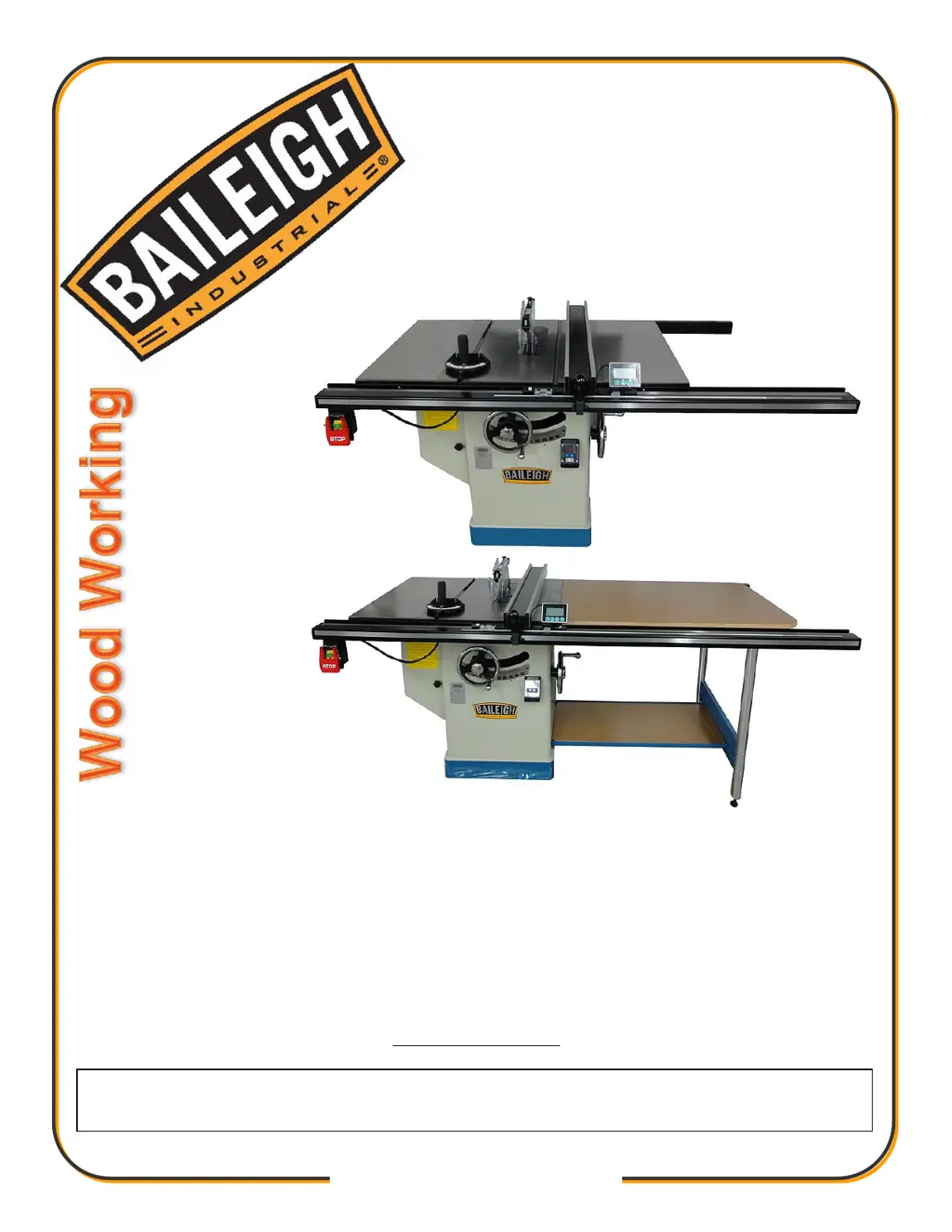
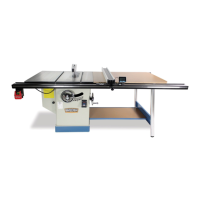
36” & 52” TABLE SAW
MODEL: TS-1248P
© 2016 Baileigh Industrial, Inc.
REPRODUCTION OF THIS MANUAL IN ANY FORM WITHOUT WRITTEN APPROVAL OF BAILEIGH INDUSTRIAL, INC.
IS PROHIBITED. Baileigh Industrial, Inc. does not assume and hereby disclaims any liability for any damage or loss
caused by an omission or error in this Operator’s Manual, resulting from accident, negligence, or other occurrence.
Rev. 10/2016
Baileigh Industrial, Inc.
P.O. Box 531
Manitowoc, WI 54221-0531
Phone: 920.684.4990
Fax: 920.684.3944
sales@baileigh.com

Table of Contents

Questions and Answers

  • S
    stanley19Aug 16, 2025
    Why won't the motor start on my Baileigh Saw?
    • R
      rhondahernandezAug 16, 2025
      If the motor of your Baileigh Saw doesn't start, here are a few things to check: * Make sure the switch disabling key is installed. * Verify the motor connection is wired correctly, referring to the inside junction box cover or the manual. * Inspect for any breaks, shorts, or loose connections in the wiring, and fix or replace as necessary. * Ensure the power supply is switched on and has the correct voltage. * Test the start capacitor and replace it if it's faulty. * Adjust or replace the centrifugal switch if it is at fault.
  • G
    gardnertonyAug 26, 2025
    Why does the workpiece burn or bind when feeding through my Baileigh Saw?
    • H
      heatherbaileyAug 26, 2025
      If the workpiece burns or binds when feeding your Baileigh Saw, try these solutions: * Adjust the riving knife to align correctly with the blade. * Adjust the spreader to align correctly with the blade. * Adjust the fence to be parallel with the blade. * Replace the blade if it is warped or damaged. * Change to a blade with fewer teeth for the cutting type.
  • D
    Damon LiAug 28, 2025
    What to do if too much sawdust blows back from my Baileigh Saw?
    • R
      rrodriguezAug 28, 2025
      If too much sawdust is being blown back towards the operator of your Baileigh Saw, here are some things to check: * Re-install the blade guard for maximum safety and dust control. * Seal any leaks in the housing or around the dust chute to prevent air leaks. * Remove any clogs from the dust collection system and revise the ducting layout for improved suction, or use a different dust collector if the current system is too weak. * Adjust the fence to be parallel with the blade. * Adjust the table so the miter slot is parallel with the blade at 90 degrees.
  • M
    megansaundersAug 31, 2025
    Why is the handwheel on my Baileigh Saw difficult to move?
    • A
      amanda14Aug 31, 2025
      If the handwheel on your Baileigh Saw binds or is difficult to move: * Loosen the lock knob if it is engaged. * Remove the handwheel and adjust the shaft pins if they are wedged.
  • M
    Margaret WillisSep 3, 2025
    What to do if the blade on my Baileigh Saw doesn't reach 45 degrees?
    • J
      Julie JordanSep 3, 2025
      If the blade on your Baileigh Saw does not reach 45 degrees: * Adjust the 45 degree stop bolt. * Check for sawdust in the trunnions, and clean and lubricate as necessary.
  • E
    Erin OrtegaSep 6, 2025
    Why doesn't the blade on my Baileigh Saw reach 90 degrees?
    • K
      Kathy CarrSep 6, 2025
      If the blade on your Baileigh Saw does not reach 90 degrees: * Calibrate the pointer/scale at true 90 degrees. * Adjust the 90 degree stop bolt.
  • J
    John MartinezSep 9, 2025
    What causes the blade on a Baileigh Saw to not move up or down?
    • A
      Amanda SchultzSep 9, 2025
      If the blade on your Baileigh Saw will not move up or down, tighten or replace the set screw on the worm gear if it is loose or missing.
  • T
    Tyler ClarkSep 12, 2025
    Why won't the blade on my Baileigh Saw go beneath the table surface?
    • R
      Ruben LaneSep 13, 2025
      If the blade on your Baileigh Saw will not go beneath the table surface, tighten the roll pins and set screws in the worm gear.
  • J
    Jamie AllenNov 18, 2025
    What to do if my Baileigh Saw stalls or is underpowered?
    • L
      Laurie WalkerNov 18, 2025
      If your Baileigh Saw stalls or seems underpowered, consider the following: * Reduce the feed rate or cutting speed. * Ensure the workpiece material is suitable for the machine; only cut wood with moisture below 20%. * Straighten or replace crooked workpieces and adjust the fence. * Use the correct blade and reduce feed rate or depth of cut if the machine is undersized for the task. * Test, repair, or replace the run capacitor. * Tension or replace the belt if it's slipping. * Ensure the motor is wired correctly. * Test the plug and receptacle for good contacts and correct wiring. * Replace any loose pulley or shaft. * Test, repair, or replace the motor bearings. * Test all legs of the contactor for power and replace if faulty. * Clean the motor, let it cool, and re...
  • K
    kaylanavarroNov 21, 2025
    How to reduce vibration and noise in my Baileigh Saw?
    • D
      Danny FrazierNov 21, 2025
      If your Baileigh Saw is exhibiting excessive vibration or noise, here's what to check: * Use a blade stabilizer if there's a slight blade wobble. * Remove, clean, and tighten the arbor nut if it's loose or obstructed. * Retighten or replace the arbor pulley, using thread locking liquid. * Tighten the tilt handwheel lock knob if the tilt handwheel is loose. * Tighten or replace the trunnion or geared bearing housing if the casting is at fault. * Fix or replace the fan cover and replace any loose or damaged motor fan if the fan is rubbing. * Tighten the mounting bolts/nuts, using thread locking fluid, if the motor mounting is loose. * Replace the belt if it's worn or damaged. * Tighten the belts if they are slapping the cover. * Replace worn pulleys, keys, and shafts, an...

Summary

Thank You and Warranty

Inspection and Acceptance

Describes the process for inspecting and accepting delivered goods.

Limited Warranty

Details the terms, duration, and exclusions of the product warranty.

Return Policy Summary

Outlines the conditions and procedures for returning products, including time limits and fees.

Introduction and General Notes

Introduction

Provides an overview of the manual's content and machine reliability.

General Notes

Offers initial important advice for handling and inspecting the machine upon receipt.

Safety Instructions

Recognize Safety Information

Explains the meaning of safety alert symbols and signal words.

Understand Signal Words

Defines signal words like DANGER, WARNING, and CAUTION.

Safety Precautions

Specifications

Intended Use

Technical Support

Unpacking and Checking Contents

Cleaning

Procedures for cleaning the table saw, including rust protection.

Transporting and Lifting

Installation

Factors to consider for placing and setting up the machine for operation.

Getting to Know Your Machine

Assembly and Set Up

Extension Wing 36” Models

Instructions for assembling the 36-inch extension wing to the table saw.

Extension Table 52” Models

Instructions for assembling the 52-inch extension table and support legs.

On;Off Switch, Fence, Gauge, and Mounts

Details on installing the power switch, fence, miter gauge, and related components.

Dust Collection

Electrical

Power Supply Connection

Steps for safely connecting the machine to the electrical power source.

Initial Operation

Operation Overview

Safety Precautions Before Operations

Essential safety advice and checks to perform before operating the saw.

Blade Requirements and Selection

Blade Requirements

Specifications for safe blade usage with the table saw.

Blade Selection

Guidance on choosing the appropriate saw blade for different cutting tasks.

Dado Blades

Blade Installation

Blade Guard Assembly

Guard

Description of the blade guard's protective function against contact and chips.

Spreader

Description of the spreader's function in preventing kickback.

Installing Blade Guard and Spreader

Anti-Kickback Pawls

Removing Pawls

Instructions on how to remove the anti-kickback pawls if necessary for specific cuts.

Pawls and Blade Guard Usage

Installing Pawls

Steps for correctly installing the anti-kickback pawls.

When to Use Blade Guard

Guidelines on when the blade guard should be used for safety.

When Not to Use Blade Guard

Situations where the blade guard is not required or may hinder a safe cut.

Riving Knife

How to Install the Riving Knife

Instructions for installing the riving knife, similar to blade guard installation.

When to Use the Riving Knife

Guidance on when the riving knife is appropriate for non-through cuts.

When Not to Use the Riving Knife

Situations where the riving knife should not be used, such as with small blades.

Cutting a Zero Clearance Insert

Operation

Safety Precautions Before Operations

Essential safety advice and checks to perform before operating the saw.

Electrical Operation

How to safely operate the saw's electrical controls and switches.

Ripping Operations

Ripping Small Work Pieces

Safety advice and techniques for ripping narrow workpieces.

Crosscutting

Instructions for cutting across the grain of the wood.

Crosscutting Variations

Miter Cross Cutting

Instructions for performing crosscuts at an angle other than 90 degrees.

Blade Tilt;Bevel Cuts

How to adjust the blade angle for bevel cuts, compound miters, or chamfers.

Dado Cutting

Cutting Dadoes with a Dado Blade

Procedure for cutting dadoes using a dado blade set.

Cutting Dadoes with a Standard Blade

Procedure for cutting dadoes using a standard saw blade.

Rabbet Cutting

Cutting Rabbets with a Dado Blade

Procedure for cutting rabbets using a dado blade and sacrificial fence.

Cutting Rabbets with a Standard Blade

Procedure for cutting rabbets using a standard saw blade.

Optional Cutting Tools and Tables

Cutting Tools (Optional)

Information on useful optional cutting accessories like push sticks.

Outfeed & Support Tables

Benefits of using outfeed and support tables for safety and ease of use.

Adjustment Procedures

Blade Height Adjustment

How to adjust the blade height for optimal cutting depth.

Adjusting the 90° Bevel Stop

Procedure to accurately set the 90-degree blade tilt stop.

Tilt Indicator Pointer Adjustment

How to calibrate the blade tilt angle indicator for accurate readings.

Adjusting the 45° Bevel Stop

Procedure to accurately set the 45-degree blade tilt stop.

Table Tilt Handwheel Backlash

How to adjust for backlash in the table tilt handwheel gears.

Blade Tilt Angle Digital Readout Calibration

How to calibrate the digital readout for blade tilt angle.

Miter Slot to Blade Parallelism

0° Check and Adjustment

Adjusting for blade parallelism with the miter slot at 0 degrees.

45° Check and Adjustment

Adjusting for blade parallelism with the miter slot at 45 degrees.

Spreader or Riving Knife Alignment

Checking Alignment

How to check the alignment of the spreader or riving knife with the blade.

Aligning Blade Guard Splitter or Riving Knife with Blade

Steps to align the splitter/riving knife with the blade for safe operation.

Fence Adjustments

Square and Height

How to adjust fence squareness and height relative to the table surface.

Offsetting Fence

How to offset the fence for specific cutting applications to prevent kickback.

Clamping Pressure and Parallelism

Checking Fence Parallelism

How to verify the fence is parallel to the blade for accurate cuts.

Fence Clamping Pressure and Parallelism Adjustment

Adjusting fence clamping pressure and parallelism for secure operation.

Fence Scale Calibration

Fence DRO Installation and Calibration

Mounting the DRO

Steps to install the digital read out sensor onto the fence track.

Initial Calibration (Tune)

Procedure for the initial setup and calibration of the DRO.

Basic Operation

How to use the DRO for measurements and basic functions.

ZERO;ENTER FUNCTION

Description of the Zero/Enter button's function for setting zero points.

mm;inch FUNCTION

How to switch the display between millimeters and inches.

ABS;REL FUNCTION

How to use Absolute and Relative measurement modes on the DRO.

MENU FUCTIONS

Guide to navigating the DRO menu functions.

Mitre Gauge

Checking;Setting 0° Stop

How to check and set the 0-degree stop on the miter gauge.

Checking;Setting 45° Stops

How to check and set the 45-degree stops on the miter gauge.

Maintenance

Cleaning

Procedures for cleaning the saw, including rust protection.

Lubrication

Details on which components require lubrication and how to apply it.

Belt Tension & Replacement

Tensioning Belt

How to adjust the drive belt tension for optimal performance.

Replacing Belt

Steps for replacing the drive belt on the saw.

Troubleshooting

Electrical Diagram

Electrical Connections

Parts Diagrams and Lists

Blade Guard, Miter, and Accessories Parts List

List of parts for the blade guard, miter gauge, and other accessories.

36” Rails Parts List

List of parts specific to the 36-inch rail assembly.

52” Extension Table and Rails Parts List

List of parts for the 52-inch extension table and rail assembly.

36” Saw Body Parts List A & B

List of parts for the 36-inch saw body, sections A and B.

52” Saw Body Parts List A & B

List of parts for the 52-inch saw body, sections A and B.

Notes

Baileigh TS-1248P Specifications

General IconGeneral
BrandBaileigh
ModelTS-1248P
CategorySaw
LanguageEnglish

Related product manuals