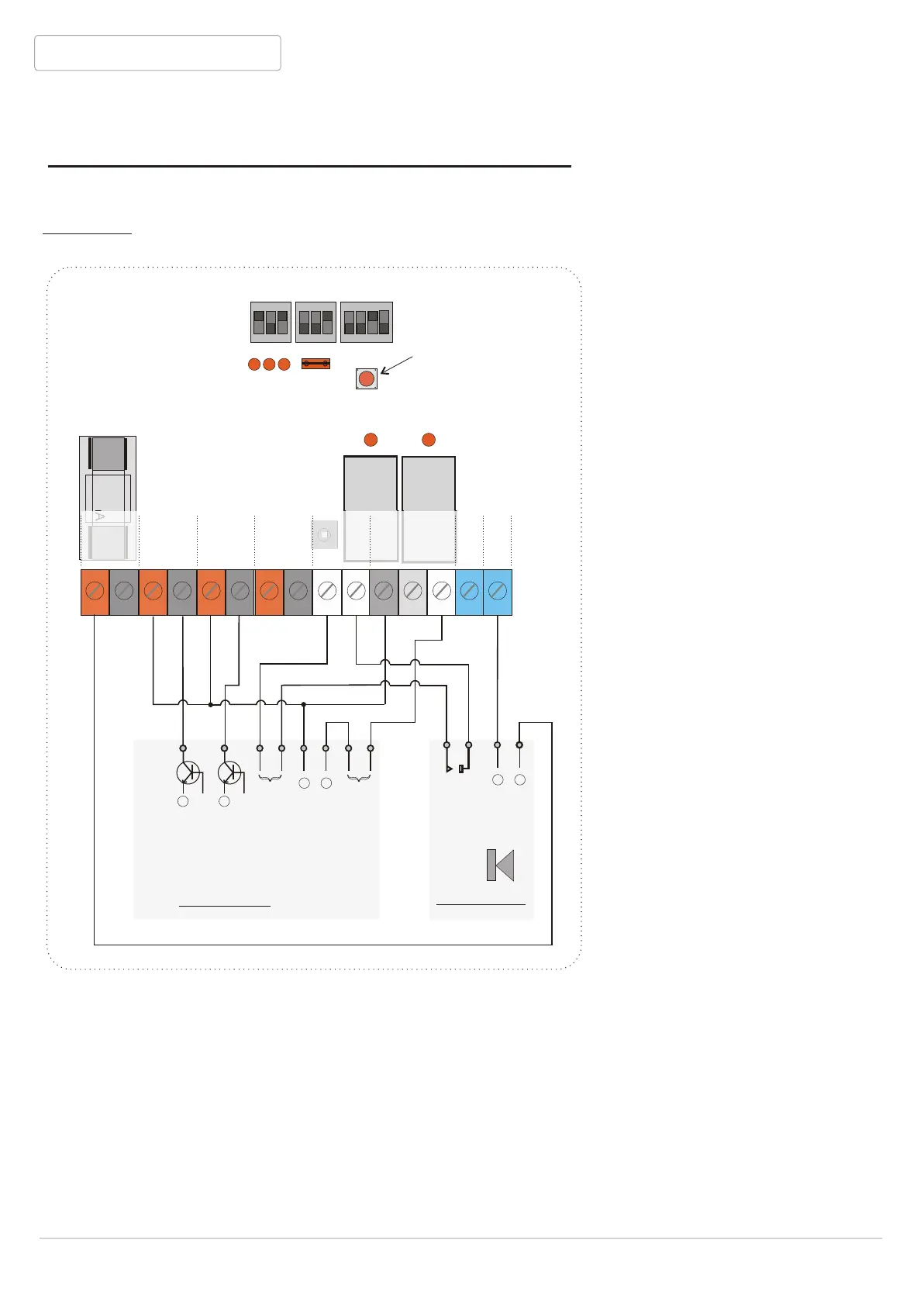
Diagram 1: Alarm system with npn- outputs, technical input and BANDIT-
controlled internal siren 12V / max. 250 mA
p. 30 - Examples of application - diagram 1
BANDIT 240 DB v.206
Alarm central
Alarm-
output npn
Guard
output npn
Sabotage
loop
Input technical
failure to dialer
12 V supply
+
_
_
_
OKout
Tmp
Read switch
dips
Red jump
PaninV
GrdinV
F2
ONON
11 22 33
ONON
11 22 33
ONON
11 22 33
44
500mA
AlinV
Read
OKout
Grdout
Alout
Tmpout
Grdin
Panin
Alin
Supply
Ta
P+
A+
G+
+
Tb
P-
A-
G-
-
COM
NC
NO
Tampercontact
12 V in
+
_
Internal siren
Max. 250 mA
A B
C
EXAMPLES OF APPLICATION
Dip switches:
A1:position ON = unit is
only in guard if there
is 12V over [Grdin].
So if relevant output
of alarm system
active (npn-transistor
in conduction), the
GrdinV LED is lit and
BANDIT is in guard-
mode.
A2: position OFF = if
there is a transition
from 12V to 0 V
over [Alin] while
BANDIT is in guard,
the alarm mode is
activated. This
means: fog ejection
during adjusted time
period (dip block C),
and sounding of
connected internal
siren for max 3
minutes.
A3: position ON = only
12V over [Panin] can
activate panic mode,
but because this
input isn’t connected,
panic mode is not
possible.
B1: No remote control is connected, so no function.
B2: No remote control is connected, so no function.
B3:No Control box connected, so position ON.
C1 OFF, C2 OFF, C3 ON and C4 OFF = adjusted fog ejection period is 4 seconds (see p. 25).
The technical failure input of the alarm system receives12V as long as there is no BANDIT
failure.


 To Next Page