The BW16-Kit is a core development board designed by B&T for the NodeMCU development board, featuring a dual-frequency Wi-Fi and Bluetooth SoC module based on RTL8720DN. It supports dual-frequency (2.4GHz or 5GHz) WLAN and low power Bluetooth 5.0. The module integrates ARMv8 (Cortex-M4F) high-performance MCU, ARM V8M (Cortex-M0) low power MCU, WLAN (802.11 a/b/g/n), MAC, Bluetooth, and RF baseband, providing a set of configurable GPIO ports for different peripherals. The BW16 also integrates internal storage and supports simple application development for full Wi-Fi and BT5.0 protocol capabilities.
The BW16-Kit is suitable for machine-to-machine interconnection (M2M) and remote control applications.
Technical Specifications:
- Model: BW16-Kit
- Module Package: SMD-16
- Module Size: 24*16*3 (±0.2) MM
- Antenna: PCB antenna or IPEX
- Frequency Range: 2400-2483.5MHz or 5180-5825MHz
- Bluetooth: BLE 5.0
- Bluetooth Frequency Range: 2.402GHz - 2.480GHz
- Operating Temperature: -20 °C ~ 70 °C
- Storage Environment: -40 °C ~ 125 °C, <90%RH
- Power Supply Range: Module voltage 3.0V ~ 3.6V (typical 3.3V), Micro USB 5V power supply, current >450mA
- Support Interface: UART/GPIO/ADC/PWM/IIC/SPI/SWD
- Module Certification: RoHS, FCC, CE, SRRC
Wi-Fi Specifications:
- Supports 802.11a/b/g/n 1x1, 2.4GHz or 5GHz
- Support for HT20/HT40 mode
- Support low power beacons listening mode, low power reception mode, and low power hanging mode
- Built-in AES / DES / SHA hardware engine
- Support for TrustZone-M, supports secure startup
- The SWD debug port access protection and ban modes are supported
Bluetooth Specifications:
- Support for BLE and BT5.0
- Bluetooth supports high-power mode (7dBm, shares the same PA as Wi-Fi)
- The Wi-Fi and the BT share the same antenna
- 2400-2483.5 or 5180-5825 MHz
- In 11a mode, PA output power: 14±2 dBm
- In 11n mode, PA output power: 14±2 dBm
- In 11g mode, PA output power: 15±2 dBm
- In 11b mode, PA output power: 16±2 dBm
- Bluetooth output power: 7±2 dBm
- CCK, 1 Mbps: <=-90 dBm
- CCK, 11 Mbps: <=-85 dBm
- 6 Mbps (1/2 BPSK): <=-88 dBm
- 54 Mbps (3/4 64-QAM): <=-70 dBm
- HT20 (MCS7): <=-67 dBm
- Bluetooth sensitivity: <=-92 dBm
Electrical Characteristics:
- DC3.3V (With an internal pressure regulator and integrate CMOSPA): Min 3.0, Typical 3.3, Max 3.6 V
- Digital I/O power supply voltage: Min 1.76, Typical 1.8-3.3, Max 3.3 mA
- DC_IO_33 (3.3V I / O rated electric current): 50 mA
- Electrostatic protection (VESD): 2000 V
Pin Definition:
The BW16-Kit development board leads out 30 interfaces. Key pins include:
- PA15: SPI1_CS
- PA27: SWD_DATA
- NC: Not connect
- PA26: LP_I2C_SDA/LP_PWM5
- PA8/LOG_RX: UART_LOG_RXD
- PA13: LP_PWM1/SPI1_MISO
- PA14: SPI1_CLK
- PA30: LP_PWM1
- PA12: SPI1_MOSI/LP_PWM0
- GND: Ground
- 3V3: 3.3V power supply (VDD); recommended greater than 500mA
- EN: Chip enabling terminal
- Vin: 5V power supply (VDD)
- 3V3: 3.3V power supply (VDD); maximum 450mA
- PB1: LP_UART_TXD
- PB2: LP_UART_RXD
- PA7/LOG_TX: UART_LOG_TXD
- PA25: LP_I2C_SCL/LP_PWM4
- PB3: ADC/SWD_CLK
Usage Features:
- Power Supply: The development board supports 3.3V or 5V voltage with peak current above 500mA.
- GPIO Port:
- Some GPIO ports are led out from the periphery of the module, if using the proposed resistance of 10-100 ohms in series on the corresponding IO port. That can suppress the overshoot, smoother on both sides. Help for both EMI and ESD.
- The up and down of the special IO port, refer to the specification instructions, which affects the start up configuration of the module.
- The IO port of the module is 3.3V, if the master control does not match the IO level of the module, additional level conversion circuit is required.
- If the IO port is directly connected to the peripheral interface, or pin header, it is recommended to reserve the ESD device at the IO line near the IPEX.
Maintenance Features:
- Electrostatic Sensitivity: The BW16 module contains electrostatic sensitive devices (ESD) and requires special ESD precautions. Proper ESD handling and packaging procedures must be applied throughout the processing, handling, transportation, and operation of any application that incorporates the BW18 module. Do not touch the module by hand or solder with non-anti-static soldering iron to avoid damage to the module.
- Reflow Soldering Curve Diagram:
- Adjust the balance time to ensure the rationalization treatment of gas when tin paste solves. If there are too much gaps on the PCB board, increase the balance time.
- Considering that the product is long placed in the welding area (temperature above 180°C), to prevent components and bottom plate damage.
- Important features of the curve:
- Rising speed =1-4 °C / sec, 25 °C to150 °C
- Average preheating temperature is =140 °C to 150 °C, 60sec-90sec
- Temperature fluctuation =225 °C to 250 °C, approximately 30sec
- Drop speed =2-6 °C / sec, to 183 °C, approximately 15sec
- Total time = is about 300sec
- Packaging: The BW16-Kit development board is packaged for inserted pearl cotton with electrostatic bags.

 Need help?
 General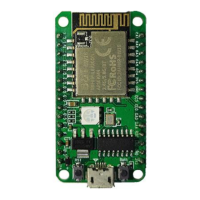

 To Next Page