22
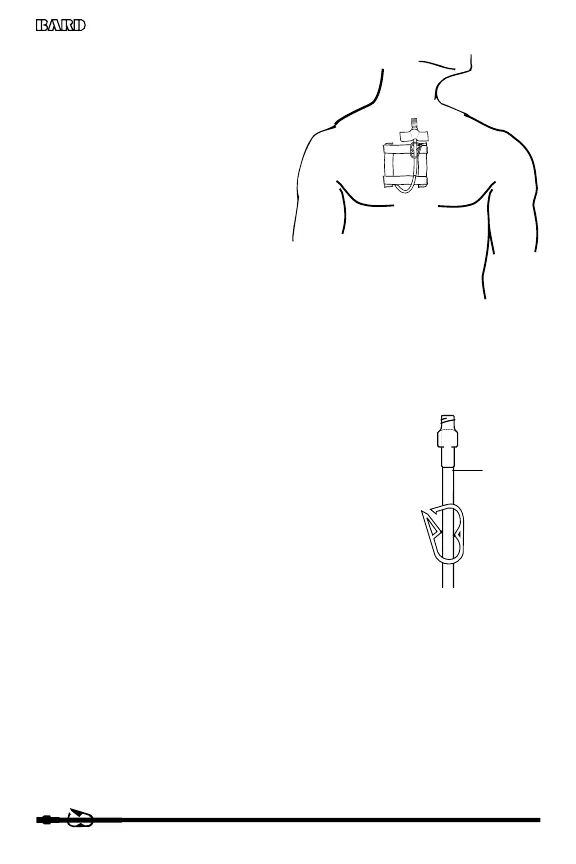
17. Always secure the catheter in
such a way that you can easily
see the cap end. Your doctor
or nurse will help you select
the best method to secure
the catheter. The type of
clothing and normal activity
will need to be considered
in this selection. You should
periodically look at the
capped end to be sure it is
intact.
Clamping the Catheter
Selection of the catheter clamp is very important since the catheter is
vital to your care. The wrong clamp can damage the catheter. Follow
these three rules for clamping:
1. Use only smooth-edged clamps.
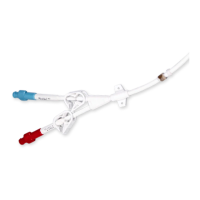
2. Always clamp the catheter over the reinforced
clamping sleeve or tape tab, as instructed by your
nurse. Never clamp over the reinforced segment
directly adjacent to the connector. (see diagram)
3. Follow the directions of your doctor or nurse
regarding when to clamp.
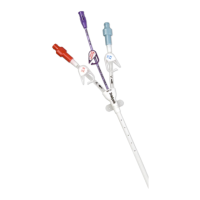
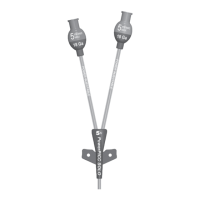
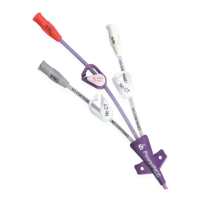
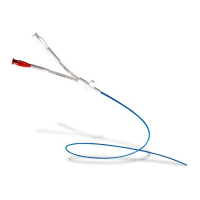
Hickman* catheters come with pre-attached clamps
and reinforced clamping sleeves.
When should you clamp?
Your doctor or nurse may instruct you to clamp your catheter whenever
it is not being used. The catheter is lled with heparin and is capped and
will protect you from having any problems, but the clamp can be another
safety measure. You should always clamp your catheter whenever it is
opened to the air, such as during catheter cap changes, or when connecting
intravenous infusions to your catheter. Always have a spare clamp
available.
Do Not
Clamp Here!



 To Next Page