EasyManua.ls Logo

Barreto HT712 - User Manual

Default Icon
16 pages
Print Icon
To Next Page IconTo Next Page
Loading...
712MT OPERATOR’S MANUAL 9/18/20 Page 1 of 16
THE
MODEL 712MT
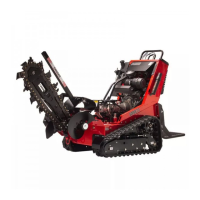
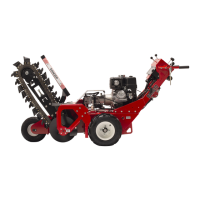
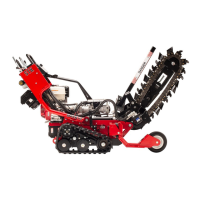
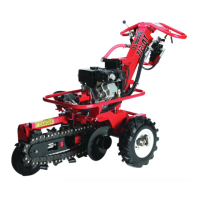
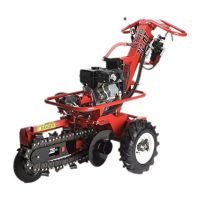
HYDRAULIC MICRO TRENCHER
OPERATORS MANUAL
TRENCHER INTENDED USE
This machine is designed for digging trenches in “normal” ground of reasonably soft dirt and stones up to 3” (7.62cm)
in diameter. Ground with larger stones, high clay content, very hard packed, very dry, or in a frozen condition may be
unsuitable for normal trenching. Consider using a backhoe or other heavier equipment for such conditions.
TABLE OF CONTENTS
LUBRICATION REQUIREMENTS 2
SAFETY MESSAGES 3
SAFETY INSTRUCTIONS OVERVIEW 3
TRENCHER OPERATING INSTRUCTIONS 6
CONTROLS 6
ENGINE CONTROLS 7
ENGINE 8
ENGINE START UP PROCEDURE 8
GETTING STARTED 9
TRENCHING PROCEDURE 9
TRENCHING TIPS 9
SHUT DOWN PROCEDURE 10
GROUND TRANSPORT OF THE TRENCHER 10
ROAD TRANSPORT OF THE TRENCHER 11
OPERATOR PREPARATION 12
DETERMINE LOCATION OF UNDERGROUND UTILITIES 13
CONTACT WITH UNDERGROUND UTILITIES 14
WORK SITE ASSESSMENT 15
INDEX 16
Question and Answer IconNeed help?

Do you have a question about the Barreto HT712 and is the answer not in the manual?

Overview

The Barreto Model 712MT is a hydraulic micro trencher designed for digging trenches in "normal" ground, which is characterized as reasonably soft dirt with stones up to 3 inches (7.62 cm) in diameter. It is not recommended for ground with larger stones, high clay content, very hard-packed, very dry, or frozen conditions, where heavier equipment like a backhoe might be more suitable.

Function Description:

The trencher's primary function is to excavate narrow trenches for various applications, such as laying cables or pipes. It operates by means of a digging chain, which is controlled by the TRENCH CHAIN CONTROL lever. The machine's movement is managed by the WHEEL DRIVE DIRECTION CONTROL and the WHEEL DRIVE ENGAGE LEVER. The digging boom, which carries the chain, can be raised and lowered using the DIGGING BOOM CONTROL. The trencher is designed to dig backward, moving towards the operator, which is an important operational consideration. Safety features include levers that stop all motion when released, and these should not be bypassed.

Important Technical Specifications:

While specific numerical technical specifications like engine horsepower or trenching depth are not explicitly detailed in the provided pages, several operational and safety parameters are mentioned:

  • Trenching Capability: Digs in "normal" ground with stones up to 3 inches (7.62 cm) in diameter.
  • Engine: Honda engine with an Oil Alert system that automatically stops the engine if tipped more than 20 degrees.
  • Hydraulic Fluid: ISO 46 hydraulic fluid is recommended for operation below +32°F (0°C).
  • Noise Emission: Declared A-weighted sound power level (LWA) is 92.1 dB with an uncertainty of 3.0 dB. Declared A-weighted sound pressure level (LpA) at the operator's position is 88.6 dB with an uncertainty of 3.0 dB. These values are in accordance with ISO 4871 and Directive 2000/14/EC Annex IIIB part 54.
  • Vibration Emission: Average measured vibration emission value is 5.5 m/s² with an uncertainty of 1.1 m/s².
  • Incline Limit: A maximum incline of 20 degrees is allowed for ground transport.

Usage Features:

  • Controls: The trencher features distinct controls for different functions:
    • Freewheeling Hubs: Allows for easier turning during transport when disengaged. To engage, align the roll pin and locking pin with the slot, pull the spring-loaded pin, turn 90 degrees, and then push the handle in until the pin drops into a hole.
    • Ignition Switch: Two switches are present – one on the engine and one on the control panel. Both must be ON to start the engine.
    • Wheel Drive Control: The right lever controls forward and backward movement. Pushing forward moves the machine forward, pulling back moves it backward. All motion stops when the lever is released.
    • Trench Chain Control: The left lever activates the digging chain (TRENCH position) and can reverse the chain to remove debris. All motion stops when the lever is released.
    • Digging Boom Control: Pulls back to raise the boom and pushes forward to lower it.
    • Engine Controls: Choke (for cold starts), Throttle (adjusts engine speed), and Fuel Shut-Off valve.
  • Starting Procedure: Involves turning on both ignition switches, releasing the wheel drive engage control, opening the fuel shut-off valve, closing the choke (if cold), setting the throttle to about 1/3, and pulling the start cord.
  • Trenching Procedure: Requires the engine at full throttle, wheel drive control in reverse, and gradually lowering the boom. The machine trenches backward.
  • Trenching Tips: Includes advice on "plunge cuts" for smoother boom lowering, avoiding engine overload by releasing the wheel drive control if the engine lugs down, and using a "can opener approach" for limited traction.
  • Ground Transport: The digging chain boom should be raised. The wheel drive control is used for direction, and the wheel drive engage lever must be held. A slow ground speed is recommended, especially for inexperienced operators.
  • Road Transport: The Barreto E3X4DGT trailer is recommended. Specific loading and unloading procedures are provided, emphasizing safety measures like securing the trencher with chains and using ramps carefully.
  • Safety Features: Levers that stop motion when released, warnings against bypassing safety features, and the engine's Oil Alert system.

Maintenance Features:

  • Lubrication: Grease points are indicated for regular lubrication.
    • Axle: Weekly, or every 30 hours of use.
    • Spindle: Daily, or every 6 hours of use.
    • Chain roller: Daily, or every 6 hours of use.
  • Cold Weather Operations: Recommendations include referring to the Engine Owner's Manual for engine oil, changing hydraulic fluid to ISO 46 if operating below +32°F (0°C), and warming up the engine and hydraulic fluid gradually.
  • Shut Down Procedure: Always park on a level surface, lower the boom, reduce throttle to idle, turn off the ignition, and close the fuel shut-off valve to prevent fuel leakage and engine damage.
  • Cooling Down: After operation, the engine, muffler, and hydraulic components must be allowed to cool completely before any cleaning or maintenance to prevent burns.
  • Machine Function Check: Regular checks of the WHEEL DRIVE and DIG CHAIN LEVERS are essential to ensure they stop their respective functions when released, as this is a critical safety feature. Any malfunction requires contacting the dealer or factory.

Barreto HT712 Specifications

General IconGeneral
BrandBarreto
ModelHT712
CategoryConstruction Equipment
LanguageEnglish

Related product manuals