SAFETY INFORMATION
OPERATION
5 6
LEAK TESTING
GENERAL
Although all gas connections on the grill are leak tested at the factory prior to shipment, a complete ga tightness
check must be performed at the installation site due to possible mishanding in shipment, or excessive pressure
unknowingly being applied to the unit. Periodically check the whole system for leaks following the procedures
listed below. If the smell of gas is detected at any time you should immediately check the entire system for leaks.
BEFORE TESTING
Make sure that all packing material is removed from the grill including the burner tie-down straps. DO NOT
SMOKE WHILE LEAK TESTING. NEVER PERFORM LEAK TEST WITH AN OPEN FLAME. Make a soap
solution of one part liquid detergent and one part water. You will need a spray bottle, brush, or rag to apply the
solution to the ttings. For the initial leak test, make sure the L.P. cylinder is full.
TO TEST
1. Make sure the control valves are in the “OFF” position, and turn on the gas supply.
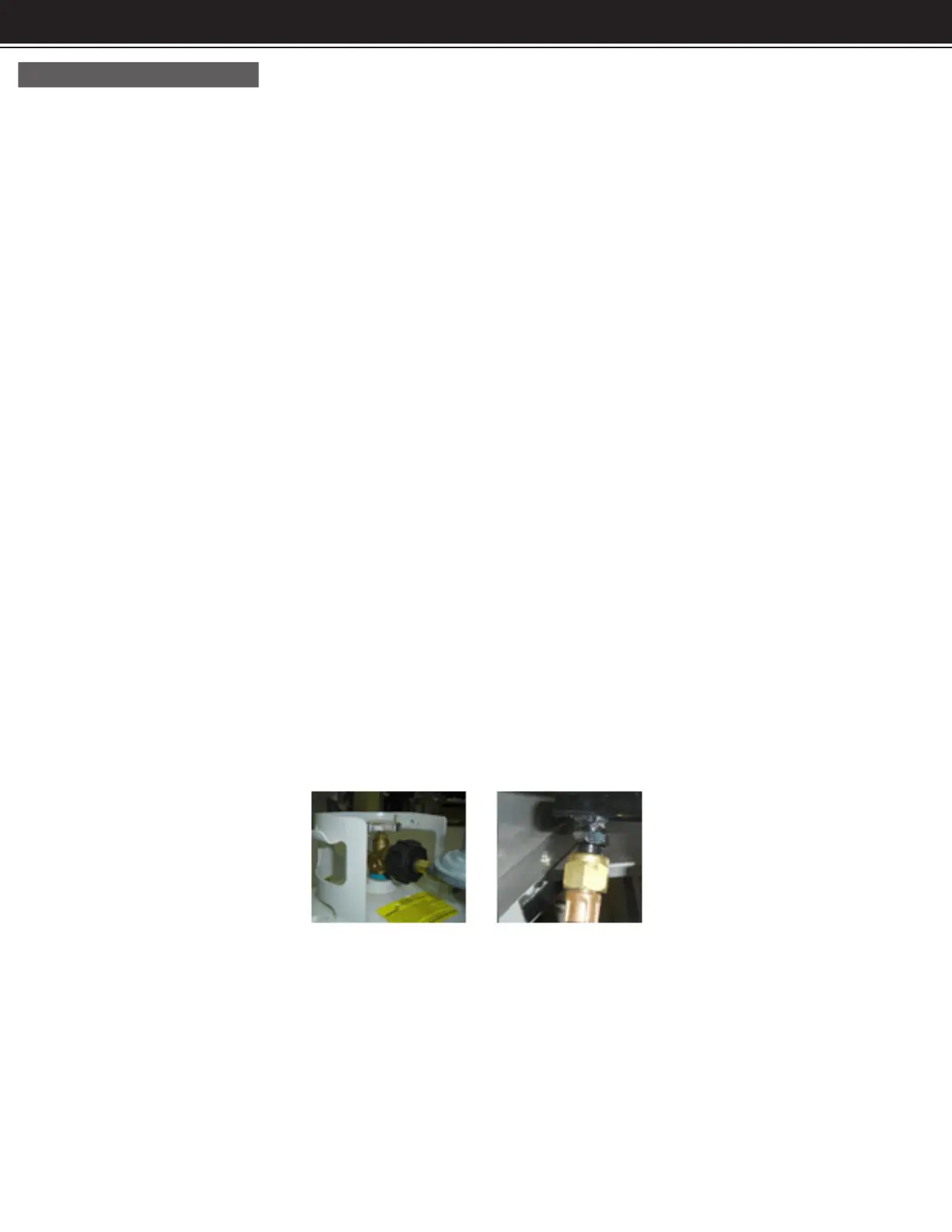
2. Check all connections from the LP gas regulator and supply valve up to and including the connection to the
manifold pipe assembly (the pipe that goes to the burners). Soap bubbles will appear where a leak is present.
3. If a leak is present, immediately turn o the gas supply and tighten the leaky ttings.
4. Turn the gas back on and recheck.
5. Should the gas continue to leak from any of the ttings, turn o the gas supply and contact your local re
department.
Only those parts recommended by the manufacturer should be used on the grill. Substitution will void the warranty.
Do not use the grill until all connections have been checked and do not leak.
GAS FLOW CHECK
Each grill burner is tested and adjusted at the factory prior to shipment; however, variations in the local gas
supply may make it necessary to adjust the burners. The ames of the burners should be visually checked.
Flames should be blue and stable with no yellow tips, excessive noise or lifting. If any of these conditions exist,
check to see if the air shutter or burner ports are blocked by dirt, debris, spider webs, etc.
Check all gas supply ttings for leaks before each use. It is handy to keep a spray bottle of soapy water near the
shut-o valve of the gas supply line. Spray all the ttings. Bubbles indicate leaks.


 To Next Page
 Loading...