Need help?
Do you have a question about the Baxi CPA-BT Series and is the answer not in the manual?
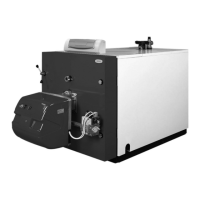
The document describes the BAXI CPA-BT series of low-temperature boilers, which are designed for heating applications. These boilers are characterized by their robust construction and efficient operation, suitable for both residential and commercial use.
The CPA-BT boilers are low-temperature heating units designed to provide hot water for central heating systems. They operate at lower temperatures compared to conventional boilers, which contributes to higher efficiency and reduced energy consumption. The boilers are compatible with various types of burners, including those for gas (natural gas and propane) and oil, allowing for flexibility in fuel choice. They can be configured for single-stage, two-stage, or modulating burner operation, depending on the specific model and control panel used.
The system incorporates a control panel that manages the boiler's operation, including burner activation, pump control, and safety functions. Different control panel options are available: a basic control panel for single or two-stage operation, and a digital KSF/QSF control panel for more advanced control, including modulating operation. These panels allow for precise temperature regulation and system monitoring.
The boiler's design emphasizes ease of installation and maintenance. It features a robust steel body, a large combustion chamber, and a system for efficient heat exchange. The design also includes provisions for connecting various external components such as pumps, expansion vessels, and safety valves.
The CPA-BT series includes a wide range of models, from the CPA 55-BT to the CPA 1740-BT, with varying nominal power outputs.
Power Output:
Efficiency:
Water Content:
Maximum Working Pressure:
Set Temperature Range:
Fuel Consumption:
Combustion Chamber:
Pressure Drop in Water Circuit:
Dimensions:
Flue Gas Connections:
Electrical Supply:
Versatility: The CPA-BT boilers are designed for a wide range of applications, from small residential systems to larger commercial or industrial installations. Their compatibility with different fuel types (gas and oil) and burner configurations (single-stage, two-stage, modulating) makes them highly adaptable.
Control Systems:
Temperature Management: The boilers are designed to operate at low temperatures, which is beneficial for systems that incorporate radiant floor heating or other low-temperature emitters. The ability to set a temperature range of 50-90°C provides flexibility for different heating needs.
Safety Features: The manual outlines several safety checks and components, including:
Installation Flexibility: The boilers can be installed in various configurations. The manual provides detailed instructions for connecting the boiler to the heating system, including flow and return pipes, expansion vessels, and safety devices. It also covers the installation of the burner and the electrical connections to the control panel.
Ease of Access: The design of the CPA-BT boilers allows for easy access to internal components for maintenance and cleaning. The combustion chamber door can be opened to facilitate inspection and cleaning of the heat exchange surfaces.
Cleaning Procedures:
Component Inspection:
Condensation Prevention: The manual emphasizes the importance of preventing condensation in the boiler, especially in low-temperature systems. It provides guidelines for maintaining minimum return water temperatures to avoid corrosion and extend the boiler's lifespan. For oil burners, the minimum return temperature should be 35°C, and for gas burners, 30°C.
Regular Servicing: To ensure optimal performance and longevity, the boiler should undergo regular maintenance checks by qualified personnel. The manual recommends a maintenance plan that includes periodic inspections and cleaning of key components.
Troubleshooting: The manual provides a section on troubleshooting common issues, such as burner lockout, pump malfunctions, and temperature control problems, to assist installers and technicians in diagnosing and resolving issues.

 To Next Page
 General