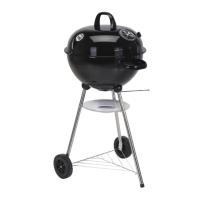
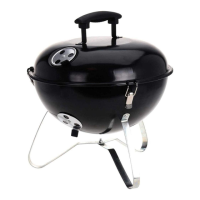
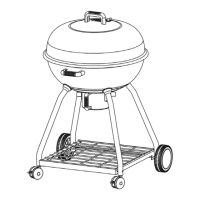
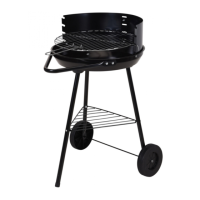
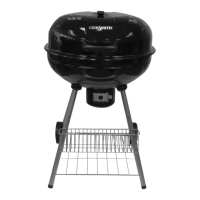
This document describes a charcoal barbecue, model C80-216020, designed for outdoor use. It is a portable grilling device, featuring a round bowl and lid, supported by a three-legged stand with wheels for easy mobility.
Function Description
The primary function of this device is to cook food outdoors using charcoal as fuel. It allows for grilling, smoking, and potentially roasting, depending on the accessories used. The barbecue is designed for ease of use and portability, making it suitable for various outdoor settings like gardens, patios, camping, or picnics.
Important Technical Specifications
- Fuel Type: Charcoal.
- Maximum Fuel Quantity: 2.0kg. This refers to the maximum amount of charcoal that should be placed directly on the charcoal grid/grate.
- Maximum Food Quantity: 2.0kg. This is the maximum weight of food that can be placed on the cooking grid.
- Dimensions: While not explicitly stated, the diagrams suggest a standard-sized kettle barbecue, suitable for typical family use.
- Materials: The components are made from durable materials, likely steel with enamel coating for the bowl and lid, and possibly chrome-plated steel for the grids. The handles are designed to be heat-resistant.
- Safety Standards: The barbecue complies with EN 1860-1, a European standard for barbecues.
Usage Features
Assembly: The barbecue requires assembly before first use. This involves attaching the legs, wheels, ash catcher, and various other components to the main bowl and lid. Clear instructions with diagrams are provided for this process. It is crucial to ensure all connections are tight and secure.
Fueling and Ignition:
- Place the charcoal directly on the charcoal grid at the bottom of the barbecue bowl.
- Do not use spirit, petrol, or lighter fluid for ignition. Only use firelighters compliant with EN 1860-3.
- Allow at least 30 minutes for the charcoal to burn down to embers before placing food on the cooking grid.
- The recommended amount of charcoal is 2.0kg.
Cooking:
- The barbecue features a cooking grid for placing food.
- The lid helps to retain heat and smoke, allowing for more even cooking and potentially smoking.
- Ventilation holes (dampers) on the lid and bowl allow for control of airflow, which in turn regulates the cooking temperature.
- Always use protective gloves when handling hot components or adjusting the charcoal.
Safety Precautions:
- Carbon Monoxide Poisoning: Always use the barbecue outdoors in a well-ventilated area. Never use it in enclosed spaces such as tents, caravans, motorhomes, boats, or indoors, as this can lead to fatal carbon monoxide poisoning.
- Fire Hazard: Keep the barbecue away from flammable materials. Ensure it is placed on a stable, level, and heat-resistant surface.
- Children and Animals: Keep children and pets away from the hot barbecue.
- Hot Surfaces: All metal parts of the barbecue become very hot during use. Always use protective gloves and appropriate tools (e.g., tongs, spatulas) when handling food or adjusting components.
- Stability: Ensure the barbecue is stable and cannot be easily tipped over.
- Ash Disposal: Allow the barbecue to cool completely before disposing of ash.
Portability:
- The barbecue is equipped with wheels on two of its legs, allowing it to be tilted and rolled to a desired location.
- Always ensure the barbecue is cool before attempting to move it.
Maintenance Features
Cleaning:
- Before First Use: Remove all packaging materials and clean all parts thoroughly.
- After Each Use: Allow the barbecue to cool completely.
- Remove and dispose of ash.
- Clean the cooking grid and charcoal grid. Soaking the grids in warm, soapy water can help loosen food residue.
- Wipe down the interior and exterior of the bowl and lid.
- Storage: Store the barbecue in a dry, protected area when not in use. If storing outdoors, consider using a barbecue cover to protect it from the elements.
Inspection:
- Regularly check all components for wear and tear, especially the grids, handles, and legs.
- Ensure all screws and fasteners remain tight. Re-tighten as necessary.
- Inspect the enamel coating for chips or damage, which could lead to rust.
Long-Term Care:
- If any parts become damaged or worn, replace them with original spare parts to ensure continued safe operation.
- Following the cleaning and storage instructions will help prolong the life of the barbecue.

 Need help?

 To Next Page
 General