6
SHREDDING
1. Be very careful about what you put into the hopper. The Shredder cannot handle cloth, string, plastics,
glass, rubber, rocks or paving, brick, large wood chunks, metal, thick branches and long vines.
Any
material more than two centimeters (about ¾”) thick can jam the Shredder.
2. Soggy soil, green garden wastes and wet grass clippings may need to be mixed with dry wood chips or
leaves to avoid clogging the Shredder.
3. Preparation of the material may help in feeding it through the hopper. Cutting branches off stems, for
example, helps the mass of material slide down the hopper walls. Adding too much material at a time
can clog the works. Pushing thick weeds or branches into the hopper with force overfeeds the flails
(knife blades) and jams the Shredder. Rods and tubes can replace the curved “Swiss cheese” screen
for improved shredding of wet materials or finer chips (see “Changing Discharge Screen").
4. Cleaning the Bio 100 discharge screen or clearing internal blockage requires temporary removal of the
belt cover and the discharge screen. It may also be necessary to remove the hopper to remedy
internal blockage. In order to remove objects between the Chipper hopper and the rotating parts it is
necessary to remove the hopper assembly, which is held by eight sets of M8
x 20 bolts, lock washers
and hex nuts.
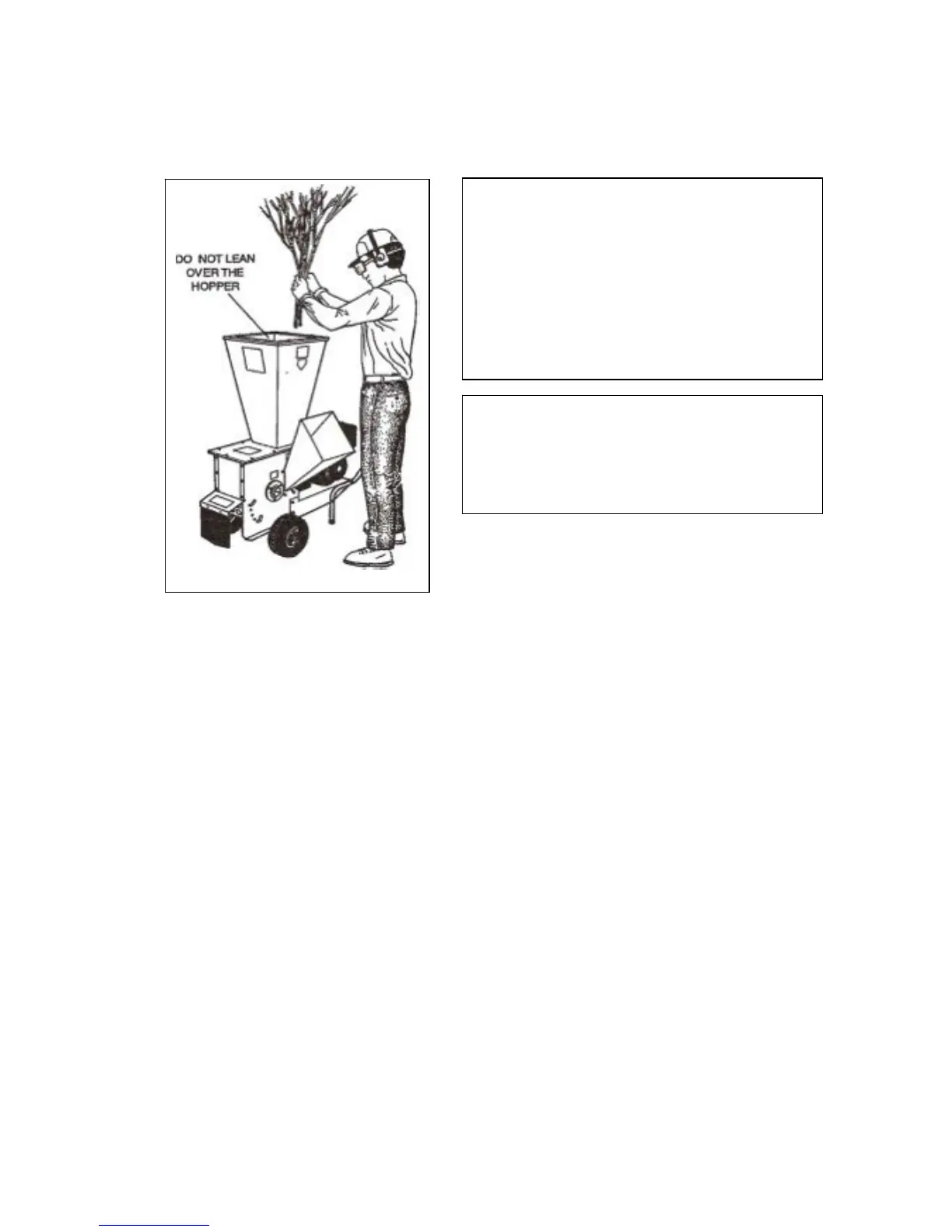
DANGER
Shredder grabs and pulls material down into the
hopper with surprising speed. Do not wear rings,
bracelets, jewelry, watches or any other items
that could be caught by the material, drawing
your hands into the Shredder. Hold the material
very lightly. Do not force the material into the
shredder. Gloves, when worn for shredding,
should be large enough to slip off your hands if
caught by the material.
WARNING
Always shut down the engine and wait until all
movement stops before clearing the hopper or
discharge screen, and before removing the
hopper to remove a blockage.


 To Next Page