Page 27
9487 Dielman Rock Island Ind Dr, St. Louis, MO 63132 www.becs.com
Operation and Maintenance Manual
Rev:
L13
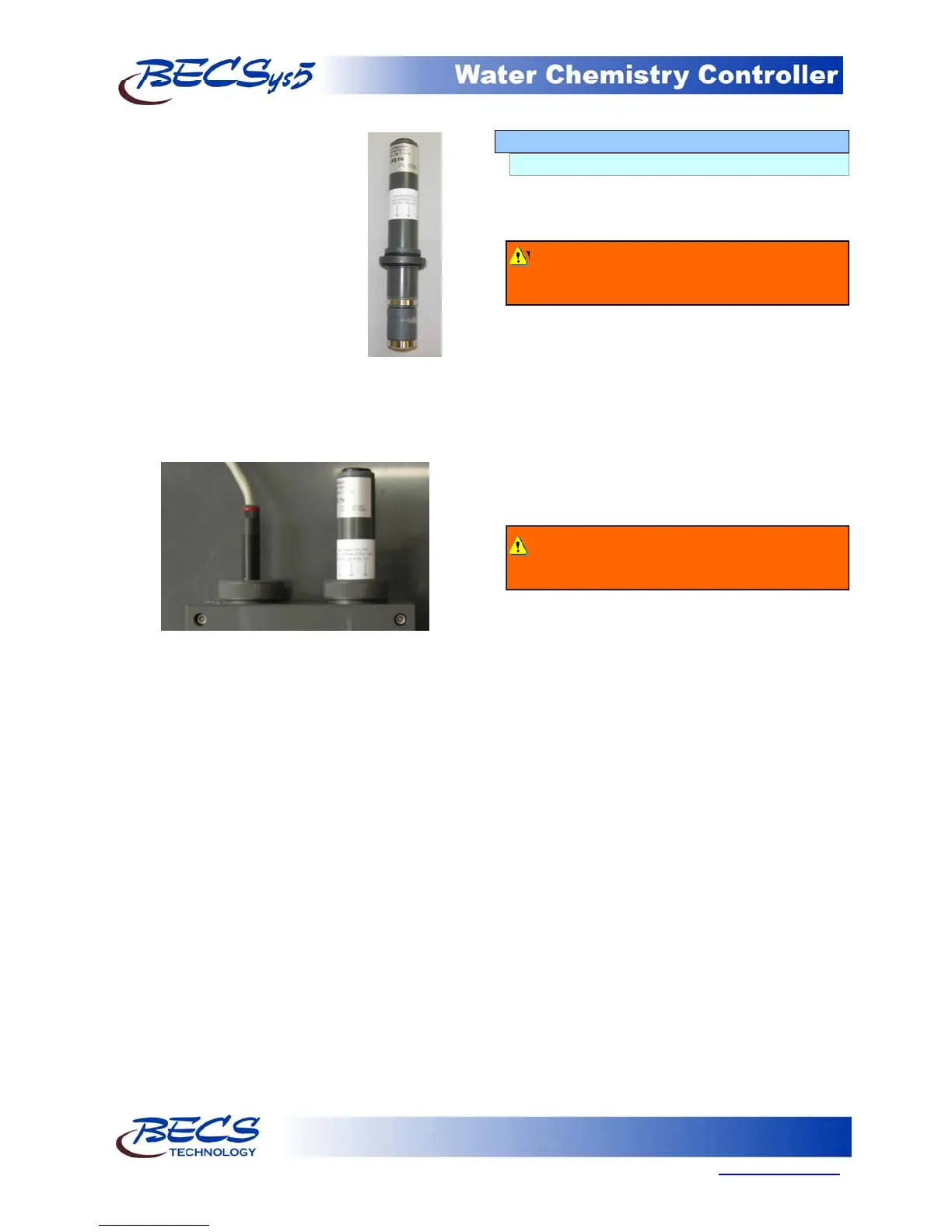
Slide the O-Ring retainer (O-Ring
side towards membrane) up
against the O-Ring just installed.
Insert the complete assembly into the Flow Cell.
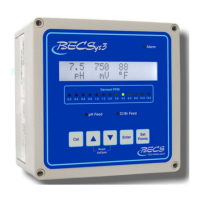
Check the Teflon Tape around the Probe Nut and
re-wrap if necessary. Use the Probe Nut to secure
the sensor inside the Flow Cell. The top of the
Probe Nut should be at the bottom of the label.
The voltage applied by the controller to the Free
Chlorine Sensor polarizes the surface of the gold
cathode. The polarization period (one hour) must
elapse before calibration is performed based on
the results acquired through the use of a DPD test
kit.
D – 4: Conductivity Sensor
D – 4.1: Cleaning
The sensor should be kept as clean as possible for
optimum measurement accuracy. The frequency
of cleaning will depend upon the application.
When necessary, wash with strong detergent
(something similar to Dawn liquid detergent) and
warm water, using a pipe cleaner or small soft
brush for most fouling. Rinse with tap water to
completely remove the detergent, and then
perform a final rinse with distilled or de-ionized
water.
For hard scale, try a mild acid solution. Vinegar
will often do it, 5% hydrochloric acid if the vinegar
doesn’t work. You can use acetone or something
similar on this sensor.
Warning: Do not soak the sensor in a strong
solvent as the O-rings may be attacked after
time.
Warning: Residue from cleaning solutions, or
even skin contact, can leave trace elements on
the sensor that ma
affect the readin


 To Next Page