Fridge use
1.
Never put liquids in the refrigerator uncovered.
2. Never put hot foods in the refrigerator. Warm food should be allowed to cool to room temperature
before being put into the refrigerator.
3. Nothing should rest against the rear wall of the refrigerator, as this will cause frost and possible
condensation problems which will be difficult to remove.
4. Make sure food is clean and any extra water is wiped away before putting into the fridge.
5. Wrap or cover food before putting into the fridge. This will help prevent the loss of moisture, keep
food fresh and avoid unpleasant odors.
6.
Any foods to be used soon should be stored at the front of the shelf to prevent deterioration
caused by the door being open for prolonged periods.
7. Do not overfill the fridge. There should be sufficient space between the foods to allow the cool air to
circulate.
8. Thawing frozen foods in the fridge compartment will help to keep the temperature low and save energy.
9.
Never store raw meats on shelves above cooked meats or other produce. This will help to prevent
juices from raw meat contaminating other foodstuffs.
Note:
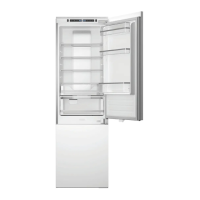
The fridge shelves can be moved according to the storage requirements within the fridge section. To move
the shelf, lift up the rear section and then pull it outwards.
To replace, slide the shelf back into the slot, and then lower the rear section.
Freezer use
1.
The freezer compartments are designed to store only frozen food.
2. Never put hot or warm foods in the freezer, allow them to cool fully before putting them into the freezer.
3. Follow the instructions on the food packaging for storage of frozen food. If no information is
provided, foods should not be stored for more than three months after the purchase date.
4. Store food in small packages (ideally less than 1kg). This reduces the freezing time and improves the
quality of the food after thawing.
5. Wrap food before putting into the freezer. To stop the wrapping sticking together, ensure it is dry.
6.
Label the food before freezing with information including type of food and dates of storage and expiry.
7.
Once food is thawed, it must not be refrozen. Only defrost as much food as is required to prevent
wastage.
8.
Bottled or canned drinks should not be stored in the freezer compartments as they could explode.
9. The maximum amount of fresh food that can be frozen within a 24 hour period is 5.7 lb (2.6kg).
10. Do not attempt to freeze more than the maximum amount.



 To Next Page