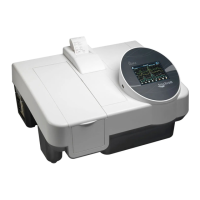
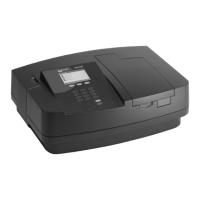
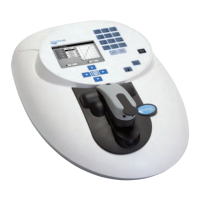
The Biochrom Libra S50, S60, S70 & S80 are UV Visible Spectrophotometers designed for laboratory use, offering precise measurement of light absorption across the UV and visible spectrum. These instruments are intended for use by trained scientists and technicians familiar with spectrophotometers and associated hazards.
Function Description
The primary function of these spectrophotometers is to measure the absorbance of samples in the UV and visible light range. This is achieved by passing a light beam through a sample and detecting the amount of light that passes through. The instruments are capable of performing various analytical applications, including quantitative analysis, kinetics, and spectral scanning, depending on the specific model and software capabilities. They are designed to provide accurate and reproducible results for a wide range of laboratory applications.
Important Technical Specifications
Compliance and Directives:
The Biochrom Libra S50, S60, S70 & S80 series conforms to several key directives, ensuring safety, electromagnetic compatibility, and environmental responsibility:
- 2006/95/EC (Low Voltage Equipment Safety Directive): Ensures electrical safety.
- 98/79/EC (In Vitro Diagnostic Medical Devices Directive): Relevant for models used in IVD applications.
- 2004/108/EC (EMC Directive): Guarantees electromagnetic compatibility, minimizing interference with other devices.
- 2002/96/EC (EC Directive on Waste Electrical and Electronic Equipment - WEEE) & 2003/108/EC, 2008/34/EC: Addresses the responsible disposal and recycling of electrical and electronic equipment.
- 2002/95/EC (Restrictions of the use of certain Hazardous Substances in Electrical and Electronic Equipment - ROHS): Limits the use of hazardous materials in manufacturing.
- 2006/42/EC (Machinery Directive): Pertains to the safety of machinery.
- 1999/5/EC (Radio and Telecommunications Terminal Equipment Directive): Applicable to instruments fitted with a Bluetooth accessory.
Conformity Standards:
- EN61010-1:2001: Safety requirements for electrical equipment for measurement, control, and laboratory use (General requirements).
- EN 61010-2-101:2002: Particular requirements for IVD medical equipment.
- EN 61326-1:2006: Electromagnetic compatibility - generic emission standard for electrical equipment for measurement, control, and laboratory use (Classified as basic immunity criterion A and Class B for conducted and radiated emissions).
- EN 12100-1,2:2003 (+A1:2009): Safety of machinery – Basic concepts, general principles for design.
- EN 14121-1:2007: Safety of machinery, Risk assessment.
Physical and Environmental Specifications:
- Weight: Approximately 18.5 kg.
- Operating Environment: Indoor use, 5 to 40 °C, maximum relative humidity 90% up to 31 °C decreasing linearly to 50% at 40 °C.
- Power Supply: Operates from 85 to 264 V~, 50 or 60 Hz.
- Power Rating:
- Xenon units: 100 VA.
- Deuterium/Tungsten units: 150 VA.
- Fuses: T 1.6 A H 250 V AC (Anti-Surge, High breaking capacity) for both Deuterium/Tungsten and Xenon units.
Light Sources:
The instruments utilize different light sources depending on the model:
- Deuterium/Tungsten lamps: Commonly used for UV-Vis measurements.
- Xenon lamps: Also used for UV-Vis measurements, offering specific advantages depending on the application.
Usage Features
Installation and Setup:
- Placement: Requires a stable, level bench with sufficient space for ventilation.
- Environmental Considerations: Should be sited in an atmosphere free from dust and corrosive fumes. If stored in a cold environment, allow 2-3 hours for thermal equilibrium to prevent condensation.
- Power Connection: Connects to the local supply outlet using provided power cables. The instrument should be positioned so the power cable can be readily removed.
- Self-Diagnostics: Performs automatic start-up self-diagnostic checks upon switch-on. Users must wait for these checks to complete before operation.
Controls and Indicators:
- On/Off Switch: Located on the left-hand side of the instrument.
- Fuse Holder: For replacing power inlet fuses.
- Mains Inlet: For power connection.
- USB B Receptacle: For connection to a PC, enabling external control and data transfer.
- USB A Plug: For connection to a printer (not available on Libra PC models) or USB memory sticks (on Libra S50, S60, S70 & S80 only).
- Connector for Externally Powered Accessories: Allows integration of additional modules.
- Internal Accessory Connector: For internal modules.
- USB LED: Indicates when the instrument is writing to a USB memory stick; the stick must not be removed while this LED is on.
- POWER/STATUS INDICATOR LED:
- Orange: During start-up and calibration.
- Green: Instrument is on and has passed start-up calibration tests.
- Red: Instrument is on but has failed start-up calibration tests.
Operation Procedures:
- Warm-up: Best performance is achieved after allowing the instrument to warm up and stabilize for at least 30 minutes.
- PC Connection: If applicable, connect to a PC via USB for control and access to online help/user manual.
- Application Selection: Select the appropriate application or method and set parameters for the sample.
- Precision Mode: Available for Deuterium/Tungsten units, offering enhanced measurement precision.
- Cuvette Selection: Use correct cuvette cell types (e.g., standard 10mm path length cells). Ensure cells are clean, free from dust/scratches, and correctly oriented. Some cells may absorb UV light and are unsuitable for UV measurements.
- Sample Preparation: Familiarize with hazards, observe local regulatory practice, and use personal protective equipment (PPE) if necessary. Prepare sample blanks (references) and solutions carefully.
- Post-Run Procedures: Empty and rinse cuvette cells with deionized water. Periodically clean cuvettes with commercial cleaning solution or dilute detergent. Dispose of hazardous or biohazardous waste according to local regulations.
Safety Features:
- High Voltage Warning: High voltages exist inside the unit; repair and maintenance should only be performed by specifically trained individuals.
- UV Radiation Warning: The UV source generates a light beam that can cause permanent eye damage if exposed. The unit should not be operated with the sample chamber lid open or the lamp housing lid removed.
- Bio-Hazard Warning: While the unit itself contains no bio-hazardous materials, it may be used with bio-hazardous samples. Users must have decontamination procedures in place. Sample chamber cell holders are removable for decontamination.
- Toxic Fumes: Efficient laboratory ventilation is required when working with volatile solvents or toxic substances.
- Heated Accessories: Care must be taken when handling all heated accessories.
- PC Connection Safety: When connected to a PC, ensure the PC conforms to basic safety and EMC standards. Advised precautions include correct display setup to reduce eye strain and use of PPE/disinfectant wipes for keyboard/mouse to prevent cross-contamination.
Maintenance Features
User Maintenance:
- Lamp Replacement: Deuterium and Tungsten lamps can be replaced by the user. Xenon lamp replacement must be carried out by a qualified service engineer.
- Procedure for Deuterium/Tungsten Lamp Replacement:
- Switch off the instrument and disconnect the power supply cord.
- Allow lamps to cool.
- Locate and remove the lamp access cover at the rear of the unit (two top screws, slide back, lift off).
- Remove the old lamp and dispose of it according to regulatory practice.
- Follow handling instructions for the new lamp; do not touch the glass envelopes directly.
- Replace the lamp cover and screw securely.
- Attach power cord, switch on, and allow at least 30 minutes for warm-up.
- Perform a new instrument baseline (on all bandwidth settings if applicable) and save it.
- Reset the lamp hours.
- Cleaning:
- Cell holders and accessories should be removed and cleaned with commercially available cleaning solution or dilute detergent, followed by a thorough rinse with deionized water, and allowed to dry.
- Casework and the sample compartment may be wiped down with commercially available disinfectant wipes.
- Performance Validation: Good laboratory practice recommends periodic checks for optical performance, including wavelength accuracy, stray light, and absorbance. The unit performs validation checks on power-up. Traceable reference materials can be used for performance validation.
- Lamp Life: Lamps age over time, reducing energy output. Lamps should be changed when energy falls to around 50% of installation energy.
Service and Repair:
- Servicing: Annual servicing is recommended to ensure the unit remains suitable for purpose. This can be arranged through a distributor.
- Decontamination for Return: Before returning equipment for inspection, servicing, repair, or disposal, it must be decontaminated. A returns request form and a completed declaration of contamination status form (available from the Biochrom website or local distributor) are required. Instruments not sufficiently cleaned or decontaminated may incur additional charges and delays.
- Troubleshooting: A troubleshooting guide is provided in the manual (page 8) for common issues like start-up calibration failures, negative absorbance readings, unexpected results, and poor reproducibility.
Disposal:
- Decontamination: Before disposal, all accessories must be removed and thoroughly cleaned with disinfectant and rinsed with distilled water. All outside surfaces and sample chamber walls must be wiped down with disinfectant wipes.
- WEEE Compliance: The product is marked with a crossed-out wheeled bin symbol, indicating it falls under the Waste Electrical and Electronic Equipment (WEEE) Directive. It must not be disposed of as unsorted municipal waste but collected separately in accordance with local regulatory practice.



 To Next Page
 General