Category Systolic Blood Pressure Diastolic Blood Pressure
Optimal < 120 < 80
Normal < 130 < 85
High Normal £ÎäÊʣΠnxÊÊn
Hypertension
UÊ-Ì>}iÊ£\Ê`
UÊ-Ì>}iÊÓ\Ê`iÀ>Ìi
UÊ-Ì>}iÊÎ\Ê-iÛiÀi
£{äÊÊ£x
£ÈäÊÊ£Ç
Ê£nä
äÊÊ
£ääÊÊ£ä
Ê££ä
Isolated Systolic Hypertension Ê£{ä < 90
Further information
If your values are mostly “normal” under resting conditions but exceptionally high under conditions of physical
ÀÊ«ÃÞV}V>ÊÃÌÀiÃÃ]ÊÌÊÃÊ«ÃÃLiÊÌ>ÌÊÞÕÊ>ÀiÊÃÕvviÀ}ÊvÀÊÃV>i`Ê»>LiÊÞ«iÀÌiû°ÊÊ>ÞÊV>Ãi]Ê
please discuss the values with your doctor.
ÀÀiVÌÞÊi>ÃÕÀi`Ê`>ÃÌVÊL`«ÀiÃÃÕÀiÊÛ>ÕiÃÊ>LÛiÊ£Óä}ÊÀiµÕÀiÊi`>ÌiÊi`V>ÊÌÀi>ÌiÌ°
£°xÊÊ`Ê*ÀiÃÃÕÀiÊ+ÕiÃÌÃÊ>`ÊÃÜiÀÃ
a) 7ÞÊÃÊÞÊL`Ê«ÀiÃÃÕÀiÊÀi>`}Ê>Ü>ÞÃÊ`vviÀi̶
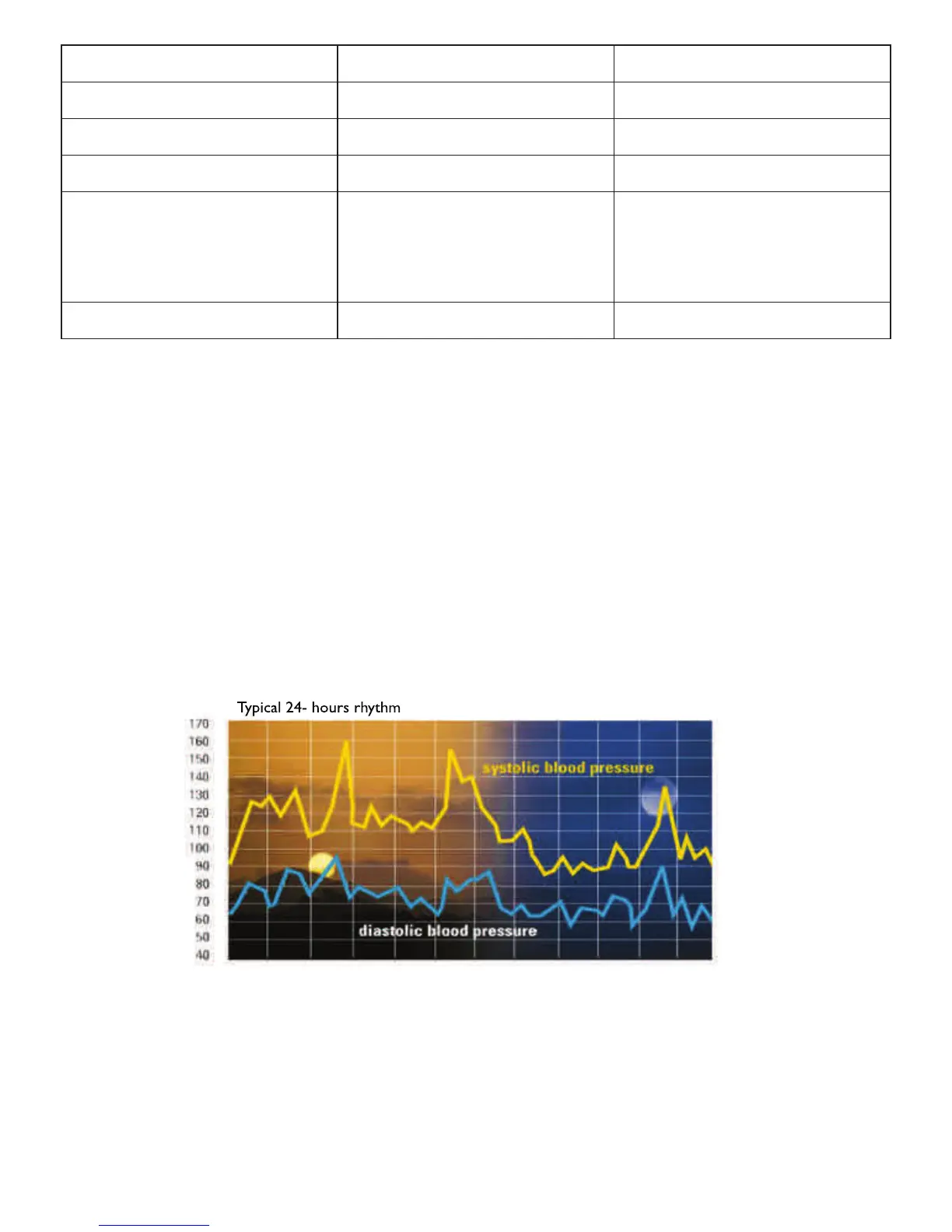
Your blood pressure changes constantly. It is quite normal for blood pressure to fluctuate significantly (50 mmHg
to 60 mmHg) throughout the day. Blood pressure is normally lowest at night, but increases during waking hours
when the stress and activities of everyday life are highest.
mmHg
AM Time PM
Your blood pressure also increases and decreases under the following circumstances



 To Next Page