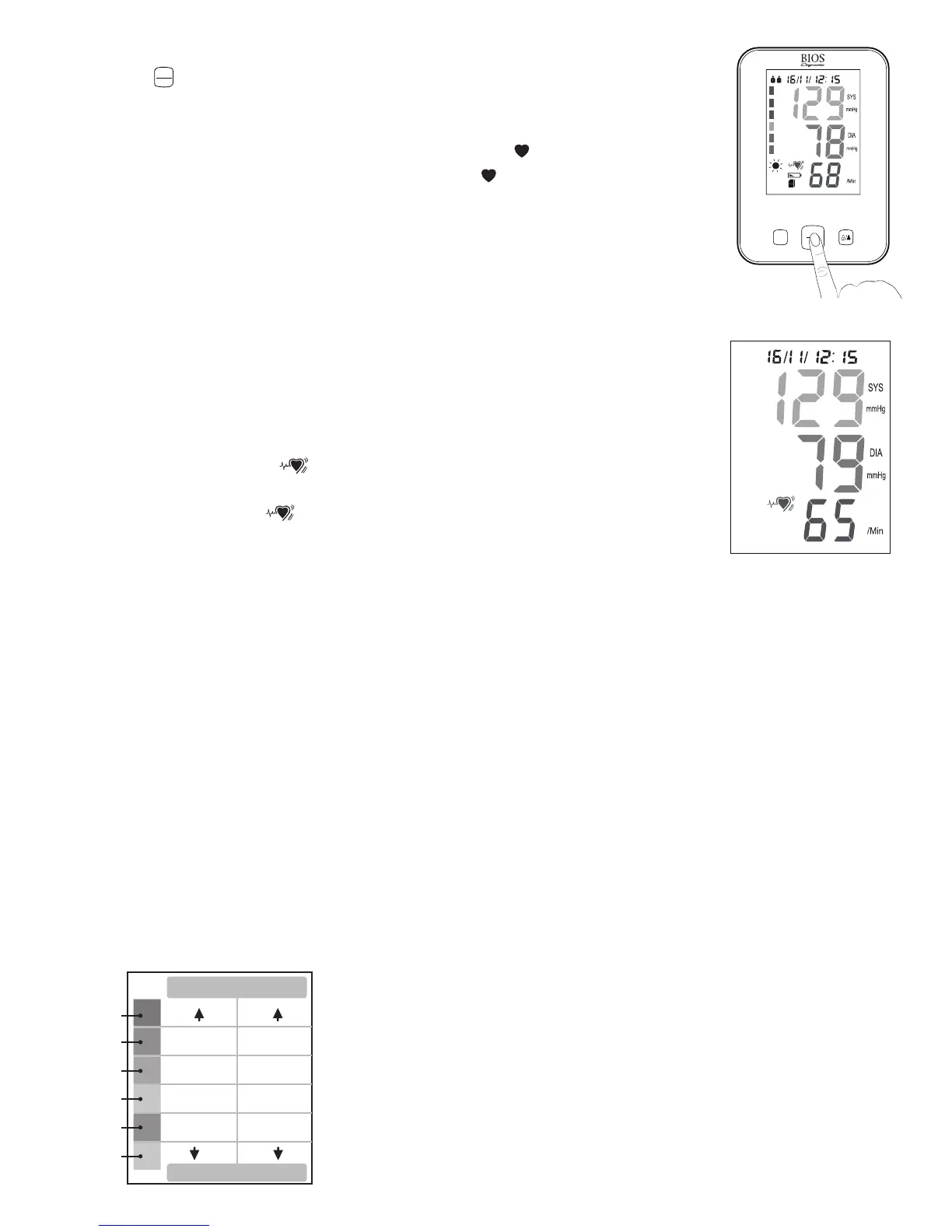
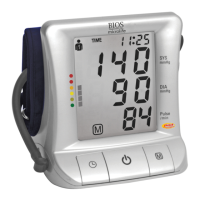
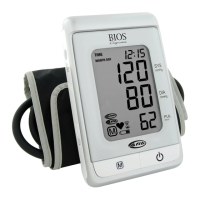
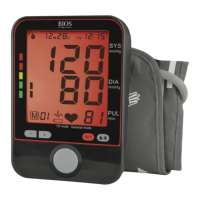
button to turn on the device and start measurement. The LCD screen is
turned on. The cuff begins to inflate while the increasing cuff pressure is displayed
on the screen. After the suitable inflation pressure is reached, the cuff stops inflating
and the pressure gradually falls. The screen will show the icon once a pulse is
detected. When the pulse signal becomes strong, the icon will begin to flash.
Three short beeps sound when the measurement is completed. The systolic and
diastolic blood pressure values along with the pulse rate are displayed on the screen.
The measurement is displayed for approximately 1.5 minutes.
2. The device will switch off after 1.5 minutes when no button is pressed.
"/\ When the measurement is taken between 4am and 12pm the “sun” icon will be
displayed
3.5 Irregular Heartbeat Detection
When the device detects an irregular heartbeat, or any excessive body movement
during the measurement, the symbol will appear and flash when the blood pressure
measurement is displayed. It is important that you be relaxed, remain still and do not talk
during measurement. If the symbol appears frequently (e.g. several times a week), it
may be an indication of a more serious heart problem, and you should consult your doctor.
3.6 `Ê*ÀiÃÃÕÀiÊÃÃiÃÃiÌÊ-vÌÜ>Ài
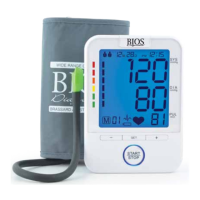
The bars on the left hand side of the display show you the range within which the indicated blood pressure
values lies. Depending on the height of the bar, the readout value is either within the normal (green), borderline
(yellow/orange) or danger (red) range.
The classification is based on standards adopted from WHO (World Health Organization); which is recognized
by Hypertension Canada.
The indicator bar rises according to your measurement.
UÊÊ vÊÞÕÀÊi>ÃÕÀiiÌÊ>ÃÊÞÊiÊÀÊÌÜÊL>ÀÃ]ÊÞÕÀÊi>ÃÕÀiiÌÊÃÊÊÌiÊ}ÀiiÊâi]ÊÀʺ À>»Ê
according to the WHO classification.
UÊÊ vÊÞÕÀÊi>ÃÕÀiiÌÊ>ÃÊÌÀiiÊL>ÀÃ]ÊÌÊÃÊÊÌiÊÞiÜÊâi]ÊÀÊ}ÊÀ>Ê>VVÀ`}ÊÌÊÌiÊ7"Ê
classification.
UÊ vÊÞÕÀÊi>ÃÕÀiiÌÊ>ÃÊvÕÀÊL>ÀÃ]ÊÌÊÃÊÊÌiÊÀ>}iʺ-Ì>}iÊ£ÊÞ«iÀÌiûÊâi°
UÊÊ vÊÞÕÀÊi>ÃÕÀiiÌÊ>ÃÊwÛiÊL>ÀÃ]ÊÌÊÃÊÊÌiÊÀi`ʺ-Ì>}iÊÓÊÞ«iÀÌiûÊâi°
UÊÊ vÊÞÕÀÊi>ÃÕÀiiÌÊ>ÃÊÃÝÊL>ÀÃ]ÊÌÊÃÊÊÌiÊÀi`ʺ-Ì>}iÊÎÊÞ«iÀÌiûÊâi°
START
M
STOP
PUL
PUL
SYS
WHO World Health Organization 2003
180
160-180
110
100-110
90-100
85-90
80-85
80
140-160
130-140
120-130
120
(mmHg)
DIA
Red
Red
Orange
Yellow
Green
Green



 To Next Page