OPERATION
WOOD CUTTING
Be
sure board is firmly positioned. Hold
jig
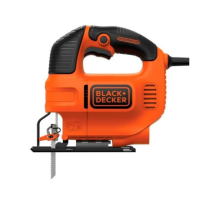
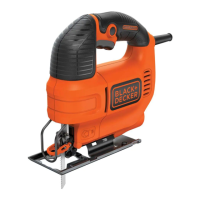
saw by the convenient overhead
handle and operate switch
to
turn the
unit
on. Don't attempt
to
turn
unit
on
when blade
is
against material
to
be cut. This could stall the motor. Place
front of shoe on material
to
be
cut and hold jig saw shoe down firmly against
the wood while cutting. Don't force the tool; let the blade cut
at
its own speed.
Whenever possible, clamp
or
support work close
to
the line
of
cut. When
the cut is completed, shut
off
power and lay the saw aside before loosening
the work.
METAL AND PLASTIC CUTTING
In
cutting
thin gauge sheet metals,
it
is best
to
clamp wood
or
plywood to
the bottom of the metal sheet; this will insure a clean cut without the danger
of
vibration
or
tearing
of
metal. Always remember
to
use a finer tooth blade
for
ferrous metals (those that have
an
iron content); and use a coarser tooth
blade
for
non-ferrous metals (those that do not have
an
iron content).
Use lower speeds
or
slow
feed
r~tes
for
cutting
metals, plastics and com-
position tile. When
cutting
laminated plastic, place the finished side down
and use a fine tooth hollow ground blade.
POCKET CUTTING (See Figures 6 and
7)
A pocket cut is
an
easy method
of
making
an
inside
cut.
The
saw can be
inserted directly into a panel
or
board
without
first
drilling
a lead
or
pilot
hole. In pocket cutting, measure
the
surf~o
be
cut
and mark clearly with
a pencil. Next
tip
the
saw forward
until
the
front
edge
of
the shoe
sits
firmly
on the work surface.
SWitch
the
tool on
and
allow
it
to
attain maximum speed.
Grip the handle
finnly
and
lower
the
back edge
of
tool
until
the
blade
cuts
smoothly
into
material. Always be sure blade reaches
its
complete depth
before starting
to
cut. NOTE:
Do
not
attempt
to
pocket
cut
with
the shoe
in
the anti-splintering position.
FIGURE 6 FIGURE 7
8



 To Next Page
 Loading...