Need help?
Do you have a question about the BMW E91 and is the answer not in the manual?
Ensure all accessories are present after unpacking the box.
Instructions for cleaning the device using appropriate cloths and cleaners.
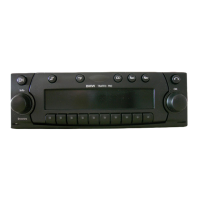
Explains the function of each key on the device's panel.
Details the different sections of the touch screen and their functions.
Details how to operate and use the radio function.
Explains how to play music and video from discs.
Instructions for connecting and using an iPod with the system.
Guide for using the Bluetooth hands-free communication feature.
Instructions for playing media from an SD card.
Information on using the optional navigation system.
Details on connecting external audio/video devices via AUX IN.
Information on using the rear-view camera feature.
Overview of the different system setup menus available.
Details on how to configure DVD playback settings.
How to adjust audio effect settings for better sound.
How to set up the child lock feature.
Describes the function of panel keys for BMW E38 and E39 models.
Describes the function of panel keys for BMW E90, E91, and E92 models.
Instructions for turning the device on and off.
How to select and access USB, SD, FM, AM, and NAVI interfaces.
Instructions for entering, ejecting, and playing discs.
Controls for pausing, playing, selecting tracks, and switching functions.
Important notices regarding remote control battery life and handling.
Buttons for mute, play mode, pause, and track selection.
Controls for accessing menus, settings, and exiting.
Description of the main interface and available operation modes.
How to change parameters and use the radio in Radio mode.
Explanation of icons for different media sources like Radio, Disc, USB, SD, iPod, NAVI, and Bluetooth.
How to change radio parameters like RDS in Radio mode.
Displays the current mode and radio frequency being tuned.
Explanation of AF, TA, LOC/DX, PS, and REG indications.
Access to setup menu and display of current system time.
Details how the touch screen is divided into sections for operation.
Explains the functions of touch sections A through F for DVD/VCD playback.
Instructions for inserting discs and playing music via USB, CD, or WMA.
Description of the USB player interface and its controls.
Details the Equalizer (EQ) menu for audio adjustments.
Shows the number keyboard for direct track selection in USB player.
Description of the CD player interface and its controls.
Functions for mode switching, playback, volume, and track selection.
System supports iPod access for playing audio and video files.
Description of the iPod player interface and its controls.
Controls for pause, stop, fast forward/backward, repeat, and scan.
Touch screen controls for SD card playback, similar to USB/CD.
Recommendation for SD card insertion/removal to avoid errors.
Guide for connecting a mobile phone via Bluetooth for hands-free communication.
Steps for pairing a mobile phone with the system via Bluetooth.
Instructions for making, answering, and switching calls using Bluetooth.
Features to ensure talk safety, like switching between car speaker and phone.
How to connect external media sources like cameras or game players via AUX IN.
Display shown when there is no signal from an AUX IN device.
How to switch to the rear-view camera mode for backup safety.
How to shut down the LCD display while keeping audio playing.
Overview of the system setup interface for various settings.
How to access DVD setup through the touch screen.
Example of the setup screen showing password, audio, DVD menu, and subtitle options.
Instructions for setting up parental control and rating passwords.
How to configure audio, DVD menu, and subtitle languages.
Option to restore system settings to factory default.
How to select the radio system country for proper reception.
Instructions to enable or disable the RDS function for FM Radio.
Adjusting TA volume and synchronizing device time with radio channel.
Configuring TA options for seeking channels and setting retune time.
Choosing bass center frequency to adjust the dynamic range of sound.
Adjusting Q value for different kinds of bass output.
Turning Bass DC Gain on or off.
Setting MID and TREB center frequencies for dynamic audio range.
Adjusting Q value for MID and setting LOUD center frequency.
Configuring power-on volume, fixed volume, radio, and media levels.
Setting various parameters for video playback as required.
Setting normal or mirror display for rear-view camera input.
Setting the system time and time format (12h/24h).
Choosing the desired subtitle language for the On-Screen Display.
Configuring beep sounds and automatic TFT screen opening.
Step-by-step guide to calibrate the touch screen for accuracy.
Option to restore all settings to their default values.
Details operating voltage, current, installation size, and angle.
Technical specs for compatible modes, audio quality, and anti-shock.
Frequency ranges, sensitivity, and response for FM and AM radio.
Details screen size, type, pixel resolution, and viewing angle.
Operating and storage conditions for temperature and humidity.
Information on video system (NTSC/PAL) and output specifications.
Details on different disc types (DVD, VCD) and their maximum playing times.
This document describes a car multi-media system, offering a comprehensive overview of its functions, usage, and maintenance. The device is designed for installation in vehicles with a 12V power supply and ground wire, specifically mentioning compatibility with BMW E38, E39, E90, E91, and E92 models. Professional installation by a car acoustics dealer is recommended to ensure proper function and safety.
Before installation, users are advised to read all instructions carefully. To prevent short circuits, the car should be turned off, and the ACC and B+ connections should be disconnected. The device is not suitable for 24V trucks or buses. Only official compact discs should be used to avoid affecting the device's lifetime. Fuse replacement should only be done by professionals. For safety, drivers should not operate the device or watch programs while driving, though passengers can view content on a back display screen. Disassembly or repair by unauthorized personnel is discouraged to prevent damage or accidents. The device should be kept away from damp environments or water to avoid electric shock, damage, or fire. When navigation is active, the SD card should not be removed to prevent damage to the device and card.
Upon unpacking, users should verify the presence of a remote control, power line, cleaning cloth, and user manual. For cleaning, a polishing cloth or dry cloth can be used to wipe dust. For dirtier surfaces, a soft cloth dampened with a neutral cleaner (diluted 5-6 times with water) should be used, followed by drying with a dry cloth. Harsh chemicals like thinner, benzene, or insecticide spray should be avoided as they may erode the surface. If chemical cleaning cloths are used, users should read their manuals carefully, and any residue should be cleaned with a dry cloth. The device should be turned off before cleaning.
The system offers various operation modes including Radio, DISC, SD, IPOD, Bluetooth, AV input, Rear-view camera, and Aux-in. The main interface is accessed by clicking the top-left corner of the touch screen in any mode. Icons for Disc, SD, IPOD, and Camera appear grey when there is no signal source, indicating they are inactive.
In Radio mode, parameters such as RDS can be adjusted via the touch screen or remote control. The radio interface displays the current mode, frequency, AF indication, LOC/DX status (for strong signal reception), Bluetooth status, system time, PS indication, and REG indication. Users can page up/down through preset radio frequencies, view the current radio band, and select preset frequencies by clicking them (long press to save). The volume can be adjusted using the VOL button.
To play a disc, the TFT screen is opened, and the disc is gently inserted. The device automatically pulls in the disc, and the TFT screen moves into position for playback. The system then reads the disc, and the USB/CD play interface appears. Music can be selected directly from the interface or by inputting a number using the on-screen keyboard. The interface includes controls for mode switching, Bluetooth icon, time display, setup, current play mode, song selection list, cycle play (repeat), current/total program numbers, play time, volume bar, and play/pause.
The system supports IPOD access and can play various audio and video files. Users must ensure the IPOD is properly connected. The IPOD interface is accessed from the main system interface, and operations are similar to those for USB or CD players.
SD card playback is controlled via the touch screen, with an interface similar to USB/CD play mode. To extend the SD card's lifetime and prevent read errors, it is recommended to insert or remove the card only after switching to other modes when the SD card is not being read.
The system offers Bluetooth hands-free communication and A2DP functionality. To enable Bluetooth, users enter the Bluetooth setup menu and set it to "On." The flashing Bluetooth icon indicates it's not yet matched. Users then enable Bluetooth on their mobile phone and initiate pairing by clicking "PAIR" on the system's Bluetooth interface and searching for new devices. After the mobile phone finds the system, users confirm the connection and input the password (1234). A non-flashing Bluetooth icon indicates a successful connection. To make a call, users input the phone number on the screen and click the green answer key. The call audio is routed through the car speakers. The red ring-off key ends the call. During a call, the switching key allows toggling the audio between the car speaker and the mobile phone. For incoming calls, the system automatically switches to the Bluetooth hands-free interface. If the answering mode is set to "Auto," calls are answered automatically; if "Manual," users can choose to answer or refuse. The incoming number is displayed in a message box. MP3 music saved on the mobile phone can be played using the interface controls. An external microphone can be connected for calls.
The AUX IN mode is accessed from the main interface or by pressing the SRC key. This function allows external media sources such as cameras, game players, walkmans, or external GPS boxes to connect to the system. If no AUX IN source is detected, the screen displays "No signal." Clicking section A of the touch screen returns to the main interface.
The rear-view camera mode is accessed from the main interface or by pressing the Camera key. If a rear-view camera is installed, the system displays the camera feed on the screen to aid in safe backing up.
For driver safety, especially at night, the LCD display can be shut down by clicking "LCD OFF" on the screen. This turns off the display while audio playback continues in the original mode. Touching any point on the screen or pressing any key on the panel exits the LCD OFF mode.
The system setup interface is accessed by clicking the gear icon. It includes ASP, Video, General, Radio, and Media setups, allowing users to customize parameters.
 General
| Category | Automobile Accessories |
|---|---|
| Manufacturer | BMW |
| Body Style | Station Wagon (Touring) |
| Drive Layout | Rear-wheel drive, All-wheel drive (xDrive) |
| Transmission | 6-speed manual, 6-speed automatic |
| Wheelbase | 2, 760 mm (108.7 in) |
| Width | 1817 mm (71.5 in) |
| Height | 1, 418 mm (55.8 in) |
| Model | E91 (3 Series Touring) |


 To Next Page