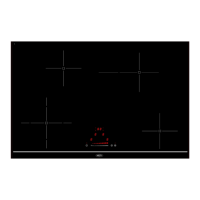
Examples of cooking power setting
(the values below are indicative)
1 to 2 Melting Sauces, butter, chocolate, gelatine
Reheating Dishes prepared beforehand
2 to 3 Simmering Rice, pudding, sugar syrup
Defrosting Dried vegetables, sh, frozen products
3 to 4 Steam Vegetables, sh, meat
4 to 5 Water Steamed potatoes, soups, pasta, fresh vegetables
6 to 7 Medium cooking Meat, lever, eggs, sausages
Simmering Goulash, roulade, tripe
7 to 8 Cooking Potatoes, fritters, wafers
9 to P Frying, roasting Steaks, omelettes, fried dishes
Boiling water Water
Switch-off the appliance before cleaning.
Do not clean the hob if the glass is too hot due
to risk of burn.
• Remove light marks with a damp cloth with
washing up liquid diluted in a little water. Then
rinse with cold water and dry the surface
thoroughly.
• Highly corrosive or abrasive detergents and
cleaning equipment likely to cause scratches
must be absolutely avoided.
• Do not ever use any steam-driven or pres-
sure appliance.
• Do not use any object that may scratch the
ceramic glass.
• Ensure that the pan is dry and clean. Ensure
that there are no grains of dust on your ce-
ramic hob or on the pan. Sliding rough sauce-
pans will scratch the surface.
• Spillages of sugar, jam, jelly, etc. must be re-
moved immediately. You will thus prevent the
surface being damaged.
Maintenance and cleaning


 To Next Page