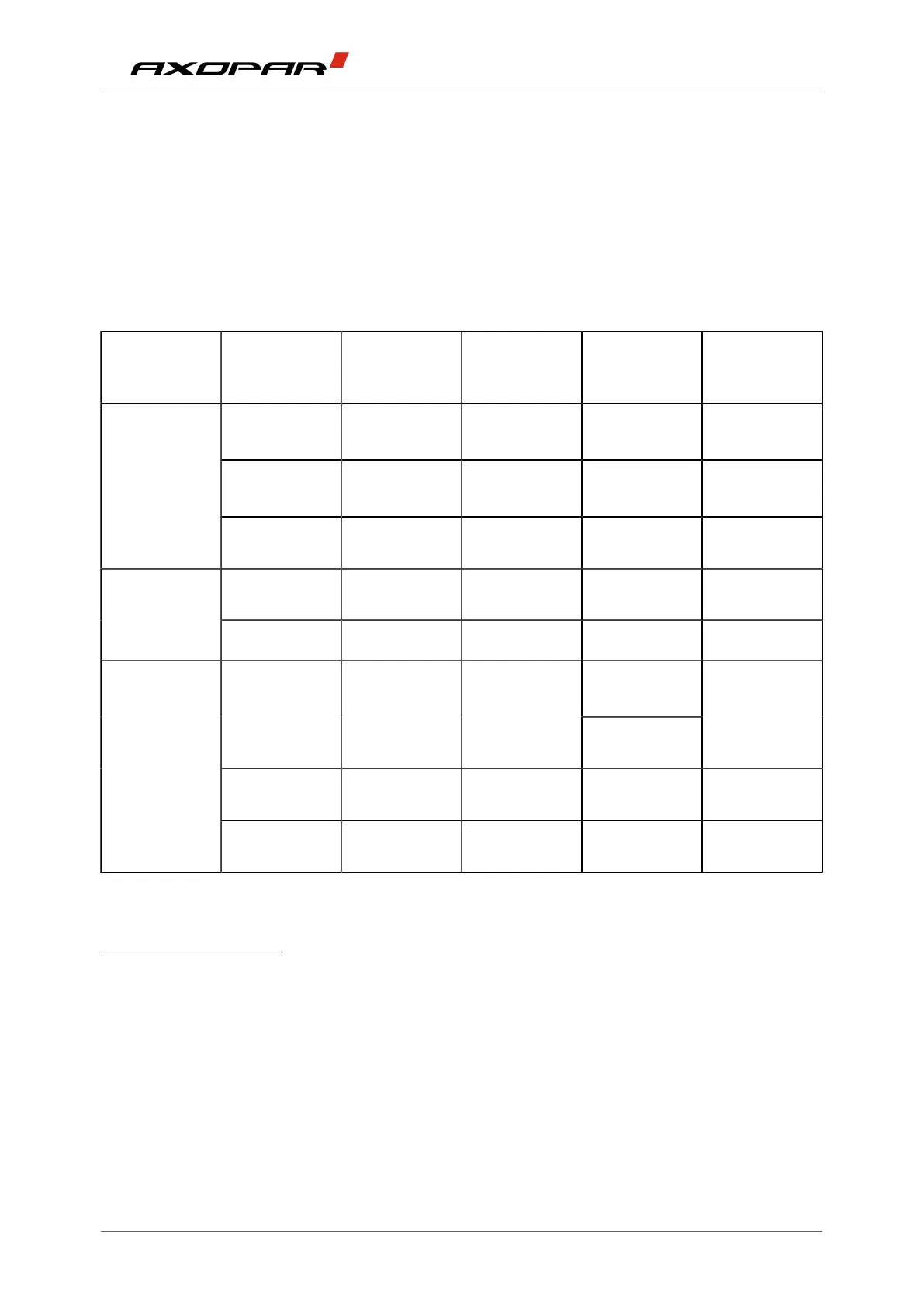
1 Decontamination criteria based on UMPS III, Table 3
1 Decontamination criteria based on UMPS III,
Table 3
The table is a summary of scientific research indicating the lethal water temperature at point of contact
and duration for decontamination. Information is grouped by the location of the boat that is targeted and
the life form of Dreissenid mussel targeted (e.g., adult mussel or veliger). Please refer to the Student
Training Curriculum for Watercraft Inspectors and Decontaminators to Prevent and Contain the Spread of
Aquatic Invasive Species in the USA for complete step by step procedures.
Boat part/
location
Water
temperature
Duration
1)
(sec)
Type of
application
Target
life stage
Hull 140°F 10
High pressure
spray
2)
Adult
Trailer 140°F 70
Low pressure
spray
3)
Adult
Exterior
PFDs, anchor,
paddle
140°F 10
Low pressure
spray
Adult or Veliger
Gimbal 140°F 132
Low pressure
spray
Adult
Propulsion
system
Engine
140°F
5)
,
6)
See note
7)
. Flush
6)
Veliger
Low risk
– Flush
4)
Ballast tanks 120°F 130
High risk – Fill
and flush
Veliger
Live well/bait well 120°F 130
Low pressure
spray or flush
Veliger
Interior
Bilge 120°F 130
Flush or low
pressure spray
Veliger
1)
The times listed are the minimum times necessary to achieve mortality.
2)
High pressure = 3000 psi.
3)
Low pressure = using the pressure from the decontamination unit with no nozzle, not to exceed 60
psi (essentially a garden hose flow).
4)
Flush = adding water to a compartment of a boat to treat or force the water out.
5)
These temperatures denote the exit temperature (i.e., temperature of water exiting the boat not
exiting the wand or flush attachment).
6)
When flushing engines with a dedicated connection (not muffs), the pressure should be limited to
less than 60 psi to prevent internal engine damage. The maximum input temperature during flushing
should not exceed 140°F.
7)
NOTE: Engine flushing relies on the exit temperature as a guideline for decontamination duration.
© 2021 Axopar Boats Page 3
-
-


 To Next Page