EasyManua.ls Logo

BRAMIDAN X Series - User Manual

BRAMIDAN X Series
49 pages
Print Icon
To Next Page IconTo Next Page
Loading...
Operating
instructions
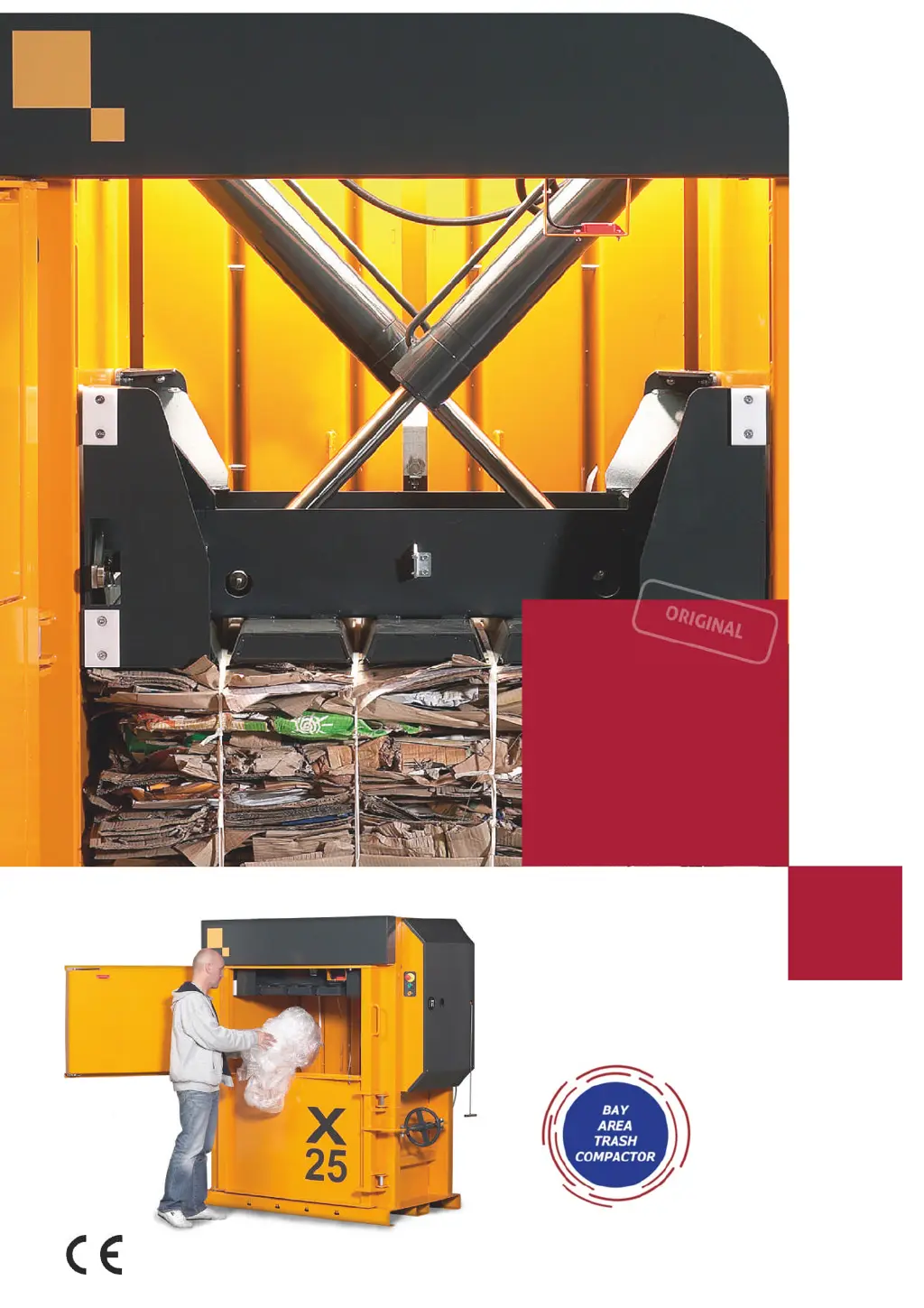
Bale press
X-series
Manual no. 7995-014
Version 01-05-2012
USA - English edition
(800) 955-0866
info@BATC-compacts.com
www.BATC-Compacts.com

Table of Contents

Questions and Answers

Summary

EU Declaration of Conformity

Conditions and Symbols

Operating Conditions

General requirements for baler use, warranty, and quality checks.

Safety Symbol Meanings

Explains DANGER, WARNING, CAUTION, and hand symbols for safety communication.

Personal Safety

Operator and Company Responsibilities

Outlines company and operator duties for safe baler operation.

General Safety Guidelines

Covers safe working areas, functional safety features, and handling binding materials.

Material and Hydraulic Safety

Material Restrictions

Prohibits compressing wet, oily, foam, explosive, or flammable materials.

Hydraulic System Safety

Warns about hot hydraulic oil and high-pressure jets.

Use and Function

Intended Waste Types

Lists acceptable waste materials like cardboard, plastic, and paper for the baler.

Prohibited Materials and Practices

Warns against compressing wet/oily materials and placing items upright.

Bale Size Adjustment

Explains how bale size is set and can be changed.

Worth Knowing

Safety Features Overview

Highlights safety equipment like emergency stop, operating panel lights, and door interlocks.

Operational Safeguards

Details how door switches, two-hand controls, and ejection mechanisms enhance safety.

Transport

Lashing Procedures

Instructions on securing the baler during transport using brackets or oval holes.

Lifting and Securing

Guidance on avoiding deformation of screens and proper lashing points.

Centre of Gravity and Transport

Transportation Angle Limits

Advises against tilting the baler more than 8° during transport.

Lifting Equipment Safety

Emphasizes using appropriate lifting gear and avoiding lifting over people.

Baler Handling and Forklift Use

Transporting on Side

Procedures for handling the baler on its side, including oil containment.

Forklift Operation Guidelines

Guidelines for safe forklift transport, avoiding damage to components.

Moving the Baler

Crane Transport Procedures

Instructions for lifting the baler using a crane via specific holes or slings.

Preparation for Movement

Steps to take before moving an installed baler, like lowering the platen.

Installation

Installation Environment and Noise

Details suitable locations and noise level considerations for baler installation.

Environmental Conditions for Operation

Specifies temperature and humidity ranges, and optional cooling/heating systems.

Indoor vs. Outdoor Placement

Advice on placing the baler indoors or outdoors with protective measures.

Clearances and Working Area

Balancing Space Requirements

Specifies minimum wall clearances for door opening and maintenance access.

Work Area Maintenance

Emphasizes keeping the working area tidy and free from waste for safety.

Connection

Power Supply Verification

Verifies motor type (single/three phase) and voltage compatibility with the supply network.

Single Phase Motor Connection

Ensures secure wiring and accessible socket for single-phase motors.

Three Phase Motor Connection

Checks secure wiring, motor rotation direction, and phase inverter setup.

Three Phase Motor Wiring without Inverter

Electrical Connection Procedure

Details electrical connections for three-phase motors without a phase inverter, requiring electrician expertise.

Cords, Straps, or Steel Wire

Binding Material Selection Criteria

Advises on choosing cords, straps, or steel wire based on bale composition and handling.

Steel Wire Usage Preparation

Notes that some balers may need readjustment for steel wire use.

Operating Principles

Power Interruption and Reset

Procedures for resetting the baler after a power disconnection.

Emergency Stop and Start Button

How to use emergency stop and activate the start button via door interlocks.

Two-Hand Control Operation

Requirements for simultaneous pressure on two buttons for operation.

Blocked Bale Ejection Causes

Reasons for blocked ejection and safety procedures for clearing jams.

Additional Functions

Automatic Start and Cycle Options

Explains automatic start, multiple press cycles, and platen pause features.

Troubleshooting Binding Material Issues

Resolving Binding Material Problems

Steps to take if cords, straps, or steel wire cause problems during ejection.

The Operating Panel

Operating Panel Components

Identifies and describes buttons like Emergency Stop, Start, and Finish Indicator.

Button Light Signal Meanings

Explains the meaning of green and orange button lights and flashes during operation.

Push Button Functions

Compression Cycle Initiation

Details how the start button initiates compression and platen return.

Bale Binding Process

Explains the process when the finish indicator button signals bale readiness.

Premature Bale Finishing

How to stop the bale compression before it reaches maximum.

Parking Platen on Bale

Procedure for temporarily parking the platen on the bale.

Mounting Cords, Straps, or Steel Wire

Cords or Straps Installation

Step-by-step guide for mounting cords or straps using brackets and securing them.

Power Disconnection for Mounting

Crucial safety step to disconnect power before mounting binding materials.

Steel Wire Mounting

Steel Wire Installation Procedure

Step-by-step guide for installing steel wire, including making loops and fastening.

Filling and Compression

Waste Distribution and Door Operation

Instructions on filling the chamber evenly and ensuring proper door operation.

Compression Cycle Initiation

Explains how the start button initiates compression and platen movement.

Finishing the Bale

Premature Bale Finishing Method

How to initiate bale compression completion before maximum filling.

Cancelling Premature Bale Finish

Procedure to cancel a prematurely initiated bale finishing process.

Binding the Bale

Binding with Cords or Straps

Detailed steps for binding the bale using cords or straps.

Mandrel and Door Operations for Binding

How to loosen the mandrel and open doors to access binding points.

Steel Wire Binding Procedure

Steel Wire Application Steps

Instructions for applying steel wire for bale binding, including platen movement.

Ejecting the Bale

Ejection Readiness Checks

Verifies door opening angle, checks for jammed ejection system, and platen position.

Safe Ejection Process

Emphasizes disconnecting power and resetting the baler before ejection.

Ejection Operation and Safety

Two-Hand Control for Ejection

Details the two-hand control requirement for performing bale ejection.

Operator Safety During Ejection

Restricts personnel to one operator in the working area during ejection.

Maintenance

Maintenance Safety Precautions

General safety rules for maintenance, including power disconnection and authorized personnel.

Daily and Weekly Inspections

Lists essential daily and weekly inspection items for baler upkeep.

Maintenance Schedule and Checks

Biannual Oil Level Checks

Specifies intervals and methods for checking the hydraulic oil level.

Annual Service and Safety Checks

Recommends annual reviews of electrical/hydraulic systems and safety protocols.

Paintwork Damage Repair

Guidance on repairing minor and major damage to the baler's paintwork.

Cleaning, Spare Parts, and Disposal

Baler Cleaning Procedures

Methods for cleaning the baler, advising against water or high-pressure cleaners.

Ordering Spare Parts

Instructions on how to order spare parts, requiring the serial number.

Disposal Guidelines

Procedures for disposing of hydraulic oil and the baler according to regulations.

Troubleshooting

Baler Fails to Start Checks

Checks for power connection, repair switch, emergency stop, and fuses.

Circuit Board and Bottom Plate Issues

Visual guide for checking components on the bottom plate and circuit board.

Troubleshooting Error Codes and Noise

Start Button Flashing Error Codes

Interprets flash codes for door switch, emergency stop, oil/motor temperature, and other errors.

Addressing Baler Noise Issues

Diagnoses causes of excessive noise, like worn wear blocks or foreign objects.

Troubleshooting Ejection and Leaks

Bale Ejection Failure Causes

Addresses issues with two-hand control, emergency stop, top switch, and incorrect installation.

Hydraulic Oil Leakage Resolution

Procedures for handling hydraulic oil leaks, including power disconnection and repair.

Safety Check Checklist

Annual Safety Check Overview

Introduces the annual safety check for individuals knowledgeable about the press.

Baler Component Identification

Labels key components (A-M) on the baler for the safety checklist.

Safety Checklist: Switches and Controls

Cable, Socket, and Switch Checks

Verifies cable, socket, repair switch, and emergency stop functionality.

Two-Hand Control Verification

Tests the dual-button operation for bale ejection.

Safety Checklist: Door and Top Switches

Door Switch (M, L) and Top Switch (K) Checks

Tests door switches and the top switch for proper operation.

AD Model Specific Safety Checks

Details checks for AD door switch (N) and closing system.

Safety Checklist: AD Door and Closing System

AD Door Switch (N) Operation Test

Verifies the AD door switch's reaction to pressure and release.

Door Closing System Test

Confirms the correct functioning of the door closing system for non-AD models.

Spare Parts

Safety-Related Spare Parts List

Lists spare parts that impact operator safety and health, with model applicability.

BRAMIDAN X Series Specifications

General IconGeneral
BrandBRAMIDAN
ModelX Series
CategoryPower Tool
LanguageEnglish

Related product manuals