
 Need help?
Do you have a question about the Briggs & Stratton 8500EA and is the answer not in the manual?
Details the generator's design, applications, limitations, and how it operates.
Provides critical warnings and precautions to avoid hazards associated with generator use.
Explains the various safety alert symbols and signal words used in the manual.
Steps for removing the generator and its included accessories from the shipping carton.
Procedures for safely adding the correct engine oil and unleaded fuel.
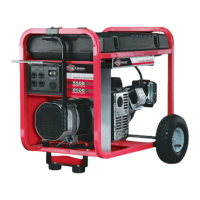
Identifies generator components, controls, and the battery charger connection.
Covers grounding requirements, safe generator placement, and necessary air clearances.
Detailed steps for starting the engine, covering both electric and manual methods.
Instructions for safely connecting appliances and tools to the generator's outlets.
Procedure for safely shutting down the generator after use.
Explanation of low oil shutdown and tips for operating in cold weather.
Guidance on calculating required running and starting watts for connected loads.
Steps for safely connecting loads sequentially to protect the generator and devices.
Table outlining recommended service intervals for various generator components.
General advice on performing regular maintenance for improved performance and longevity.
Instructions for cleaning the generator and maintaining the starting battery.
Steps for inspecting and cleaning the fuel valve's sediment cup, screen, and o-ring.
Guidance on selecting oil viscosity and procedures for changing engine oil.
Instructions for maintaining the air cleaner and servicing the spark plug.
Procedures for checking the oil level and adding oil to the correct fill level.
Guidelines for inspecting the muffler and spark arrester for damage or blockage.
Recommendation to have a dealer clean the engine's cooling system for optimal performance.
Information regarding the non-adjustable idle mixture and factory-set top speed.
General cleaning and preparation steps before storing the generator.
Procedures for using fuel stabilizer for extended storage periods.
Safety precautions for fuel storage and procedures for draining fuel.
Additional recommendations for fuel storage, protective covers, and storage area.
Diagnosing and correcting issues when the engine runs but no power is produced.
Troubleshooting steps for when the engine loses power when connected loads are applied.
Identifying causes and solutions for engines that won't start or run erratically.
Addressing issues where the engine does not perform at its expected power level.
Resolving problems where the engine speed fluctuates inconsistently.
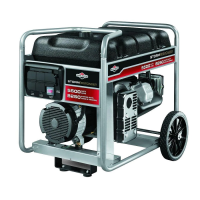
Technical details including starting wattage, rated wattage, frequency, and capacity.
Technical details including starting wattage, rated wattage, frequency, and capacity.
List of frequently replaced parts such as air cleaner and spark plug.
Details on what the warranty covers, exclusions, and limitations.
Information on warranty duration for consumer and commercial use and registration necessity.
Explanation of warranty service, conditions, and what is not covered.
 General
| Model | 8500EA |
|---|---|
| Type | Portable Generator |
| Starting Watts | 8500 |
| Fuel Type | Gasoline |
| Tank Capacity | 7.5 Gallons |
| Run Time at 50% Load | 9 hours |
| Weight | 192 lbs |
| Engine Displacement | 420cc |
| Engine | Briggs & Stratton |
| Voltage | 120/240V |
| Noise Level | 74 dB |
| Wheel Kit | Included |
| Engine Type | 4-Stroke |
| Outlet Types | 120V 20A, 120/240V 30A |




 To Next Page