BRONKHORST
®
page 18 9.17.022
The approximate accuracy of the conversion factors listed is:
typical for conversion factors; > 1
2% x factor
< 1
2% / factor
However, as the accuracy of the factor also depends on viscosity, pressure and temperature, special
attention should be taken for gases in the gas/liquid state where specific heat, density and viscosity can vary
tremendously. Apply to factory for more detailed information.
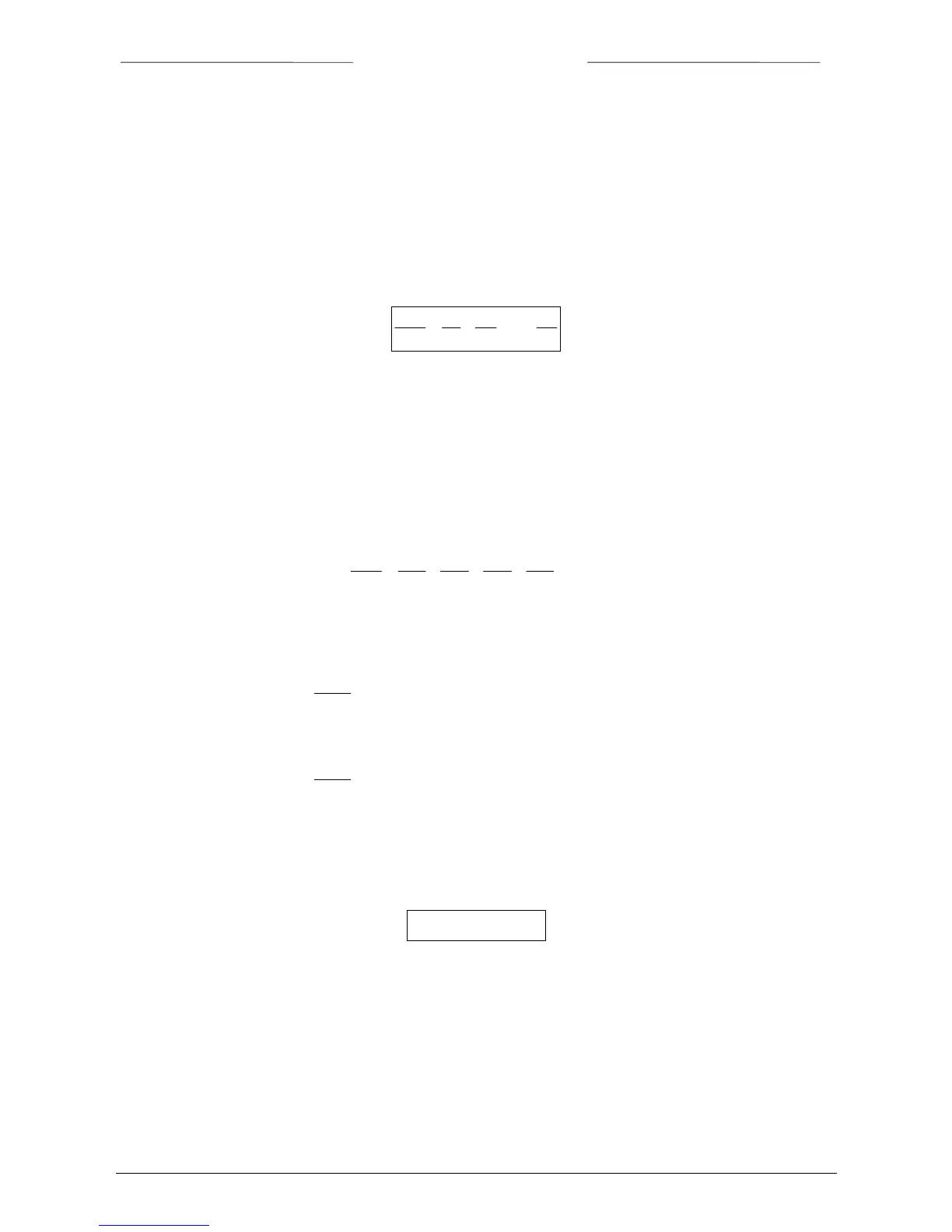
For gas mixtures a good approach is the following simplified equation:
1
1
1
2
2
C
V
C
V
C
mix
.....
V
C
n
n
C
mix
= Conversion factor for gas mixture
C
n
= Conversion factor for gas n
V
n
= Volumetric part of gas n in the mixture
Example Gas mixture contains:
(1) 10% N
2
C1 = 1,00
(2) 30% Ar C2 = 1,40
(3) 50% CH
4
C3 = 0,76
(4) 10% He C4 = 1,41
1010
100
030
140
050
076
010
141
1043
C
mix
,
,
,
,
,
,
,
,
,
C
mix
= 0,959
When the original meter has been calibrated on 500 ml
n
/min N
2
, 100% means:
500
00,1
959,0
= 480 ml
n
/min mixture.
When the original meter has been calibrated on 500 ml
n
/min Argon, then 100% means:
500
40,1
959,0
= 343 ml
n
/min gas mixture.
1.6.2 Gas Conversion Factors (direct mass flow measurement, CTA-based)
For CTA-based gas flow sensors the general relationship between signal and mass flow is:
n
msignal
KSS
0
In which:
S
signal
= output signal
S
0
= offset (zero flow) signal
K = constant factor (includes λ – heat conductivity, C
p
– specific heat, μ – dynamic viscosity
and ρ – density of the gas)
m
= mass flow
n = dimensionless constant (typically of order 0.5)
Due to the offset signal (which is also dependent on fluid properties) and the non-linear relationship between
signal and mass flow, a single conversion factor for a custom fluid that covers the entire flow range of an
instrument can not be obtained. However, a complex and partially empirical conversion model is available for



 To Next Page