
 Need help?
Do you have a question about the BRUEL & KJAER 1526 and is the answer not in the manual?
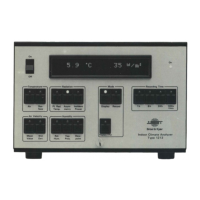
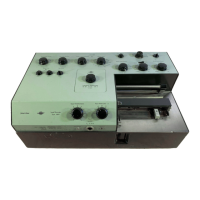
The Brüel & Kjær 1526 Strain Indicator, along with its accessories, the Multipoint Selector and Control Type 1544 and Multipoint Selector Type 1545, forms a comprehensive system for accurate strain measurements.
The Type 1526 Strain Indicator is a direct-reading digital instrument designed for measuring static strain and dynamic strain up to 300 Hz. It can be used with a wide range of strain gauges and strain-gauge transducers in quarter-, half-, or full-bridge configurations. The instrument allows monitoring of up to 5 strain-gauge bridges.
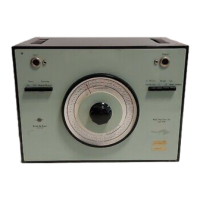
For applications requiring more extensive monitoring, the 1526 can be integrated with a Multipoint Selector and Control Type 1544 and up to 39 Multipoint Selectors Type 1545. This expanded system can monitor up to 400 bridge configurations. The Type 1544 also features an output socket for digital data transfer via the B&K Interface Bus to other digital recorders and processors.
The Strain Indicator employs a carrier frequency system to excite the measuring bridge, which effectively eliminates problems associated with DC systems, such as thermocouple effects and electrical/magnetic noise. This system also enables the use of a low bridge excitation voltage, minimizing heating effects on strain gauges.
Strain Indicator Type 1526:
Multipoint Selector and Control Type 1544 & Multipoint Selector Type 1545:
Direct Reading and Ease of Operation: The 1526 provides instant, direct digital readings of strain levels in microstrain units, making it user-friendly.
Multipoint Measurement: The system allows for monitoring of up to 5 points on the 1526 alone, and up to 400 points when integrated with the 1544 and 1545 selectors. Each measuring point has individual balance and bridge mode controls.
Digital Display Functions: The digital display can show strain, gauge factor, or the initial balance potentiometer position, which is useful for referencing initial conditions in tests where unloading is not possible.
C-Balance Elimination: The operating principle of the 1526 eliminates the need for C-balance, simplifying setup.
Low Heating Effect: The 0.3 V excitation voltage minimizes heating of strain gauges, making it suitable for testing materials with low thermal conductivity.
Low Pass Filters: Built-in 3 Hz, 30 Hz, and 300 Hz low-pass filters help separate static and dynamic strains and suppress spurious signals.
Hold Function: A "Hold Max." function captures the largest peak strain (positive or negative) for non-repeating phenomena. This is particularly useful for dynamic measurements where both static and dynamic strains are present.
Overload Indication: The digital display flashes to indicate overload conditions, which can be caused by excessive signal, capacitive unbalance, or superimposed hum.
Outputs for External Equipment:
Multipoint Selector and Control Type 1544:
Multipoint Selector Type 1545:
Accessories:
Fuse and Voltage Selector: The rear panel of the 1526 and 1544 includes a fuse holder and voltage selector, allowing adjustment for different mains supply voltages (100-240 V AC) and corresponding fuse replacement.
Ground Connections: The 1526 offers internal ground connection options to minimize noise and ground loops, with clear instructions for selecting the appropriate grounding point (mains supply ground or chassis ground via a measuring point terminal).
Cable Preparation and Connection: Detailed instructions are provided for preparing and connecting cables, including recommendations for conductor cross-section area, twisting leads, and shielding to ensure optimal signal integrity and reduce interference.
Connector Assembly: For the 26-conductor cable AQ 0115 and JJ 2604 connectors used with the multipoint selectors, a step-by-step guide is given for assembling the connectors onto the cable, ensuring proper orientation and secure attachment.
Fine Adjustment of Digital Voltmeter: A procedure is outlined for fine-tuning the digital display circuit of the 1526 to ensure perfect agreement between the displayed value and the actual measurement, especially when using the Calibration Bridge.
Troubleshooting Overload: The manual provides guidance on identifying the cause of analogue overload (superimposed signals or capacitive unbalance) and suggests remedies such as selecting a higher bridge excitation voltage, screening leads, or adding a capacitor.
 General
| Brand | BRUEL & KJAER |
|---|---|
| Model | 1526 |
| Category | Measuring Instruments |
| Language | English |




 To Next Page