EXAMPLE: (0–2000 ft altitude)
Btu heating input = Btu/cu ft X cu ft/hr
Heating value of gas = 1050 Btu/cu ft
Time for 1 revolution of 2-cu ft dial = 82 sec
Gas rate = 88 cu ft/hr (from Table 9)
Btu heating input = 88 X 1050 = 92,400 Btuh
In this example, the orifice size and manifold pressure
adjustment is within ±2 percent of the furnace input rate.
2. Set temperature rise.
Furnace must operate within range of temperature rise
specified on the unit rating plate. Determine the air tem-
perature rise as follows.
a. Place duct thermometers in return and supply ducts as
near furnace as possible. Be sure thermometers do not
“see” heat exchangers so that radiant heat will not affect
thermometer readings. This is particularly important
with straight-run ducts.
b. When thermometer readings stabilize, subtract return-air
temperature from supply-air temperature to determine
temperature rise.
c. Adjust air temperature rise by adjusting blower speed.
Increase blower speed to reduce temperature rise. De-
crease blower speed to increase temperature rise.
WARNING: Disconnect the electrical power before
changing the speed tap. A failure to follow this warning
could result in personal injury.
d. To change blower motor speed selections for heating
mode, remove blower motor lead from control board
HEAT terminal. (See Fig. 14.) Select desired blower
motor speed lead from 1 of the other terminals and
relocate it to HEAT terminal. See Table 10 for lead color
identification. Reconnect original lead on SPARE termi-
nal.
Follow this same procedure for proper selection of COOL speed
selection.
CAUTION: If Model 376CAV066115 is installed in
0.50-in. wc or lower static pressure ductwork, evaporator
coil condensate blow off can occur during cooling opera-
tion. When installed in this manner, do not use high
blower speed tap for cooling.
CAUTION: Recheck temperature rise. It must be within
limits specified on unit rating plate. Recommended op-
eration is at midpoint of rise or above.
3. Set thermostat heat anticipator.
The thermostat heat anticipator must be set to match the
amp draw of the electrical components in the R-W circuit.
Accurate amp draw readings can be obtained at thermostat
subbase terminals R and W. Fig. 19 illustrates an easy
method of obtaining the actual amp draw. The amp reading
should be taken after the blower motor has started. See the
thermostat manufacturer’s instructions for adjusting the
heat anticipator and for varying the heating cycle length.
NOTE: When using an electronic thermostat, set cycle rate for 3
cycles per hr.
V. CHECK SAFETY CONTROLS
The flame sensor, gas valve, and pressure switch were all checked
in the Start-Up Procedures section as part of normal operation.
1. Check primary limit control.
This control shuts off the combustion control system and
energizes the circulating-air blower motor if the furnace
overheats.
The preferred method of checking the limit control is to
gradually block off the return air after the furnace has been
operating for a period of at least 5 minutes. As soon as the
limit has shut off the burners, the return-air opening should
be unblocked. By using this method to check the limit
control, it can be established that the limit is functioning
properly and operates if there is a motor failure.
2. Check blocked vent safeguard switch.
The purpose of this control is to permit the safe shutdown
of the furnace during certain blocked vent conditions.
a. Disconnect power to furnace and remove vent connector
from furnace outlet collar. Be sure to allow time for vent
pipe to cool down before removing.
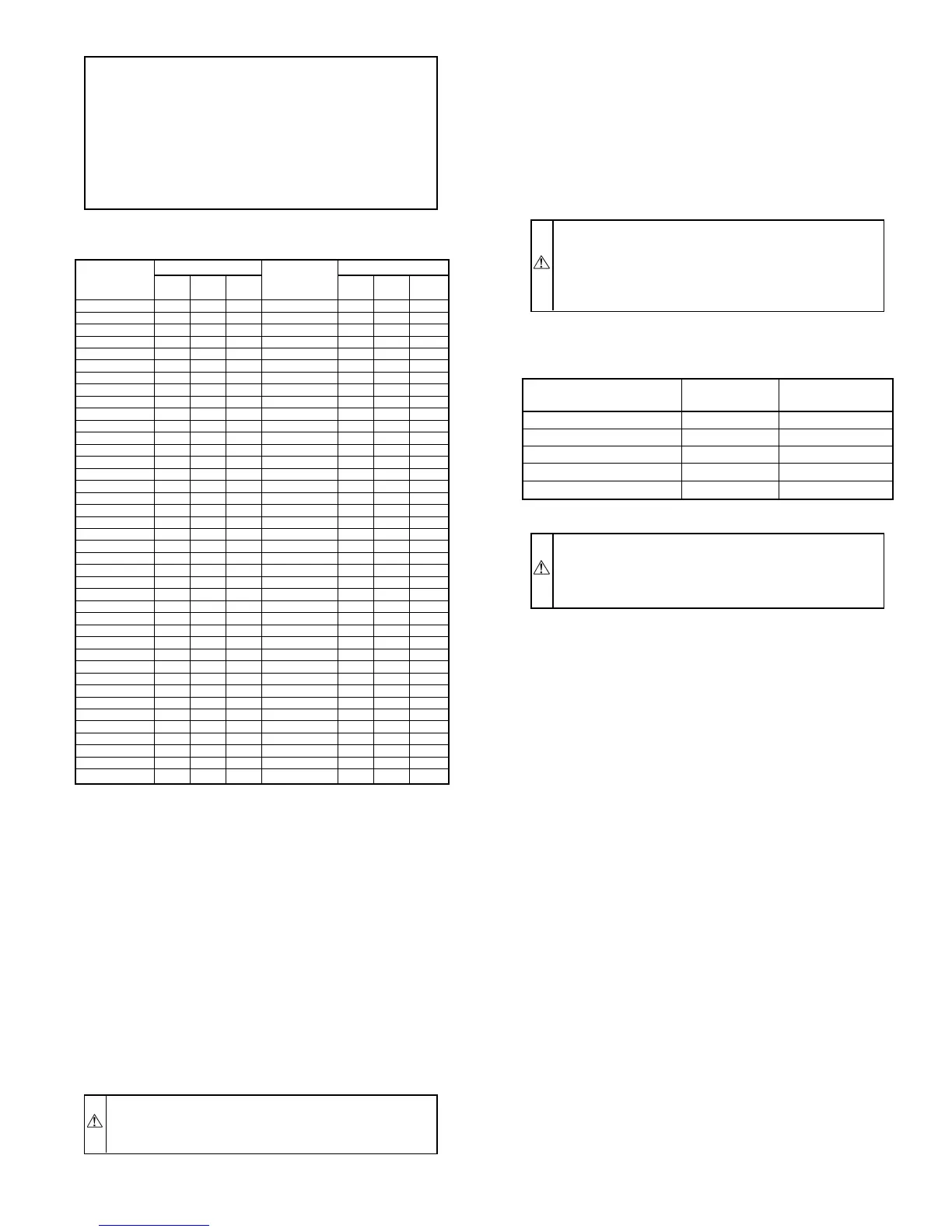
TABLE 9—GAS RATE (CU FT/HR)
SECONDS
FOR 1
REVOLUTION
SIZE OF TEST DIAL
SECONDS
FOR 1
REVOLUTION
SIZE OF TEST DIAL
I
Cu Ft
2
Cu Ft
5
Cu Ft
1
Cu Ft
2
Cu Ft
5
Cu Ft
10 360 720 1800 50 72 144 360
11 327 655 1636 51 71 141 355
12 300 600 1500 52 69 138 346
13 277 555 1385 53 68 136 340
14 257 514 1286 54 67 133 333
15 240 480 1200 55 65 131 327
16 225 450 1125 56 64 129 321
17 212 424 1059 57 63 126 316
18 200 400 1000 58 62 124 310
19 189 379 947 59 61 122 305
20 180 360 900 60 60 120 300
21 171 343 857 62 58 116 290
22 164 327 818 64 56 112 281
23 157 313 783 66 54 109 273
24 150 300 750 68 53 106 265
25 144 288 720 70 51 103 257
26 138 277 692 72 50 100 250
27 133 267 667 74 48 97 243
28 129 257 643 76 47 95 237
29 124 248 621 78 46 92 231
30 120 240 600 80 45 90 225
31 116 232 581 82 44 88 220
32 113 225 563 84 43 86 214
33 109 218 545 86 42 84 209
34 106 212 529 88 41 82 205
35 103 206 514 90 40 80 200
36 100 200 500 92 39 78 196
37 97 195 486 94 38 76 192
38 95 189 474 96 38 75 188
39 92 185 462 98 37 74 184
40 90 180 450 100 36 72 180
41 88 176 439 102 35 71 178
42 86 172 429 104 35 69 173
43 84 167 419 106 34 68 170
44 82 164 409 108 33 67 167
45 80 160 400 110 33 65 164
46 78 157 391 112 32 64 161
47 76 153 383 116 31 62 155
48 75 150 375 120 30 60 150
49 73 147 367
TABLE 10—SPEED SELECTOR
COLOR SPEED
FACTORY-
ATTACHED TO
Black High COOL
Yellow (When Present) Medium-High SPARE
Blue Medium-Low HEAT
Red Low SPARE
White Common L2/COM
—19—


 To Next Page