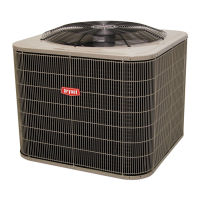
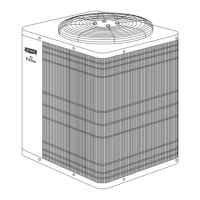
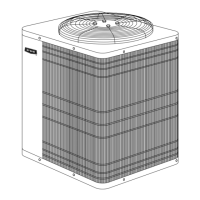
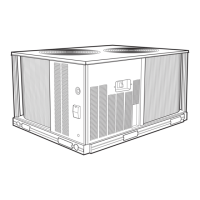
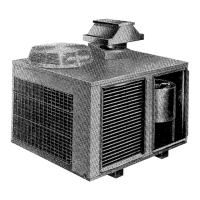
This document is a user's information manual for a Bryant Central Air Conditioner, specifically the "Quantum Plus" model, which uses an environmentally safe refrigerant. It provides guidance on operation, maintenance, and troubleshooting for homeowners.
Function Description:
The Bryant Central Air Conditioner is designed to provide efficient home cooling comfort. It operates as a split-system, meaning it consists of an indoor unit (containing a coil) and an outdoor unit (also containing a coil), interconnected by refrigerant tubes. The system's primary function is to lower the indoor temperature to a user-selected level during the cooling cycle and, if equipped, to provide heating during the heating cycle. It also removes humidity from the home during cooling. The system's operation is controlled by an indoor thermostat, which can be either non-programmable or programmable, allowing users to set desired temperatures and fan modes.
Important Technical Specifications:
The manual emphasizes the use of an environmentally safe refrigerant, indicating a focus on ecological responsibility. While specific BTU ratings or SEER values are not provided in the excerpt, the mention of "energy-efficient" products suggests adherence to modern efficiency standards. The outdoor unit requires a minimum 12-inch clearance from tall grass, vines, and shrubs for unrestricted airflow. The thermostat typically offers temperature settings around 78°F for cooling and 68°F for heating. The system should not be operated when outdoor temperatures are below 55°F.
Usage Features:
- Thermostat Control: The indoor thermostat is the central control, typically featuring a temperature control selector, a FAN control (AUTO/ON), and a SYSTEM or MODE control (COOL/OFF/HEAT/AUTO). Some thermostats offer two temperature control selectors for separate cooling and heating settings.
- Programmable vs. Non-Programmable Thermostats: Programmable thermostats allow for preset daily temperature changes, enabling energy savings by adjusting temperatures when the home is unoccupied or during sleep. Non-programmable thermostats require manual adjustment for temperature changes.
- Continuous Fan Operation: Users can choose to run the fan continuously (ON mode) to minimize temperature differences and eliminate "air pockets" within the home, enhancing personal comfort.
- Automatic Changeover (AUTO Mode): Some thermostats with an AUTO system/mode control can automatically switch between cooling and heating cycles based on the indoor temperature relative to the set points.
- Air Cleaners and Humidifiers: The system can be integrated with electronic or mechanical air cleaners and/or humidifiers for year-round air purification and winter humidification.
- Ventilation: Systems may include a heat or energy recovery ventilator to exhaust stale indoor air and bring in fresh outdoor air while minimizing heat loss.
- Zoning: The system can be equipped with a zoning system for individual temperature control in different areas of the home.
- Compressor Protection: To prevent damage, users are advised not to "jiggle" the thermostat or move the temperature selector for at least 5 minutes after the compressor has shut off, as rapid-cycling can be detrimental.
Maintenance Features:
- Air Filter Maintenance: The manual stresses the importance of keeping the air filter clean. Filters should be checked every 3 to 4 weeks. Disposable filters must be replaced with new ones of the same dimensions, while reusable filters should be washed with cold water and mild detergent, rinsed, and thoroughly dried before reinstallation. Having an extra filter is recommended to avoid prolonged unit shutdown during drying.
- Condensate Drain Check: Users should periodically check the condensate drain of the cooling coil to ensure it is not clogged, observing water trickling after a few minutes of operation.
- Outdoor Unit Airflow: The outdoor unit requires unrestricted airflow. Users must ensure it is not covered, leaned against, or blocked by grass clippings, leaves, or other debris. A minimum 12-inch clearance from surrounding vegetation is necessary.
- Outdoor Unit Cleaning: For general maintenance, the outdoor coil can be cleaned with a vacuum cleaner with a soft brush attachment, using an up-and-down motion to avoid bending or damaging the coil fins. For units near the ocean (sea coast), periodic washing of all exposed surfaces and the coil (approximately every 3 months) is recommended to combat corrosive salt mist.
- Unit Support: The outdoor unit should be maintained in a level position to ensure proper water drainage. Any shifting or settling that causes the unit to become unlevel should be corrected promptly.
- Professional Maintenance: In addition to routine homeowner tasks, the manual recommends regular inspections (preferably annually) by a trained service technician. This includes checking/cleaning the blower wheel, housing, motor, indoor/outdoor coils, drain pan, and drain lines, as well as electrical connections and overall operational checks. Service contracts for seasonal inspections are also suggested.
- Safety Precautions: Before any maintenance, all electrical power to the air conditioner (both indoor and outdoor units) must be disconnected. Users are also warned to be careful when handling parts due to potentially sharp edges.
- Troubleshooting: Before requesting a service call, users are advised to check basic issues such as disconnect switches (ON), circuit breakers (ON), sufficient airflow (clean filters, unblocked registers), and correct thermostat settings.

 Need help?
 General

 To Next Page