EasyManua.ls Logo

Bryant ZONE PERFECT PLUS - User Manual

Bryant ZONE PERFECT PLUS
24 pages
Print Icon
To Next Page IconTo Next Page
Loading...
NOTE: Read the entire instruction manual before starting the
installation.
TABLE OF CONTENTS
INTRODUCTION..........................................................................1
OVERVIEW OF ZONING............................................................1
WHAT IS ZONING?.....................................................................1
IS A ZONING SYSTEM RIGHT FOR THIS JOB?....................1
DESIGNING A ZONE PERFECT PLUS INSTALLATION ......1
ASSIGNING ZONES...............................................................2
SIZING THE EQUIPMENT ....................................................3
SIZING THE DUCT SYSTEM ...............................................3
REFERENCE FOR DUCT SIZING WORKSHEET:
STEP 6 ......................................................................................4
REFERENCE FOR DUCT SIZING WORKSHEET:
STEP 7 ......................................................................................5
APPENDIX ....................................................................................5
INTRODUCTION
Zone Perfect Plus is a zoning system capable of providing zone
control requirements for 2, 4, or 8 living or business areas. This
system allows the home or business owner to control the living
environment in an individualized way. The Zone Perfect Plus kit
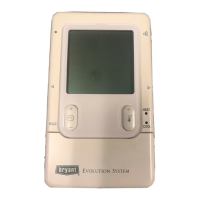
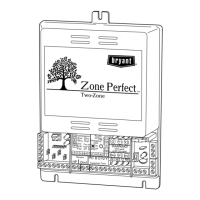
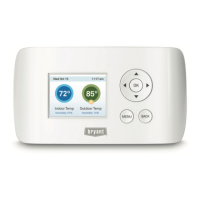
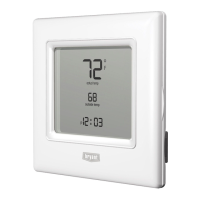
includes the User Interface, Equipment Controller, Remote Sen-
sors, an Outdoor Temperature Sensor, and Leaving Air Tempera-
ture (LAT) Sensor. See Fig. 1 for components which make up an
8–zone kit.
This guide provides information to help you design a Zone Perfect
Plus installation. It discusses general topics related to designing a
zoning control system.
Use this guide to help you design a zoning system that will:
Meet or exceed the expectations regarding the system’s capa-
bilities. This goal will result in improved customer perception
of your company, as well as repeat business and referrals.
Protect the heating and cooling equipment used in the system.
This goal will result in improved system reliability, longer life
of heating and cooling equipment, and reduced warranty costs.
To design a zoning system to perform well under all conditions, it
is essential to view the system as a whole at the design stage, rather
than to begin selecting and installing individual components
without a careful assessment of how they will work together. Be
sure to perform all of the Tasks described in this guide before you
begin to install components.
OVERVIEW OF ZONING
Zoning systems bring the possibility of total comfort control to the
occupants by providing the right amount of heating or cooling to
each space. Comfort can be described as the absence of sensation.
Ideally, a zoning system should keep the occupants of the space
comfortable without them being aware of the system.
WHAT IS ZONING?
A zone is a conditioned space (one room or a group of rooms) that
is separately controlled by its own sensor. There are as many
sensors in a designed system as there are zones.
A zoning system is a heating and cooling control system that
maintains each zone at a predetermined temperature set point and
maintains the overall space at a predetermined humidity set point.
In addition to meeting these basic goals, Zone Perfect Plus is
designed to:
Direct conditioned air proportionately based on the needs of
each zone, so that the zone(s) with the greatest demand receive
relatively more conditioned air.
Keep the sound produced by the system low enough that
occupants will not find it objectionable.
Conveniently interface with and protect the system’s heating
and cooling equipment.
Maintain at least the minimum airflow necessary to keep
heating and cooling equipment running efficiently.
IS A ZONING SYSTEM RIGHT FOR THIS JOB?
When designing a zoning system, it is important to keep in mind
what a zoning system can and can not do. A zoning system is only
part of a complete heating and cooling system. A properly selected
heating and cooling system has a limited heating and cooling
capacity. A zoning system may or may not increase the effective
capacity. This depends on whether the system is being designed
for comfort (no increase) or energy savings (some increase in
overall effective system capacity).
A zoning system reduces the effective size of the air distribution
system as dampers are adjusted and closed to meet the needs of the
zone. The primary challenge when designing a zoning system is to
make sure that the air distribution system cannot become so
effectively small that the reduction in airflow causes one of the
following problems:
Air noise or draft becomes excessive.
The heating or cooling equipment is shut down because
temperature limits are exceeded.
The life of the equipment is reduced because of stresses related
to excess temperatures.
The addition of a zoning system will not correct undersized
duct problems. A zoning system will compensate for oversized
ducts, but might make a bad situation worse in the case of
undersized ducts. There are many ways to make a marginal duct
system perform better. Most of these approaches involve changing
ducts, registers, and/or heating or cooling equipment.
DESIGNING A ZONE PERFECT PLUS INSTALLATION
The main objective when designing a zoning system is to maintain
at least minimum airflow through the system when only one zone
requires conditioning, yet still provide sufficient airflow when all
zones require conditioning. The tasks described below provide
step-by-step instructions for designing an effective zoning system.
These tasks are grouped in the following phases:
Assigning Zones
Task 1–Assess the goals for comfort and energy savings.
Task 2–Conduct a site survey and make preliminary zone assign-
ments.
Zoning Design Guide
ZONE PERFECT PLUS
Cancels: AP17–2 AP17–5
8-00
—1—

Question and Answer IconNeed help?

Do you have a question about the Bryant ZONE PERFECT PLUS and is the answer not in the manual?

Summary

Assigning Zones

Task 1: Assess Comfort and Energy Goals

Evaluate customer comfort and energy goals to ensure system suitability and manage expectations.

Task 2: Site Survey and Zone Assignments

Conduct a site survey to gather data for making initial zone assignments based on building layout.

Sizing HVAC Equipment

Task 3: Calculate Load Estimates

Determine block and room-by-room heating and cooling load estimates for the building.

Task 4: Size HVAC Equipment

Select appropriate heating and cooling equipment based on calculated load estimates and zoning needs.

Appendix

Owner Survey Worksheet

Questionnaire to gather detailed information about household usage and preferences for zoning system design.

Floor Plan Worksheet

Template for drawing and annotating floor plans to aid in zone assignment and system design.

Overview

The Bryant Zone Perfect Plus is a sophisticated zoning system designed to provide individualized climate control for residential and light commercial spaces, accommodating 2, 4, or 8 distinct living or business areas. Its primary function is to maintain each zone at a predetermined temperature set point and the overall space at a specific humidity level, ensuring optimal comfort and potential energy savings.

Function Description:

The Zone Perfect Plus system intelligently directs conditioned air proportionally to zones with the greatest demand, ensuring that comfort is prioritized where needed most. It aims to achieve this while keeping system noise low, protecting heating and cooling equipment, and maintaining minimum airflow for efficient operation. The system includes a User Interface for user interaction, an Equipment Controller to manage the HVAC system, Remote Sensors for each zone to monitor conditions, an Outdoor Temperature Sensor, and a Leaving Air Temperature (LAT) Sensor to monitor air leaving the indoor unit.

A key aspect of its operation is the ability to reduce the effective size of the air distribution system by adjusting and closing dampers to meet specific zone needs. This allows for targeted conditioning, but careful design is crucial to prevent issues like excessive air noise, equipment shutdown due to temperature limits, or reduced equipment life from stress due to excess temperatures. The system is designed to prevent the air distribution system from becoming so small that airflow reduction causes these problems.

The Zone Perfect Plus is compatible with residential furnaces, fan coils, and light commercial products. It is recommended to use a thermostatic expansion valve (TXV) whenever possible. The system is designed to operate with equipment ranging from 1.5 to 12.5 tons in cooling mode.

Important Technical Specifications:

  • Zone Capacity: 2, 4, or 8 zones.
  • Cooling Capacity Compatibility: 1.5 to 12.5 tons.
  • Airflow Management: Proportional air distribution based on zone demand.
  • Minimum Airflow Maintenance: Ensures heating and cooling equipment runs efficiently.
  • Duct Sizing Recommendations:
    • Traditional methods often design ductwork at 0.1 in. wc supply and 0.08 in. wc return, based on 100 ft of equivalent ductwork.
    • For zoning systems, a 25% oversizing of ductwork is recommended to handle varying airflow conditions. Some manufacturers suggest 30% to 75% oversizing.
    • The system aims for a maximum zone duct pressure drop of approximately 0.1 in. wc / 100 ft and a maximum of 900 fpm for main ducts and 700 fpm for branch ducts for sheet metal ductwork.
    • For duct board, multiply areas by 1.1; for flex-duct, multiply areas by 1.25 to maintain the same duct pressure drop and fpm.
    • If CFM in Step 3 is based on cooling and the design is NOT based on 400 CFM/ton, divide that CFM by 400 and multiply the areas by this number.
    • "Grey-shaded" boxes in the duct sizing tables represent zone CFMs of less than 20% of the total CFM, with square inches increased by approximately 10% to accommodate limited open zones.
  • Bypass Needs: A bypass mechanism is crucial for worst-case scenarios (e.g., only one room zone open). Options include "Controlled Leakage" (damper motors with MIN settings) or "Out Zones" (system opens a zone if bonnet/plenum temperature becomes too hot or cold). If the smallest zone plus any controlled leakage cannot handle 60% of the nominal CFM, a bypassing option is necessary.
  • Equipment Protection: The zoning system will shut down equipment if duct temperature falls outside minimum or maximum limits and limits restarts to four times per hour.
  • Retrofitting Considerations: Existing ductwork and dampers may need modification, mechanical minimum damper positions may need to be set, or insulation improved to reduce load.
  • Recommended Equipment: Variable-speed or multi-speed residential equipment with staging logic removed (allowing the zoning system to control staging). Low ambient kits, wind baffles, and freeze-stats are required for cooling equipment operating below standard minimum outdoor temperatures.

Usage Features:

  • Individualized Comfort: Allows home or business owners to control the living environment in an individualized way, setting specific temperatures for different zones.
  • Energy Savings Potential: By conditioning only occupied zones, the system can contribute to energy savings. However, this depends on whether the system is designed primarily for comfort (no increase in effective capacity) or energy savings (some increase in overall effective system capacity).
  • Quiet Operation: Designed to keep system sound low to avoid occupant discomfort.
  • User-Friendly Interface: Provides a convenient interface for managing the system.
  • Flexible Zone Assignment: Allows grouping of areas based on usage patterns, similar heating/cooling needs, physical separation, level in the home, and external exposures. This flexibility helps optimize comfort and energy efficiency.
  • Adaptability for Retrofits: While more challenging, the system can be integrated into existing structures with appropriate modifications to ductwork, damper settings, or insulation.

Maintenance Features:

  • Equipment Protection: The system incorporates features to protect heating and cooling equipment from stresses related to excess temperatures or insufficient airflow, potentially extending equipment life and reducing warranty costs.
  • Airflow Monitoring: Ensures minimum airflow is maintained, which is critical for the efficient and safe operation of HVAC equipment.
  • Bypass Damper Location: Guidelines for bypass damper installation emphasize accessibility for inspection and maintenance, ensuring that the bypassed air mixes properly with return air before entering the equipment, and that the LAT sensor is installed upstream from the bypass inlet.
  • Duct Sizing Worksheet: Provides a structured approach to designing the duct system, which is crucial for the long-term performance and maintenance of the zoning system. Proper sizing helps prevent issues like air noise, equipment cycling, and reduced efficiency.
  • Troubleshooting Support: The system's design guide provides detailed instructions and considerations to help prevent common problems, such as undersized ducts or oversized equipment, which can lead to frequent maintenance issues.

Bryant ZONE PERFECT PLUS Specifications

General IconGeneral
BrandBryant
ModelZONE PERFECT PLUS
CategoryThermostat
LanguageEnglish

Related product manuals