In the case of the rear brake a sleeve nut on the brake rod effects any adjustment
necessary, and a few turns are all that are required to improve braking efficiency.
The front brake is adjusted by means of the knurled ring nut on the cable stop at the
lower end of the forks.
Brake Shoe Removal and Replacement
After the brake plate has been removed from the wheel, the brake cam lever should
be detached and the cam spindle pushed in slightly to allow the shoes to clear the
brake plate. Insert a screwdriver between the brake shoes at the fulcrum pin and twist
the screwdriver.
Place a small lever between one of the shoes and the cover plate and lever the shoe
away from the plate until the spring pressure is released. Both shoes can then be
lifted away from the cover plate.
The shoes can then be replaced by the reverse procedure. Hook the springs on to
the shoes and place the ends of the shoes in position on the fulcrum pin and cam
lever. Then push the shoes outwards until the springs pull them into their correct
position.
Note: The brake shoe springs are quite strong and care should be taken that the
fingers are not trapped by the brake shoes during these operations.
Re-lined brake shoes are available through the B.S.A. Exchange replacement
service, a scheme which operates in the British Isles only.
STEERING AND SUSPENSION
Under normal conditions the only servicing which the front forks require is
occasional renewal of the oil. The need for this may be indicated by excessive
movement of the forks, but it should only be necessary after considerable mileage.
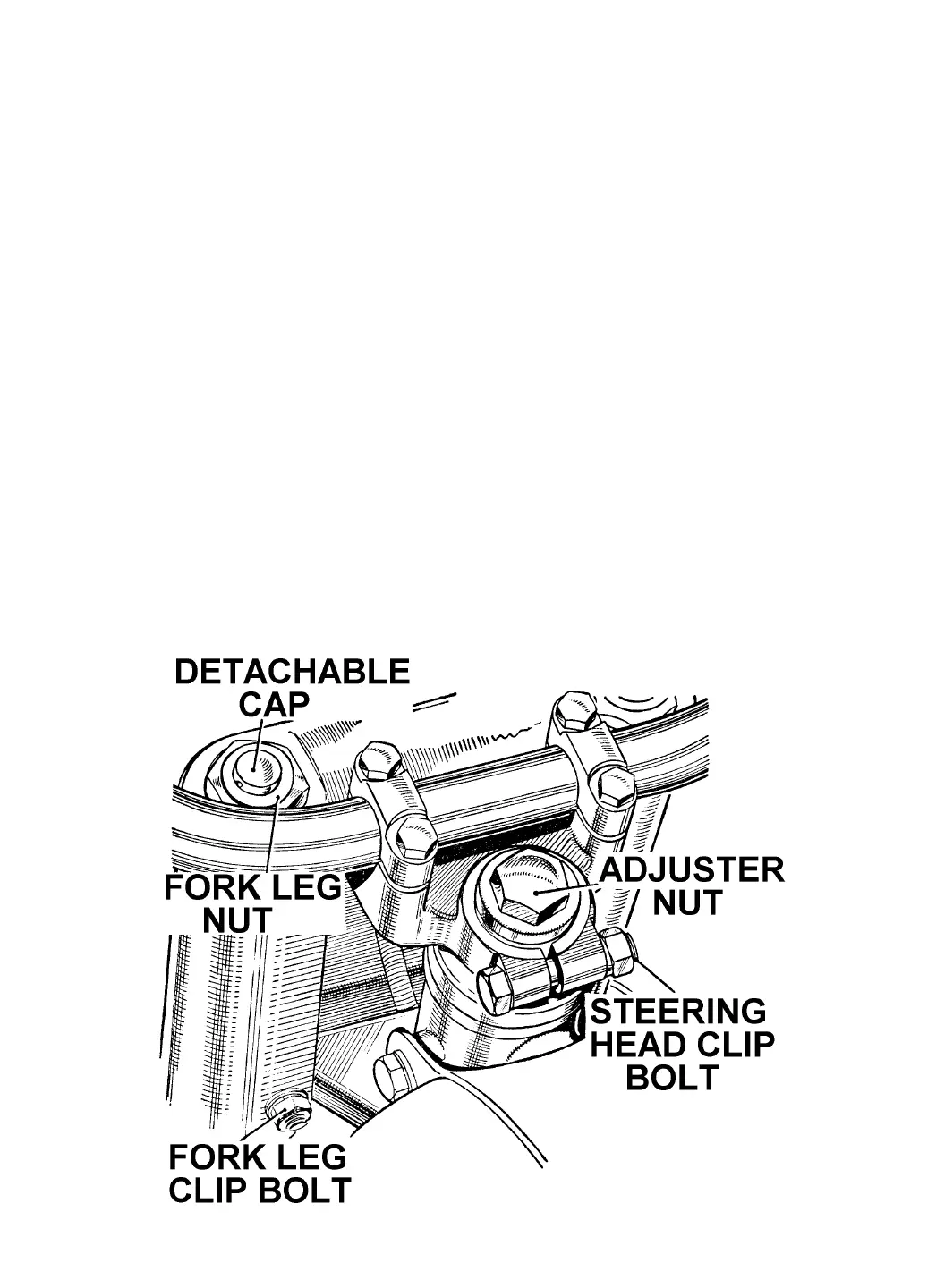
Fig. 8. Front Fork and steering head
26


 To Next Page