EasyManua.ls Logo

California Air Tools 2010SP - User Manual

California Air Tools 2010SP
16 pages
Print Icon
To Next Page IconTo Next Page
Loading...
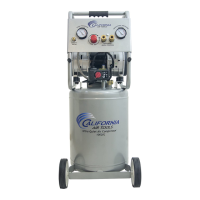
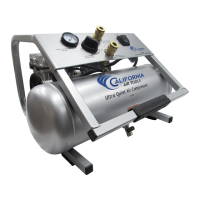
ULTRA QUIET & OIL FREE
AIR COMPRESSOR
OWNER'S MANUAL
CALIFORNIA AIR TOOLS
2010SP
1.0 HP
3.10 CFM @ 40 PSI
2.20 CFM @ 90 PSI
2.0 GALLON STEEL TANK
WWW.CALIFORNIAAIRTOOLS.COM Customer Support 1-866-409-4581

Questions and Answers

  • K
    Kimberly ZamoraAug 16, 2025
    How to fix pressure drop in California Air Tools 2010SP Air Compressor tank?
    • M
      Mrs. Stephanie Medina MDAug 16, 2025
      If the pressure in the tank of your California Air Tools Air Compressor drops, it is likely due to air leaks at connections. Let the compressor build pressure in the tank, to the maximum pressure if possible. Brush soapy water on air connections and look carefully for air bubbles. Tighten leaky connections. If the problem persists, contact the seller for further advice.
  • R
    reillybenjaminAug 19, 2025
    What to do if California Air Tools 2010SP Air Compressor tank is full of water?
    • T
      Tanya WilsonAug 19, 2025
      Open the drain valve and release the water from the tank of your California Air Tools Air Compressor.
  • K
    Kelsey SandersAug 22, 2025
    Why does my California Air Tools 2010SP Air Compressor motor not start or start slowly?
    • A
      Amanda BarkerAug 22, 2025
      If the motor of your California Air Tools Air Compressor does not start or starts slowly, make sure that the main voltage corresponds to the air compressor specifications. A too thin or too long extension cord can cause a voltage drop. Use heavy duty extension cords and ensure that the air compressor is plugged into a fully functional power outlet.
  • G
    Grace MillerAug 25, 2025
    What to do if my California Air Tools 2010SP motor doesn't start and hums?
    • V
      vmitchellAug 26, 2025
      If the motor of your California Air Tools Air Compressor does not start and makes a humming noise, perform a Check Valve Adjustment. Drain the air tank, remove the check valve cap, take out the check valve spring, clean inside the check valve and elongate the spring. Replace the spring and cap.
  • Z
    zsmithAug 28, 2025
    Why my California Air Tools 2010SP stopped and does not start?
    • B
      Beth BrownAug 28, 2025
      If your California Air Tools Air Compressor stopped and does not start, it could be due to the thermal protector being activated because the motor is overheating. Check that the main voltage corresponds to the air compressor specifications. Also, an extension cord that is too thin or too long can cause a voltage drop and cause the motor to overheat. Excessive use (over 1 hour continuous use) can cause the motor to overheat. Allow the motor to cool down. Contact Customer Support if motor windings are burned out.
  • J
    Jennifer ButlerAug 31, 2025
    How to fix unloader valve leak on idle California Air Tools Air Compressor?
    • J
      Jacqueline AcostaAug 31, 2025
      If the unloader valve on your California Air Tools Air Compressor leaks when the compressor is idle, the unloader valve seal is likely defective. Let the air in the air tank flow out until all the pressure is released. Then remove the unloader valve plug and clean the valve seal. If necessary, replace the seal and then reinstall all components.
  • S
    Sandra RodgersSep 3, 2025
    Why is my California Air Tools Air Compressor so noisy with metallic clangs?
    • C
      Charles WrightSep 3, 2025
      If your California Air Tools Air Compressor is noisy with metallic clangs, stop the compressor and contact the dealer, because the compressor head gasket or reed valve is damaged.
  • K
    Kelly CostaSep 6, 2025
    What to do if California Air Tools Air Compressor doesn't reach maximum pressure?
    • R
      richardnormanSep 6, 2025
      If your California Air Tools Air Compressor does not reach the maximum pressure, stop the compressor and contact the dealer, because the compressor head gasket or reed valve is faulty.
  • S
    Scott CastroSep 9, 2025
    What to do if California Air Tools 2010SP motor pump unit doesn't stop at max pressure?
    • N
      Nathan WilliamsSep 9, 2025
      If the motor pump unit of your California Air Tools Air Compressor does not stop when the tank pressure reaches its maximum working pressure (135 PSI), stop the compressor immediately and contact Customer Support because the pressure switch defective or needs adjusting.
  • R
    Rhonda HollandSep 12, 2025
    Why California Air Tools 2010SP Air Compressor doesn't provide as much air as new?
    • D
      Dana AnthonySep 12, 2025
      If your California Air Tools Air Compressor doesn't seem to provide as much air as it did when new and/or the compressor cuts off within a much shorter time period, stop the compressor and contact the dealer, because the pressure switch needs adjusting.

Summary

Important Safety Instructions

Safety Messages and Signal Words

Explains signal words (DANGER, WARNING, CAUTION, NOTICE) and their implications for user safety.

Risk of Cutting

Warns about severe trauma from moving parts and outlines necessary precautions.

Electrical Shock Hazard

Details dangers of electric shock and emphasizes proper grounding and electrical practices.

Risk to Breathing

Addresses hazards of breathing contaminants and recommends appropriate protective equipment.

Flying Objects Hazard

Highlights dangers from propelled items and mandates eye and body protection.

Hot Surface Warning

Warns about hot surfaces causing burns and provides cooling procedures.

Fire Hazard

Details fire risks and precautions when using the compressor near flammable materials.

Explosion Hazard

Outlines precautions for using pressurized air and preventing explosions.

Air Tank Explosion Risk

Warns about air tank bursting risks due to improper care or rust.

Sparks and Flammable Vapors

Warns about sparks igniting flammable vapors and stresses ventilation requirements.

Electrical Extension Cord Usage

Provides guidelines for safe extension cord use, including gauge and length.

Locations of Important Labels

Product Label Details

Explains the product label including warnings and factory settings.

Oil-Free Compressor Identification

Highlights information specific to the oil-free nature of the compressor.

Hot Surface Label Information

Details the warning label regarding hot surfaces and cooling requirements.

Model and Specification Labels

Covers labels showing model number, electrical specs, and certifications.

Motor Thermal Protection Label

Provides information on the motor's thermal protection and auto-restart.

Extension Cord Prohibition

Clarifies the warning against using extension cords for the air hose.

Daily Tank Drainage Reminder

A reminder to drain the tank daily to prevent rust and explosion risks.

General Safety Warnings Summary

A compilation of various safety warnings and instructions presented in multiple languages.

Air Compressor Components

Component Identification Diagram

Visual diagram identifying all parts of the air compressor with corresponding numbers.

Parts List

A comprehensive list of all parts with their corresponding numbers and descriptions.

Pre-Operation Checklist

Package Contents

Lists the items included in the air compressor package.

Assembly Instructions

Provides steps for assembling the air filter onto the air compressor.

Inspect for Damage

Instructions to inspect the air compressor and its parts for any damage before use.

Save Packaging

Important instruction to save the original packaging for service or return purposes.

Compressor Location Requirements

Guidelines for positioning the air compressor on a flat surface with adequate airflow.

Electrical Power Requirements

Details necessary voltage, amperage, and circuit requirements for safe operation.

Operating the Air Compressor

Introduction to Operation

Overview of the air compressor's features, performance, and oil-free operation.

Assembly Steps

Step-by-step guide for connecting air hoses and preparing the compressor for use.

Test Run Procedure

Instructions for performing an initial test run to verify normal operation.

Daily Operation Guide

Steps for starting, regulating air flow, and operating tools with the compressor.

Shutting Down the Compressor

Procedure for safely turning off the compressor and releasing pressure.

Maintenance

Draining the Air Tank

Procedure for draining moisture from the air tank to prevent rust and corrosion.

Cleaning or Changing Air Filter

Instructions for cleaning or replacing the air filter to maintain performance.

Testing for Leaks

Method for identifying and fixing air leaks in hoses and connections.

General Cleaning

Guidelines for cleaning the compressor exterior using soft brushes and mild solvents.

Storage

Storage Preparation

Steps to prepare the compressor for long-term storage, including power disconnection and cleaning.

Storage Precautions

Warnings against exposing the compressor to rain and advice to store it indoors.

Troubleshooting

Pressure Drop Issues

Addresses tank pressure drops, identifying air leaks at connections.

Unloader Valve Leaks

Troubleshooting steps for leaks from the unloader valve when idle.

Compressor Not Starting

Solutions for when the compressor stops or fails to start, including overheating.

Motor Humming or Slow Start

Diagnoses for motor issues like humming, slow starting, or low voltage.

Noisy Operation

Addresses noisy operation, particularly metallic clangs from head gasket or reed valve.

Maximum Pressure Not Reached

Troubleshooting steps when the compressor fails to reach maximum pressure.

Reduced Air Output or Frequent Cut-offs

Solutions for reduced air output or the compressor cutting off prematurely.

Pressure Switch Malfunction

Addresses issues with the pressure switch not stopping the motor at maximum pressure.

Specifications

Electrical Circuit Diagram

A schematic illustrating the electrical connections and components of the compressor.

Air Passage Diagram

A diagram showing the flow of air through the compressor system.

Limited Warranty

Warranty Coverage Details

Information on what the limited warranty covers, including repair or replacement of parts.

Limited Warranty Periods

Specifies the duration of warranty coverage for non-commercial and commercial use.

Disclaimers and Exclusions

Outlines disclaimers, limitations of remedies, and specific exclusions from warranty coverage.

Service and Parts Information

Warranty Exclusions

Details specific conditions and actions that void the product's warranty.

Maintenance and Troubleshooting Guide

Information on accessing online guides for setup, operation, and maintenance.

Obtaining Service or Parts

Instructions on how to contact customer support for service, parts, or warranty inquiries.

California Air Tools 2010SP Specifications

General IconGeneral
Model2010SP
TypePortable Electric Air Compressor
Oil FreeYes
Tank Capacity2.0 Gallons
Motor Power1.0 HP
Max Pressure120 PSI
Noise Level60 dB
Voltage110V
Amperage8.5 A

Related product manuals