16
ADJUSTMENTS
TRACK TENSION
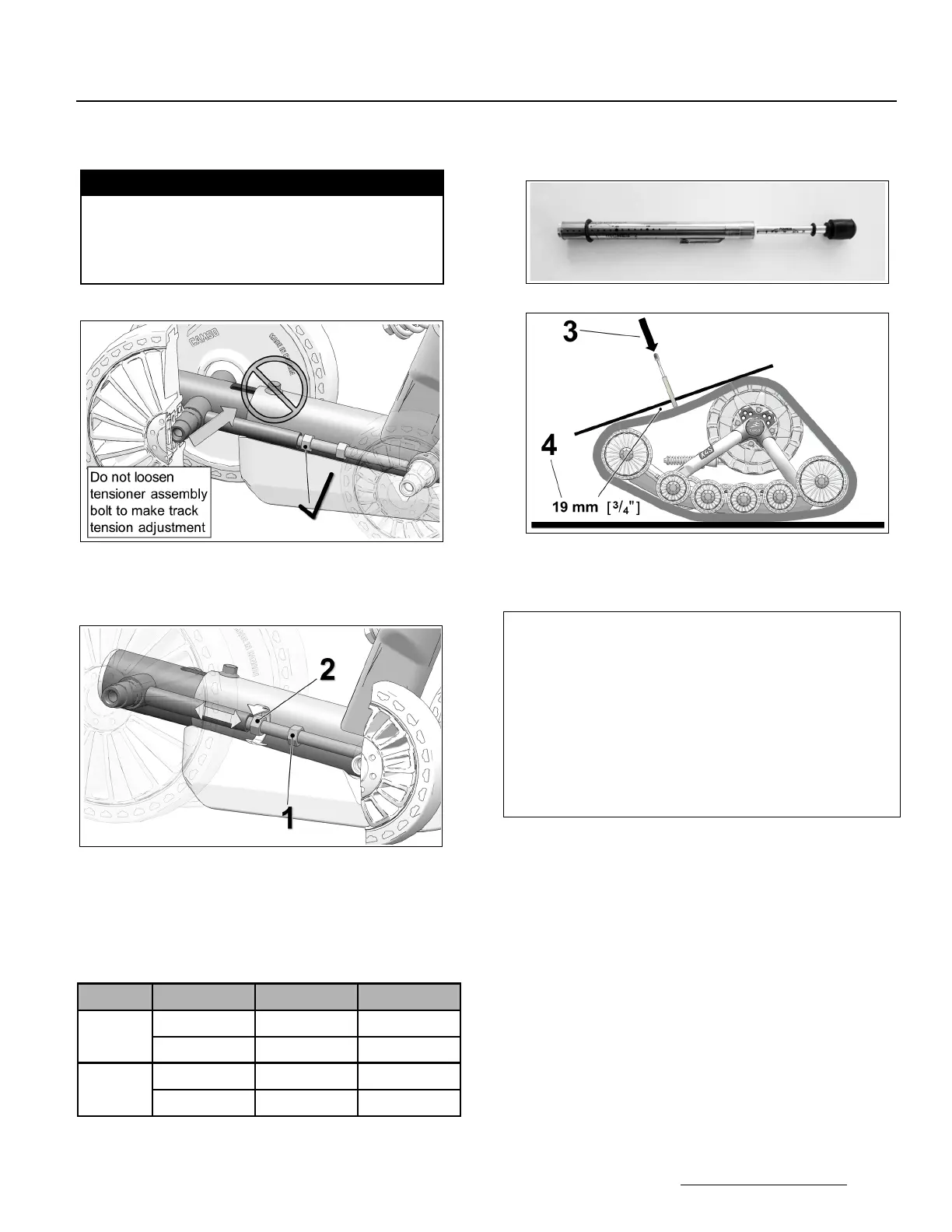
Figure 27
• Loosen jam nut (1) and turn adjusting nut (2) to
set track tension. See Figure 28.
Figure 28
• The table below shows the force (3) applied
and the deflection (4) which must occur to
correctly set track tension. See also Figure 30.
NOTE: The track tension testing tool, shown below in
Figure 29, can be purchased through an
authorized Camso dealer. Part #2000-00-3125.
Figure 29
Figure 30
BASIC TUNING
• Higher rubber track tension reduces the risk of
“derailing” and reduces sprocket “ratcheting”.
NOTE: Track tension set too high could cause
premature wear on system components and
is therefore not recommended.
• Lower rubber track tension provides better
traction, a smoother ride and better fuel
economy.
Final Check
Ride at slow speed on a distance of about 1.5 km
[1 mile]. Re–adjust as required.
WARNING
The tensioner assembly bolt must never be
loosened while adjusting the track tension. This
bolt is designed for assembly and alignment of
the tensioner with the frame. The tensioner must
always be realigned when this bolt is loosened.
SEASON TRACK FORCE DEFLECTION
SUMMER
Front 15 kg (33 lb) 19 mm (¾ in.)
Rear 15 kg (33 lb) 19 mm (¾ in.)
WINTER
(snow)
Front 11 kg (24 lb) 19 mm (¾ in.)
Rear 11 kg (24 lb) 19 mm (¾ in.)


 To Next Page